Penguin Kayaking in Cape Town Myths vs Reality
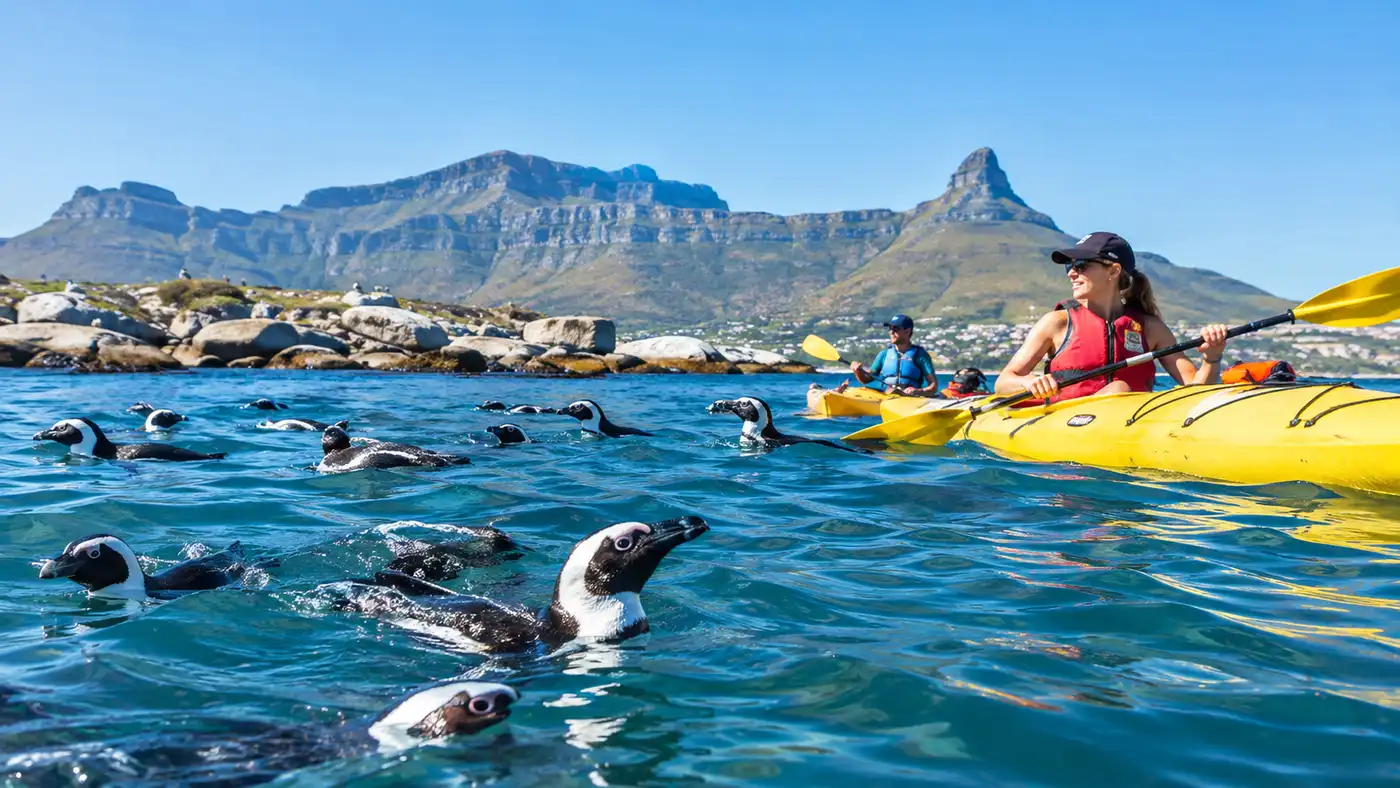
Most people arrive at Simon's Town expecting a scene straight out of an edited travel reel, where dozens of fluffy seabirds hop onto the bow of your boat to pose for a selfie. When you book a morning of penguin kayaking cape town, you are signing up for an ocean adventure in the brisk South Atlantic, not a staged petting zoo. Social media has created a strange caricature of this trip. You see clips of tourists laughing in glassy turquoise coves with penguins resting beside their paddle blades, but those 10-second videos leave out the stiff wind, the pungent odor of guano, and the rapid pace at which these wild birds actually move through water.
I learned this on an overcast Tuesday morning when my paddle clipped a patch of thick sea bamboo and my hands were so stiff from the 15-degree water that I could barely undo my drybag. The real trip is much better than the glossy fantasy, provided you know what you are getting into before you push your plastic boat off the sand. Here is what is actually going on out along the Boulders coastline, stripped of all the influencer nonsense.
Book your kayaking cape town experience:
The Instagram Fantasy vs What Swims Past Your Hull
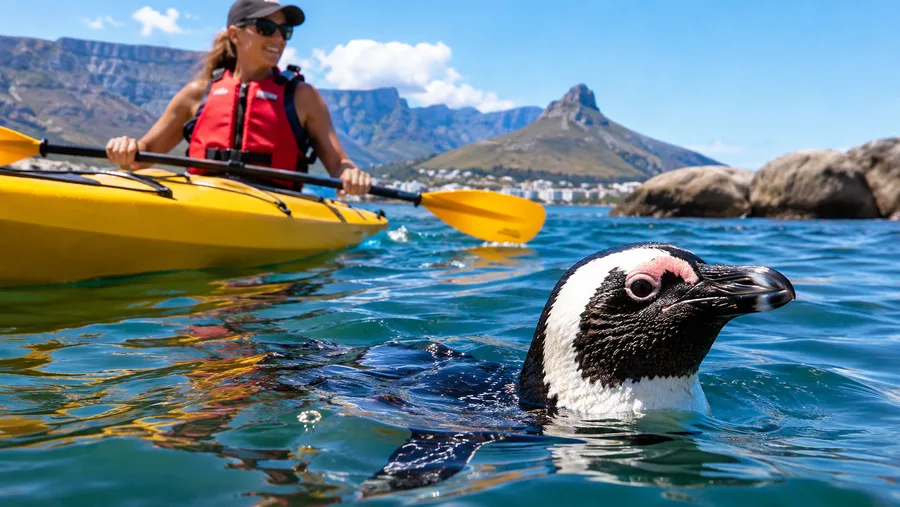
The single biggest misconception about paddling here involves bird behavior. People honestly think the penguins want to be their friends. African penguins, historically called jackass penguins because their territorial call sounds like an angry donkey, are nervous, wild creatures. They are currently classified as endangered, fighting off food shortages and habitat loss. When they see a bright yellow sit-on-top kayak sliding toward them, their natural instinct is to dive deep or steer clear.
In the water, these birds do not waddle. They transform into slick, feathered torpedoes. You will rarely see one floating static beside your boat for minutes on end. Instead, you hear a sharp gasp for air on your left, turn your head, and catch a split-second glimpse of a white belly and a black head before it rockets straight beneath your hull. They can swim around 20 kilometers per hour when chasing sardines, which makes keeping up with them impossible.
What you actually get to witness on the water is far more interesting than a staged pet encounter:
- Rafting groups: Small groups of three to eight penguins loafing on the surface between feeding dives, floating like little corks with their feet tucked in.
- Porpoising runs: Birds leaping entirely out of the chop in low arcs when they are traveling between the deep bay and their nesting burrows.
- Rock lookouts: Solitary birds perched high on granite boulders, stretching their stubby flippers to warm up under the morning sun.
- Subsurface flashes: Sudden darting shadows three feet below your seat, moving so fast you initially mistake them for small cormorants.
Note: Touching, feeding, or cornering a penguin is illegal under South African maritime and national park laws. If a bird turns its head sharply side to side, you are too close; back off immediately.
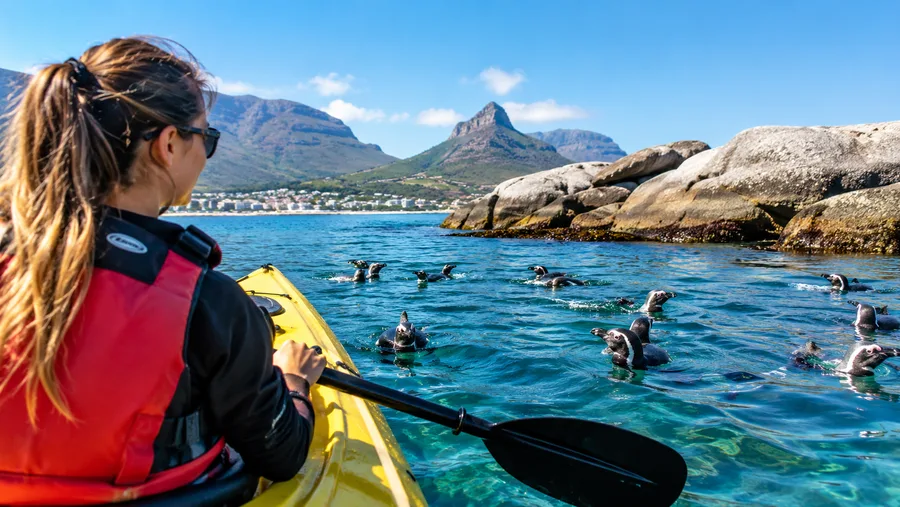
You might go twenty minutes without seeing a single bird in the open water. Then, suddenly, four of them surface five meters from your paddle, shake their heads to clear salt from their nostrils, glance at you with flat black eyes, and vanish into the kelp. It feels spontaneous. That unpredictability makes finding them genuinely thrilling.
Where You Launch and Why Boulders Beach Has Boundaries
A surprising number of travelers assume they will drag their kayaks directly across the famous boardwalk beach where tourists pay entry fees. That is not how it works at all. The protected SANParks reserve at Boulders Beach is strictly managed, meaning commercial watercraft cannot simply pull up onto the sand and drop anchor among the sunbathers.
Almost every penguin tour sets out from Simon's Town harbor or Seaforth Beach, roughly 1.5 kilometers north of the main colony. If you are curious about local currents and put-in points, our detailed look at kayaking in Simon's Town breaks down the harbor topography. Once you launch off the sheltered sand at Seaforth, you paddle past the naval docks, navigate through granite channels, and work your way south toward Windmill Beach and the outskirts of the reserve.
There are physical buoy lines marking off the penguin sanctuary. Commercial guides will keep you on the seaward side of these markers. You cannot land on Boulders Beach itself from the water. You float thirty or forty meters off the massive round rocks, rocking in the swell, looking in at the nests tucked into the milkwood scrub. It is a spectacular angle, giving you a view of the colony that the boardwalk crowds never get to see.
Pro tip: Book the earliest departure slot around 8:00 AM, because the False Bay southeaster wind usually kicks up after midday and turns the bay into a washing machine.
From the water, you hear the sheer volume of the colony. The braying echoes across the sea surface. You smell the guano long before you see the white streaks on the granite, a raw, fishy stench that reminds you this is a working marine habitat, not a theme park.
Water, Wind, and Physical Effort: It Is Not a Lazy River
Travelers read that False Bay is warmer than the Atlantic Seaboard, which leads them to pack light shorts and expect tropical conditions. While Clifton and Camps Bay hover around a bone-chilling 11 degrees, False Bay sits somewhere between 15 and 18 degrees Celsius. That is still cold enough to steal your breath if you flip over.
You will get wet. The sit-on-top boats used by Simon's Town operators have drainage holes through the floor, which means salt water constantly sloshes around your seat and feet. If you want a wider picture of gear and sea states, check our guide on what to expect from a kayaking experience in Cape Town before packing your bags.
Then there is the wind. Simon's Town is somewhat protected from the heavy westerly Atlantic swell by the Cape Peninsula spine, but it lies completely exposed to the southeaster. If that wind picks up, the paddle back from the penguin rocks turns into a serious grind. Your forearms will burn, salt will crust over your eyelashes, and steering straight requires focused effort. It takes roughly two hours of sustained, moderate exertion.
| Experience Factor | The Common Myth | The Field Reality |
|---|---|---|
| Water Temperature | Tropical, mild, warm swim water | 15°C to 18°C; requires windbreakers and neoprene |
| Proximity to Birds | Birds climb on kayaks, lap sitting | Kept at 5 to 15 meters; fast subsurface passes |
| Launch Site | Directly from Boulders Beach boardwalk | Seaforth Beach or Simon's Town pier |
| Physical Demand | Gentle, drifting photo shoot | 4 km round-trip ocean paddle against swell and wind |
| Encounter Guarantee | Guaranteed hundreds around your boat | Varies widely; sometimes 5, sometimes 50 |
I watched a couple give up after twenty minutes because they expected a flat lagoon. They drifted into a thick patch of sea kelp, panicked, and had to be towed back to Seaforth by the safety guide. Respecting the ocean here keeps you from having an embarrassing morning.
Book your kayaking cape town experience:
What You Actually Need to Pack
Leave the heavy camera gear on shore. Unless you own a dedicated waterproof housing with a secure chest tether, bringing a multi-thousand-dollar DSLR onto a wet kayak is asking the ocean for punishment. A basic action camera or a phone inside a certified floating dry pouch works far better.
The wind cuts through wet cotton quickly. If you wear an old t-shirt and jeans, you will be shivering by the time you reach the granite boulders outside Windmill Beach.
- Synthetic rash guard: Dries fast, blocks wind chill, and prevents chafing under your life vest.
- Neoprene booties or water shoes: The launch at Seaforth has submerged granite shelves, barnacles, and occasional sea urchins.
- Polarized sunglasses: Essential for spotting penguins swimming underwater; make sure you have an elastic neck strap.
- Compact dry bag: A 5-liter bag strapped between your knees holds car keys, sunscreen, and dry socks for after the paddle.
- Windbreaker jacket: A light, unlined shell keeps salt spray off your chest when paddling into headwind.
Footwear matters more than people think. Walking barefoot on the Simon's Town slipway or over slick rocks is a quick route to sliced heels. I wear thin 2mm surf booties that grip wet plastic hulls securely.
Other Marine Life You Will Likely Run Into
When people focus entirely on penguins, they miss out on the other species sharing this stretch of False Bay. The marine ecosystem around Simon's Town is dense, centered on massive kelp forests that act as an underwater buffer against heavy ocean swells.
Cape fur seals are everywhere. They are much bolder than the penguins, often surfacing right beside paddlers to roll belly-up in the sun. A seal will happily follow your kayak for several hundred meters, twisting through the water weeds and occasionally slapping its flippers against the surface. They smell terrible and bark aggressively on the haul-outs, but in the water they are graceful, inquisitive neighbors.
Southern right whales visit False Bay between June and November. While paddling directly toward a whale is forbidden, these massive animals often cruise within a few hundred meters of the shoreline. Paddling past a giant tail fluke emerging through the early morning fog makes the penguin viewing feel like a sideshow.
You also skim across the tops of the Great African Sea Forest. The sea bamboo stems here grow up to eight meters long, anchored to the seabed with huge, tangled holdfasts. Gliding through them feels like flying over an underwater jungle canopy. Schools of small streepies, blacktail, and the occasional harmless shyshark hide right underneath your kayak keel.
Frequently Asked Questions about penguin kayaking cape town
Can children join a penguin kayak tour?
Most operators require kids to be at least 8 to 10 years old, and they must ride in the front seat of a double kayak paired with an adult paddler. Check age limits with your specific operator beforehand.
What happens if the kayak capsizes?
The boats used are wide, stable sit-on-tops that are difficult to flip. If you do tip over, you are wearing a life vest, and the guides will assist you in pulling yourself back on board immediately.
Are there great white sharks where you kayak?
False Bay historically had high white shark numbers, but their presence has dropped significantly in recent years due to orca activity. Bronze whaler sharks inhabit the bay, but shark incidents with sea kayaks in Simon's Town are unheard of.
Do I need prior paddling experience?
No prior experience is necessary. Tours run at a steady, manageable pace with safety briefings on the beach, though basic physical fitness makes the trip far more enjoyable.
Quick Reference
- Launch point: Seaforth Beach or Simon's Town harbor
- Typical paddle distance: 3.5 to 4.5 km round-trip
- Water temperature: 15°C to 18°C year-round
- Best launch window: 8:00 AM to 9:30 AM
Book your kayaking cape town experience:
Is It Worth It?
If you head out expecting wild penguins to treat you like a playmate, you will walk away disappointed. If you go because you want to experience the raw, granite-strewn coast of the Cape Peninsula from water level, breathing cold ocean air while endangered birds hunt around your boat on their own terms, it is easily one of the best adventures in the Western Cape. Skip the crowded boardwalks at Boulders, put on a windbreaker, pull your paddle through the kelp, and let the real False Bay surprise you.
Read more about kayaking cape town.