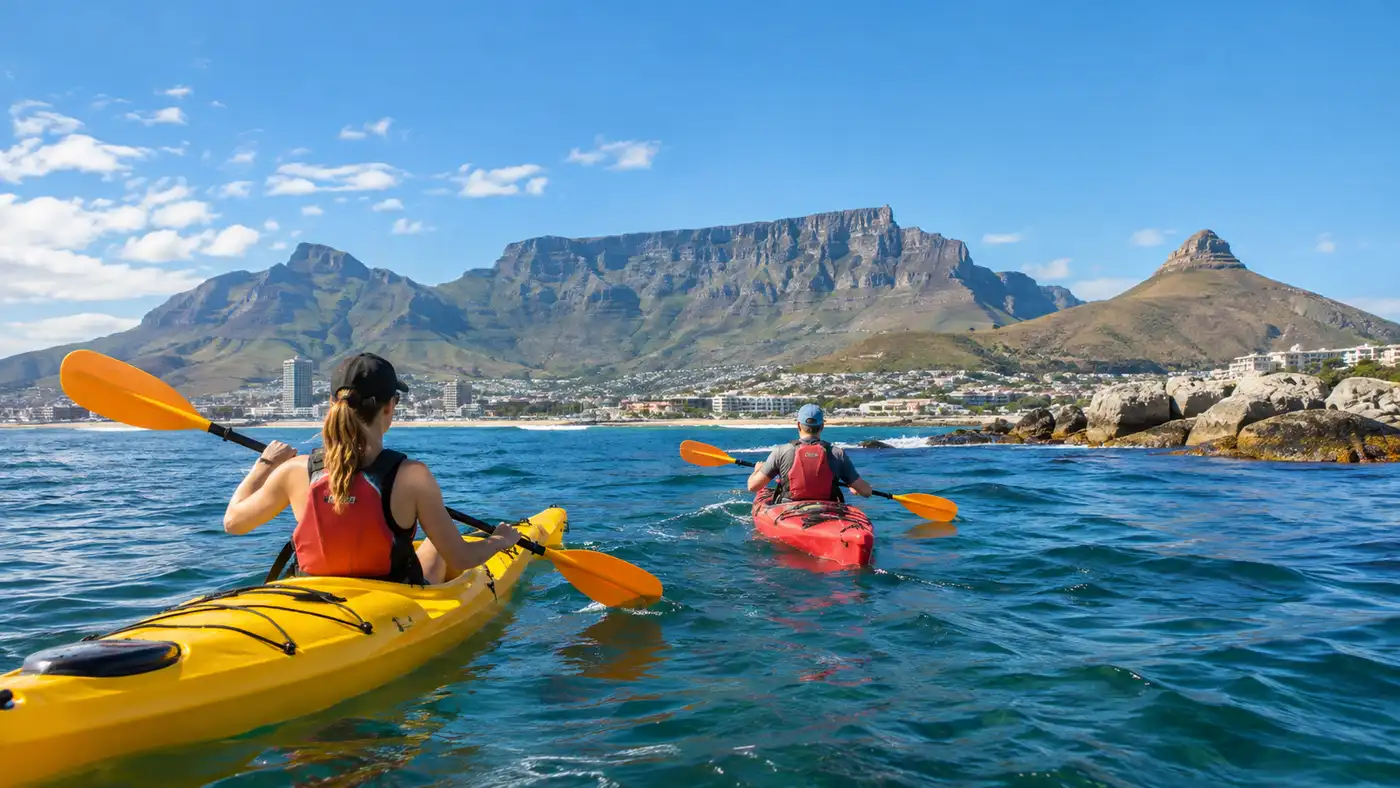
Best Time of Year for Kayaking in Cape Town
Cape Town has two distinct coastlines and weather patterns that shift completely every few months. If you ask five locals about the best time of year for kayaking in cape town, you will likely get three different answers depending on whether they prefer flat water, warm sunshine, or spotting migrating southern right whales. The cold Atlantic laps against Sea Point on one side of the peninsula, while the Indian Ocean-influenced False Bay warms the eastern shore, creating microclimates that behave completely differently on any given Tuesday.
Most travelers arrive between December and February expecting calm turquoise seas every afternoon. What they often encounter instead is the ferocious southeasterly wind, known locally as the Cape Doctor, which can turn Table Bay into a white-capped cauldron by midday. Picking the best time to kayak around this peninsula comes down to understanding when winds drop, how winter swells behave, and what marine life you want paddling alongside your boat.
Book your kayaking cape town experience:
The Seasonal Breakdown: When Does Kayaking Season Start?
Commercial outfitters run trips year-round here, so asking when does kayaking season start is technically a trick question. Paddling never actually stops. The calendar year splits into two primary weather windows that dictate where and when you can get on the ocean safely. The summer window runs from late October through April, characterized by long daylight hours, dry air, and strong afternoon winds. Winter spans May through September, bringing cooler temperatures, passing cold fronts, big northern ocean swells, and surprisingly calm wind days between storms.
For sheer consistency and warm beach days, late summer into autumn - specifically February, March, and April - is widely considered the sweet spot. During these months, the ferocious summer southeaster begins to run out of steam. Water temperatures in False Bay hover around 18 degrees Celsius, air temperatures sit in the comfortable mid-twenties, and the morning sea often looks like poured glass.
Pro tip: March is often the calmest month across the Atlantic Seaboard. If your schedule allows flexibility, book your outings for mid-March to early April when offshore winds are minimal and the summer tourist rush has cleared out.
Winter paddling has its own distinct appeal that catches visitors off guard. Cold fronts roll in from the southern ocean every week or so between June and August, bringing rain and heavy surf to the western beaches. But right behind those fronts come crisp, clear winter mornings with zero wind. The sea flattens out, the air turns sharp, and you get views of snow-dusted peaks on the distant Boland mountains while paddling out from sheltered bays.
| Season | Months | Average Water Temp | Wind Conditions | Primary Wildlife |
|---|---|---|---|---|
| Early Summer | Nov - Jan | 11°C to 15°C (Atlantic) | Moderate to gale southeaster | Cape fur seals, Heaviside's dolphins |
| Late Summer / Autumn | Feb - Apr | 13°C to 18°C | Light to moderate morning winds | Dolphins, sunfish (Mola mola), penguins |
| Winter | May - Aug | 14°C to 16°C | Calm glassy gaps between cold fronts | Southern right whales, humpbacks |
| Spring | Sep - Oct | 12°C to 16°C | Unpredictable, shifting spring winds | Whales, newborn seal pups, sea birds |
Wind Patterns and the Best Time of Day to Kayak
Regardless of the month, wind rules the Cape Peninsula. The best time of day to kayak in Cape Town is almost always early morning, with launch times between 6:30 AM and 8:30 AM. Local outfitters like Cape Kayak Adventures and Atlantic Outlook schedule their prime trips at dawn for good reason. Mountain winds generally sleep while the sun rises over the Hottentots Holland range. By 11:00 AM in the summertime, air heating inland begins pulling strong maritime air over the slopes, building a southeasterly gale that can turn a peaceful paddle into a grueling battle back to the slipway.
Late afternoon paddles can work out during autumn, but planning a sunset session requires watching the barometer closely. If a high-pressure system sits off the southern coast, afternoon winds can hit 25 to 30 knots in an hour. Paddling in those gusts requires real fitness and experience with open ocean chop. If you are comparing this to sheltered lake paddling - like doing blessington kayaking in County Wicklow or drifting through peaceful backwaters - the Atlantic requires far more respect for changing afternoon conditions.
Simon's Town along False Bay offers a partial escape from this pattern. The high granite peaks of the Swartkop ridge block a fair amount of the summer breeze, making coastal trips around the naval harbor and toward the penguin colonies feasible even when Atlantic Seaboard routes in Sea Point are blown out.
- Dawn launches (6:30 AM to 8:00 AM): Glassy water, minimum wind risk, and soft light illuminating the Twelve Apostles.
- Mid-morning slots (8:30 AM to 10:30 AM): Good visibility, pleasant temperatures, but breezes often begin building by the end of the trip.
- Afternoon launches (after 3:00 PM): High risk of strong chop in peak summer; pleasant during March, April, and crisp winter days.
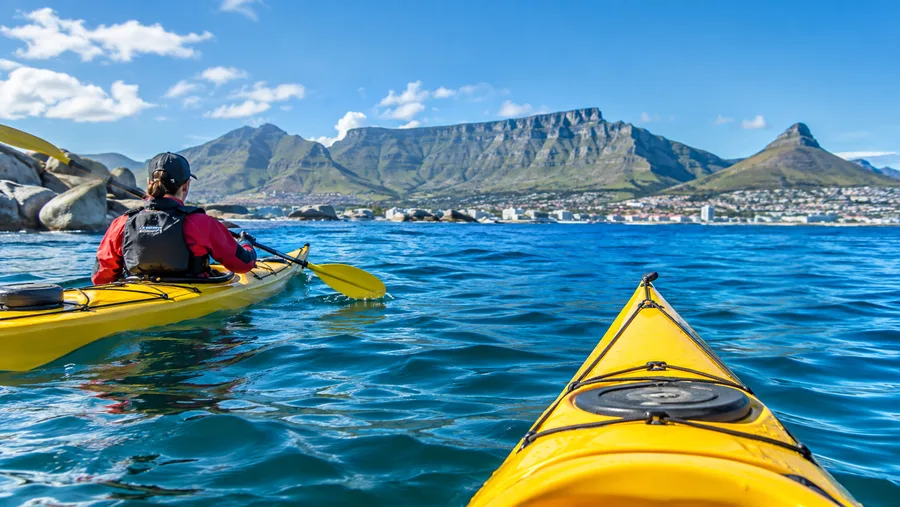
Wildlife Seasons: Whales, Penguins, and Dolphins
Timing your paddle depends heavily on what you hope to see floating beside you. Southern right whales travel up from Antarctica to mate and calve in the sheltered bays of the Western Cape between June and November. Peak calving happens in August and September. If encountering these gentle giants is top priority, winter and early spring represent the best time to go kayaking on the South African coast.
While towns farther east see massive whale concentrations - prompting travelers to book hermanus sea kayaking outings - Cape Town has its fair share of sightings along both coastlines. Paddlers launching from Simon's Town or Hout Bay regularly spot mothers with calves resting near the kelp forests. For dedicated cetacean watchers, reading up on whale encounters while kayaking in cape town will give you a clear sense of what local laws require regarding minimum approach distances.
Cape fur seals stay put year-round. You will find them sunning on rocky outcrops in Hout Bay, lounging on marina docks at the V&A Waterfront, and tumbling through waves off Granger Bay no matter what month you paddle. African penguins are also permanent residents around Boulders Beach, though their plumage looks scruffy during their annual molt between November and January. Pods of dusky and Heaviside's dolphins hunt along the Atlantic coast throughout the year, appearing most frequently on calm mornings when baitfish school near the surface.
Note: South African maritime regulations strictly forbid paddling directly toward whales. You must maintain a 300-meter buffer zone, though curious animals will frequently approach a stationary, drifting kayak on their own terms.
Book your kayaking cape town experience:
Regional Route Differences: Atlantic vs False Bay
The Cape Peninsula is split down the middle by a spine of sandstone mountains, giving paddlers two completely different ocean environments within a 45-minute drive. Where you should launch depends largely on which season you land in town.
The Atlantic Seaboard, stretching from the V&A Waterfront down past Sea Point to Camps Bay, showcases Table Mountain and Lion's Head rising straight from the surf. Summer southeasterly winds blow offshore here, which flattens the coastal water near the rocks but can push an inexperienced paddler out into open shipping lanes if they drift too far. Checking whether kayaking in cape town is safe under current weather forecasts is essential before putting in along the Atlantic side, especially for self-guided trips.
False Bay offers a completely different vibe. Sheltered within the bay, Simon's Town provides calmer water, fewer heavy ocean groundswells, and warmer seas. Water temperatures here can reach 20 degrees Celsius in mid-summer, compared to the shocking 10 to 12 degrees typical of the Atlantic Seaboard. If you prefer relaxed paddles, gentle wildlife viewing, and a lower likelihood of getting tossed by breaking waves, False Bay works well across all four seasons.
Hout Bay sits on the Atlantic side inside a dramatic mountain amphitheater. It stays somewhat protected from open ocean swell by the Sentinel peak, making it the primary hub for visiting Duiker Island seal colonies. Even in winter, outfitters launch here on clear days when outer reefs take the brunt of incoming southern swells.
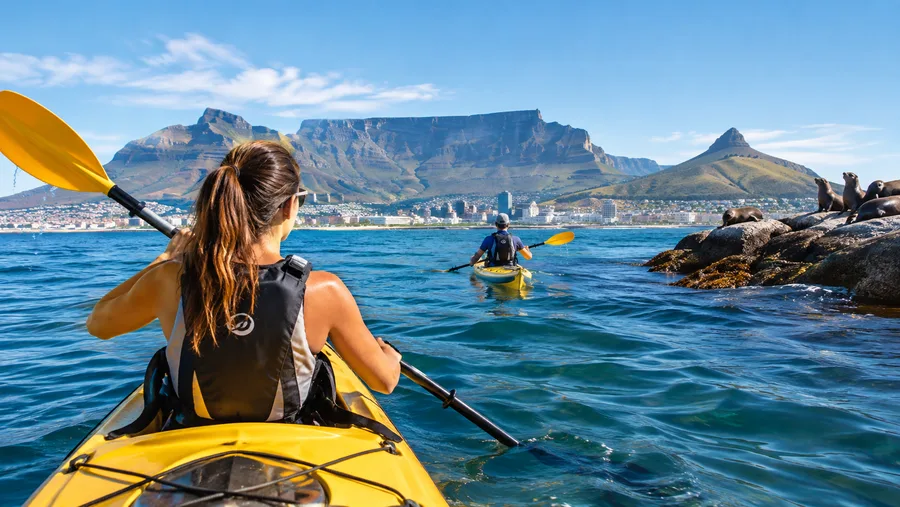
What to Wear and Pack Across Different Months
Because ocean temperatures around the peninsula are cold even on 35-degree summer days, dressing appropriately makes or breaks your trip. Many visitors arrive in lightweight board shorts expecting tropical conditions, only to freeze when ocean spray hits them. Atlantic water comes straight from the Benguela Current, pulling upwelling cold water from deep trenches offshore.
Most outfitters supply life jackets and windbreakers, but choosing your base layers depends entirely on the calendar:
- Summer clothing (December to March): Quick-drying rash vests, board shorts, polarized sunglasses with a retention strap, and heavy zinc sunscreen. The African sun reflects intensely off the water surface.
- Autumn clothing (April to May): Neoprene leggings or paddle pants, long-sleeve thermal tops, and a light splash jacket. Bring dry fleece clothes left in the car for after the paddle.
- Winter and spring clothing (June to October): A 2mm or 3mm neoprene wetsuit, neoprene booties to protect feet from cold launch water, and a wind-resistant paddling cagoule. Cold fingers stiffen fast if wind picks up.
- Year-round essentials: A reliable dry bag for your phone or keys, plenty of drinking water, and footwear that can handle slippery slipway algae or rough granite boulders.
People often ask odd practical questions before committing to an ocean trip, like can you go kayaking on your period, or whether sea sickness hits hard on sit-on-top boats. The short answer to both is that normal biological needs should never keep you off the water with modern gear, though taking a motion sickness tablet 40 minutes before launch is smart if you get queasy in rolling swells.
I think people often overcomplicate their travel plans by hunting for a single perfect week. Honestly, Cape Town rewards flexibility more than rigid schedules. You might land in mid-July expecting miserable rain and catch three days of 22-degree sunshine over an ocean flat as an ironing board. Or you could visit in January and lose two days of paddling because a howling gale strips the foam off waves outside Table Bay harbor. Leaving two or three open mornings in your itinerary is the easiest way to guarantee a brilliant session.
Frequently Asked Questions about best time of year for kayaking in cape town
What is the overall best month for kayaking in Cape Town?
March is widely regarded as the best single month. Summer winds die down, daylight hours remain long, ocean water is at its seasonal warmest, and mornings feature consistently flat ocean conditions across both coastlines.
Can you kayak in Cape Town during winter?
Yes, winter kayaking runs regularly between May and August. While passing storms bring heavy rain and swell, the days between fronts often offer zero wind, crisp sunny skies, and peak southern right whale sightings.
Is morning or afternoon better for sea kayaking?
Morning is significantly better. Launching between 6:30 AM and 8:30 AM minimizes the risk of running into heavy afternoon southeasterly gales, which build rapidly after midday throughout the spring and summer months.
Quick Reference
- Peak calm weather: February to April
- Whale migration window: June to November
- Best daily launch window: 6:30 AM to 8:30 AM
- Warmer ocean water: False Bay (December to March)
- Typical tour prices: R450 to R650 per person
Book your kayaking cape town experience:
The Bottom Line
If you want easy paddling, warm sun, and swimming weather, book your Cape Town ocean trip between February and April. If your heart is set on spotting forty-ton whales breaching beside sea cliffs, pack a thick wetsuit and aim for August or September. Keep your itinerary loose, watch the wind flags along the coast, and book morning slots to make the most of this wild stretch of southern African sea.
Read more about kayaking cape town.