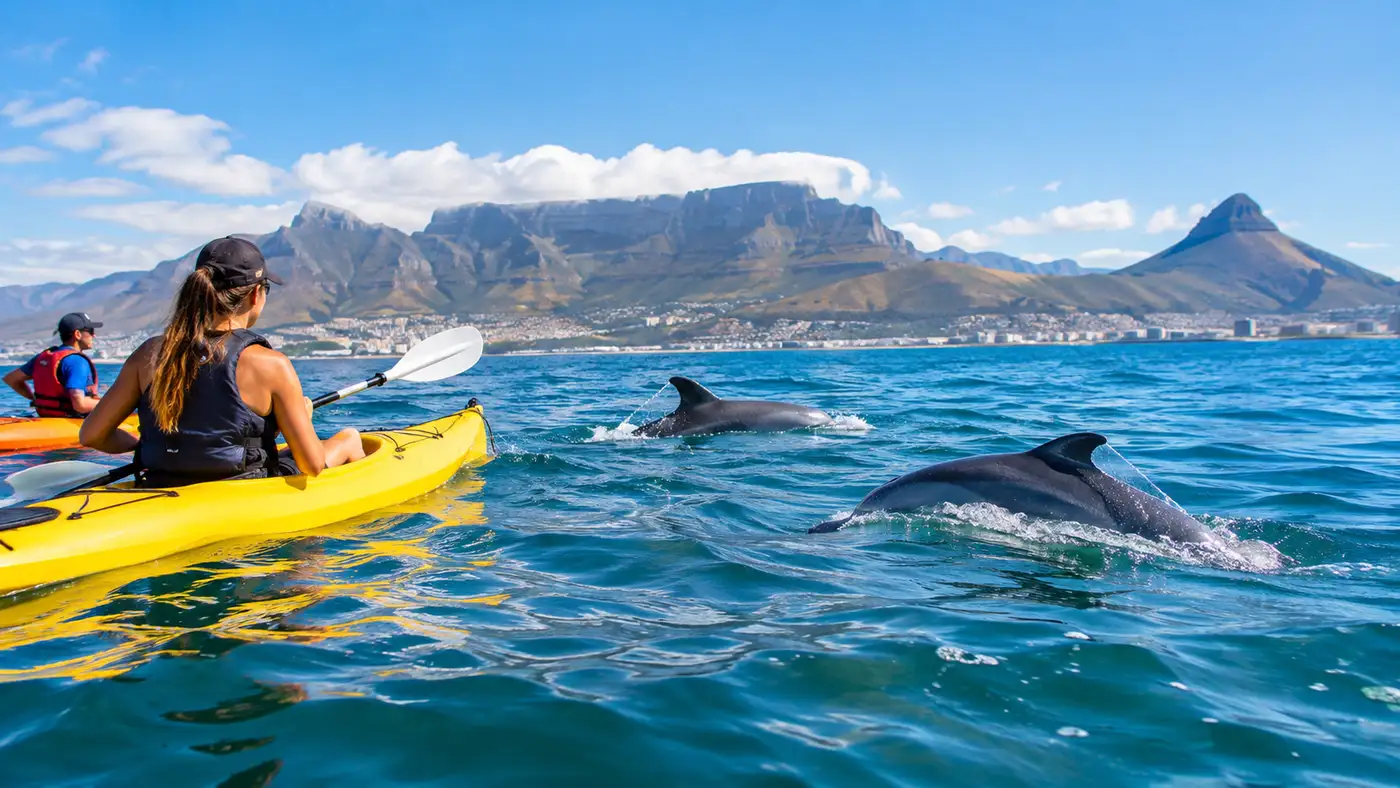
Kayaking with Dolphins in Cape Town How Often It Happens
Every commercial tour operator on the Atlantic Seaboard advertises the dream. You see the pictures on Instagram: a slick yellow kayak bobbing gently on flat green water while a dusky dolphin leaps cleanly through the air against the backdrop of Lion's Head. When you book a trip for kayaking with dolphins cape town, you naturally want to know if that photograph reflects everyday life or pure marketing luck. The honest answer sits somewhere between those two poles, leaning heavily on weather patterns, ocean currents, and plain chance.
I have paddled out of Three Anchor Bay and Mouille Point dozens of times over the years. Some mornings you drop into the water and find a pod of 40 dolphins cruising past within fifteen minutes. Other weeks you paddle until your shoulders burn, spotting nothing more dramatic than a grumpy Cape fur seal and a raft of kelp gulls. If you are asking whether it happens, yes, absolutely. Are there dolphins in cape town waters year-round? Yes. But understanding how often you will encounter them from a plastic sit-on-top kayak requires stripping away the brochure gloss and looking at raw animal behavior.
Book your kayaking cape town experience:
The Realistic Odds of Seeing Dolphins on a Paddle
If you head out on the water along Sea Point or Granger Bay, your baseline chance of seeing dolphins sits right around 25% to 35% across the entire year. That means roughly one out of every three or four outings yields a sighting. During peak summer runs, those numbers creep up toward 50% or 60% if the water stays calm for three or four consecutive days. Tour outfits love to highlight strings of good fortune where every group hits the jackpot for a week straight. Then an icy southeasterly gale clears the bay, moves the baitfish offshore, and nobody spots a dorsal fin for ten days.
Nature does not follow a timetable. You might ask a guide at the slipway, "are you sure we will see them today?" Any guide who answers with an unqualified yes is lying to you. Marine mammals roam hunting territories stretching across hundreds of square kilometers between False Bay, Hout Bay, and Table Bay. Even on days when animals are around, they might be hunting three nautical miles out, well past the safe operational boundary for commercial paddlecraft.
Still, when dolphin kayaking cape town trips do collide with an active pod, the experience is unreal. Kayaks produce almost zero engine vibration, so dolphins do not treat you like an intrusive speedboat. They glide under your hull, pop up three feet away to exhale through their blowholes, and surf the swells right beside your bow. What to expect from a kayaking experience in Cape Town always depends on the day, but when dolphins choose to engage, it tends to be intimate and quiet.
Pro tip: Book your excursion for your first morning in the city, not your last. If wind cancels the trip or you get skunked and want to try again, you will still have open mornings left on your calendar.
Types of Dolphins in Cape Town Waters
Most travelers imagine just one generic gray mammal, but the coastal waters around the peninsula harbor several distinct species. The ones you meet depend heavily on which side of the mountain you launch from.
Dusky dolphins dominate the Atlantic seaboard between Granger Bay and Camps Bay. They are small, extremely acrobatic creatures that travel in pods ranging from 20 to over 200 animals. They love bow-riding, backflipping, and chasing schools of anchovies close to the kelp line. When people talk about wild, high-energy dolphin encounters off Sea Point, duskies are almost always the stars. Watching them burst out of the water in synchronized pairs five yards from your paddle blade will make your heart skip a beat.
Common dolphins also sweep through in massive offshore superpods, sometimes numbering in the thousands. They occasionally swing into Table Bay during feeding frenzies, creating a chaotic churn of white water, diving gannets, and flashing bellies. Heaviside's dolphins, by contrast, are tiny, shy, and endemic to the cold Benguela current running up the west coast. You rarely see them jumping wildly; they tend to surface quietly with a blunt, rounded dorsal fin and stay close to surf breaks.
Over on the False Bay side, around Simon's Town, you are much more likely to encounter Indo-Pacific bottlenose dolphins. These are the larger, heavier dolphins most people recognize from films. They patrol close to the rocky shoreline, surfing the waves behind Boulders Beach and winding through the granite boulders in pods of 15 to 30.
| Dolphin Species | Typical Pod Size | Primary Cape Town Locations | Common Behaviors Near Kayaks |
|---|---|---|---|
| Dusky Dolphin | 20 - 150+ | Sea Point, Three Anchor Bay, Mouille Point | Aerial flips, bow-riding swells, swimming under hulls |
| Bottlenose Dolphin | 10 - 35 | Simon's Town, Muizenberg, Fish Hoek | Slow cruising, inshore patrolling, surf-riding |
| Heaviside's Dolphin | 2 - 10 | Table Bay, Bloubergstrand, Melkbosstrand | Shy surfacing, brief bow inspections, staying near kelp |
| Common Dolphin | 100 - 1,000+ | Deep water off Cape Point, seasonal Table Bay | Fast baitball herding, porpoising at high speed |
Knowing what species you might encounter helps set sensible expectations. You will not see duskies lounging in calm shallow lagoons, and you will rarely spot bottlenose pods tumbling through heavy Atlantic surf off Mouille Point.
What Time Do Dolphins Come Out and When Should You Go?
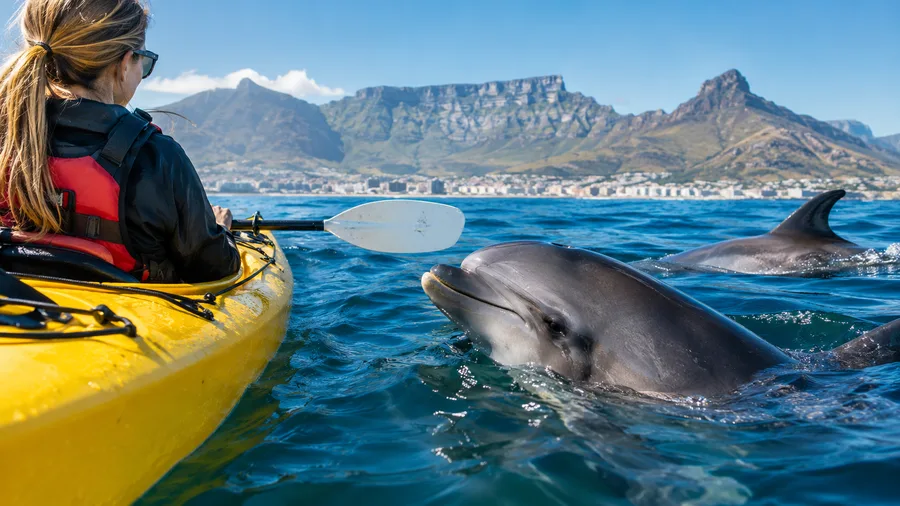
People often ask me: what time do dolphins come out? The short answer is they are always out, living in the ocean around the clock. The real question is when they feed near the surface close to shore, and when ocean conditions let kayakers get out to reach them.
Early morning beats every other window of the day. Between 06:30 and 09:00, the sea along the Atlantic Seaboard is usually glass-flat. The brutal summer wind, known locally as the Cape Doctor, rarely begins its howling southeasterly assault before late morning. In glassy water, spotting a fin cutting through the swell from 300 meters away is simple. By 11:30, whitecaps froth across the surface, turning every breaking wave into a fake dolphin fin and making paddling an exhausting workout.
Note: Winter paddles in June through August often yield cleaner water and calmer mornings than summer, despite colder air temperatures. Do not write off winter if you want to kayak with dolphins.
What if I go now, on a windy afternoon? Honestly, your chances collapse. Operators will cancel the session anyway if wind speeds top 15 knots, primarily for safety reasons. Even if they run the trip, choppy surface water drives baitfish deeper, and dolphins follow their food downward. When the sea churns, pods travel faster and spend less time lingering near the surface to play.
If you want to maximize your odds, pay attention to these environmental indicators:
- Water surface: dead calm, glassy conditions reveal surfacing pods from half a kilometer away.
- Baitfish presence: swirling shoals of anchovy or pilchard near the kelp beds invariably draw hunting pods within an hour.
- Bird activity: gannets plunging straight down into the sea like white missiles almost always mean dolphins are herding fish underneath.
- Tide movement: incoming tides push nutrient-rich water closer to the shoreline rocks, often pulling dolphins along with the flow.
Book your kayaking cape town experience:
Safety, pod behavior, and kayak etiquette
Is there any accident risk when paddling near these large marine mammals? It is a natural worry. You sit in a fragile plastic shell, while a wild 120-kilo creature moves through the water at 25 kilometers per hour with immense power. Fortunately, wild dolphin attacks on kayakers in Cape Town are basically unheard of. There is no recorded history of aggression from local pods toward human paddlers.
Accidents do happen, but they almost always stem from poor seamanship rather than angry animals. A sudden broach in shorebreak surf or a clumsy collision between two panicked novice paddlers accounts for 99% of flipped boats. Dolphins possess echolocation so precise they know exactly where your plastic rudder sits even in pitch-black water. They dodge kayaks effortlessly. The real hazard is a human getting overly excited, dropping a paddle, leaning out of the seat to take a phone photo, and rolling themselves into 12-degree Atlantic water.
If you encounter a pod, local regulations and common sense dictate strict behavior guidelines:
- Never chase the animals: paddling frantically behind a moving pod stresses them and ensures they dive deep to vanish.
- Stop your stroke: rest your paddle horizontally across your cockpit lap when animals approach within twenty feet.
- Maintain your line: let the dolphins dictate the geometry of the encounter; they will circle you if they are curious.
- Keep your hands out of the water: do not try to pet, slap, or splash them, no matter how close their dorsal fins glide past.
Tour operations like Atlantic Outlook or Cape Kayak Adventures drill these rules into guests before departure. Respecting wild boundaries keeps the animals willing to approach our little fleets day after day.
Where to See Dolphins in Cape Town from the Water
Choosing where to see dolphins in cape town depends on your schedule and willingness to drive. Different stretches of coast deliver completely distinct marine backdrops, water temperatures, and animal communities.
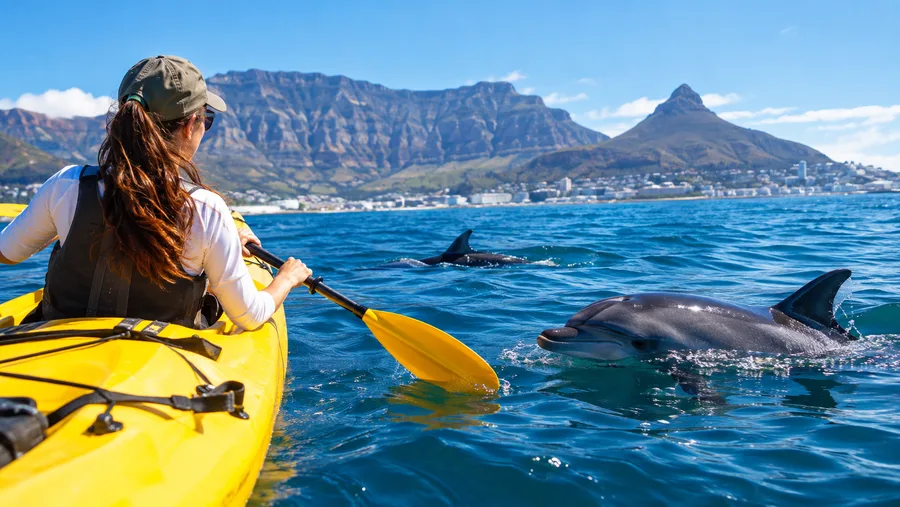
Three Anchor Bay remains the undisputed capital for cape town kayaking with dolphins. The sheltered beach slipway lets operators launch beginners safely even when swell rolls through the outer bay. From there, you paddle west past the Green Point Lighthouse or east toward the V&A Waterfront shipping basin. This specific corridor acts as a natural highway for dusky dolphins hunting squid and small fish along the deep kelp shelf. Many paddlers use a Sea Point Mouille Point kayaking guide to understand the landmarks along this jagged coastline before setting out.
Hout Bay offers a dramatic alternative surrounded by sheer granite peaks. You launch from the working harbor beach and track along the cliffs toward Duiker Island. While seals and sunfish dominate this bay, resident pods of Heaviside's dolphins frequent the surf line near Chapmans Peak. The water is freezing, yet the mountain scenery is staggering.
Over on the Indian Ocean side, Simon's Town offers warm water and mild conditions. Paddling out toward Boulders Beach often brings encounters with bottlenose dolphins cruising through the shallows. The water here is noticeably calmer than the Atlantic side, making it ideal for families with younger kids or anyone terrified of ocean swells. The mix of African penguins on the rocks and dolphins in the channel makes False Bay exceptionally rich for wildlife spotters.
People visiting from overseas often ask guides basic questions in their own tongues, murmuring "а дельфины?" or "いるかは?" while pointing toward the horizon. The guides grin, point their paddles toward a flock of diving birds, and tell everyone to start pulling. Sometimes you chase the birds and find nothing. Sometimes you find thirty dolphins surfing a two-meter swell right beside your elbow, clicking and whistling through the water hull.
Frequently Asked Questions about kayaking with dolphins cape town
What are my honest chances of seeing dolphins on a single kayak tour?
Your chances sit between 30% and 50% on any single morning tour under decent weather conditions. Summer months offer slightly better sighting frequencies along the Atlantic Seaboard, but marine wildlife encounters are never guaranteed by reputable operators.
Can I swim with the dolphins if they come up to my kayak?
No. South African maritime and environmental laws strictly prohibit jumping into the water to swim with dolphins or whales. You must stay seated inside your kayak at all times during guided commercial tours.
Do dolphin encounters get canceled often due to bad weather?
Yes, weather cancellations happen regularly in Cape Town. High winds over 15 knots and massive ocean swells make paddling unsafe, so operators will postpone or refund your booking if conditions deteriorate.
Are the waters safe from sharks while kayaking with dolphins?
Kayaking along the Atlantic Seaboard carries an exceptionally low risk of shark encounters. Commercial tours operate daily without incident, and the sit-on-top kayaks used by operators are stable, buoyant, and led by trained ocean guides.
Quick Reference
- Sightings occur on roughly 1 in 3 outings year-round
- Atlantic side is best for dusky dolphins; False Bay for bottlenose
- 06:30 to 08:30 morning launches yield the calmest water
- Touching or swimming with dolphins is illegal under local regulations
Book your kayaking cape town experience:
The Bottom Line
Nobody can promise you wild dolphins on demand. If a company promises a 100% money-back wildlife sighting guarantee, read the fine print carefully, because ocean biology does not work like a theme park exhibit. You might paddle through glassy green water and see nothing but kelp heads bobbing in the tide. Yet when luck lands on your side, and a pod of wild duskies surfaces twenty feet from your bow, slicing through the Atlantic with Lion's Head towering above, it easily becomes the best two hours you will spend in South Africa. Grab a paddle, dress for cold ocean spray, and take the gamble.
Read more about kayaking cape town.