Hout Bay Kayaking Location Guide Marine Life
The smell of diesel from commercial trawlers mixes with cold salt spray before you even drop your boat into the water. Hout Bay feels like an active working harbor first and a postcard second, which is why I love paddling here. If you are planning an outing with houtbay kayaking on your radar, you should know right away that this corner of the Atlantic does not pretend to be the Mediterranean. It is raw, green-tinted, chilly, and teeming with animals that could not care less about human visitors.
Most tourists only see the bay from the wooden benches of the big ferry boats chugging out toward Duiker Island, or while eating oily fish and chips near the wharf. Launching a kayak from the harbor apron puts your eyes roughly twenty inches above the surface. From that angle, the massive granite face of the Sentinel mountain does not just look steep. It looks like it might tumble straight into the ocean.
Book your kayaking cape town experience:
Launching from the Harbor: What to Expect from Hout Bay Kayaking
Paddlers put in at the public slipway tucked alongside the local NSRI rescue base. It is a busy concrete ramp covered in wet green slick, so walking down it in neoprene boots requires careful steps. On any given morning around 8:00 AM, you will share the space with commercial fishermen hosing down yellowtail crates and local harbor seals lounging directly on the pontoons, waiting for free fish guts. The harbor basin itself is sheltered by a long concrete breakwater that cuts the ocean swell down to almost nothing.
Once you clear the harbor entrance, the water changes instantly. The green water turns dark sapphire, the rolling swells lift the nose of your boat, and you feel the open Atlantic breeze hit your neck. Most mornings start with calm conditions, but the wind can build quickly once the sun climbs over the back of Chapman's Peak. If you want a smooth outing, booking the earliest morning slot is essential.
Pro tip: Park your car on the lower concrete lot near the slipway rather than up along the main wharf road, and give the local parking attendant a 10 or 20 rand tip on arrival to keep an eye on your vehicle.
Guided outings typically run for about two hours, with roughly 85 to 90 minutes spent actively moving on the ocean. The pace is slow because people constantly stop to take photos, watch animals, or rest their shoulders against the chop. You do not need to be an athlete, but you should expect your arms and upper back to do real work against the tide.
- Launch location: the sheltered public slipway beside the NSRI Station 8 boathouse.
- Water temperature: cold Atlantic currents keep it between 11 and 15 degrees Celsius year-round.
- Paddling distance: roughly 4 to 6 kilometers total, depending on wind and swell.
- Typical time on water: about 90 minutes of steady exploration.
The Wildlife: Seals, Sunfish, and Coastal Birds
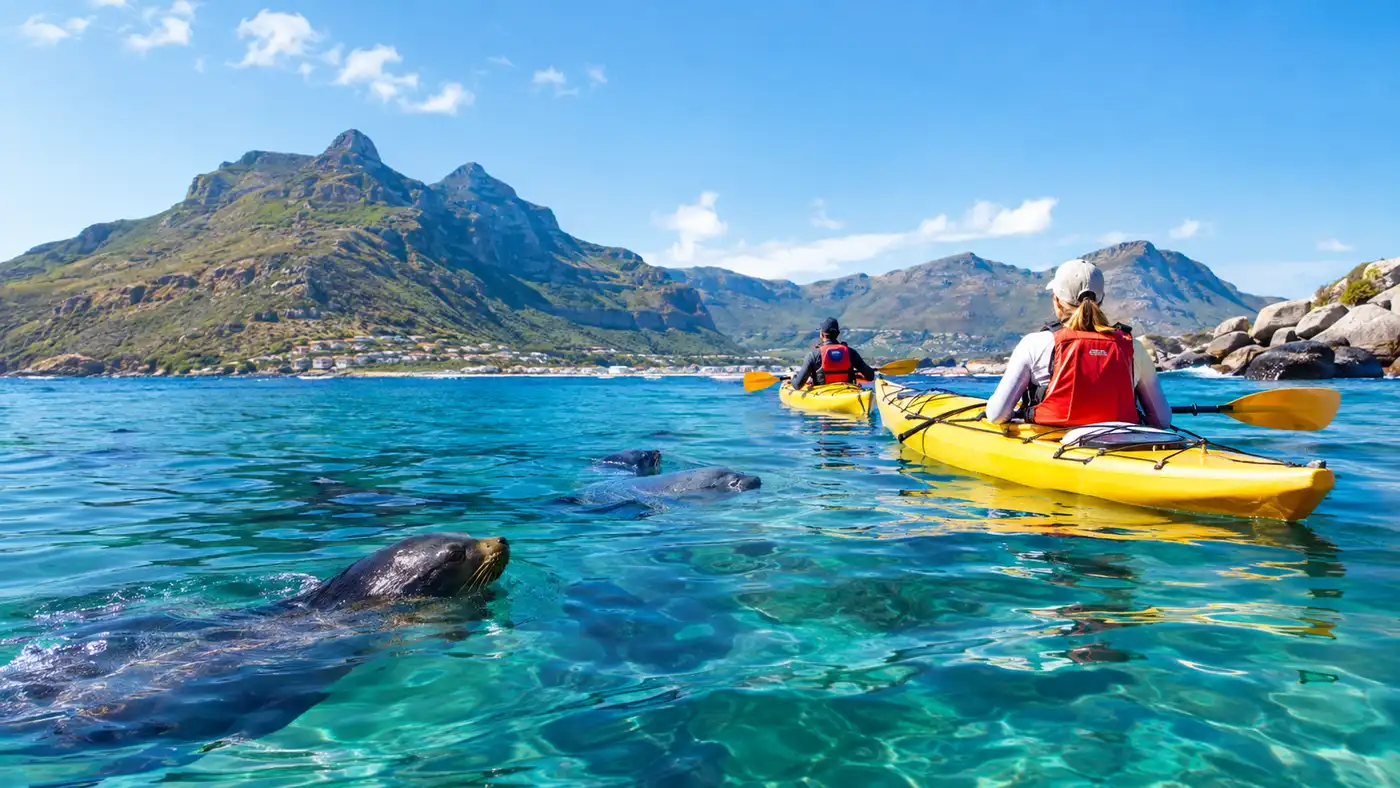
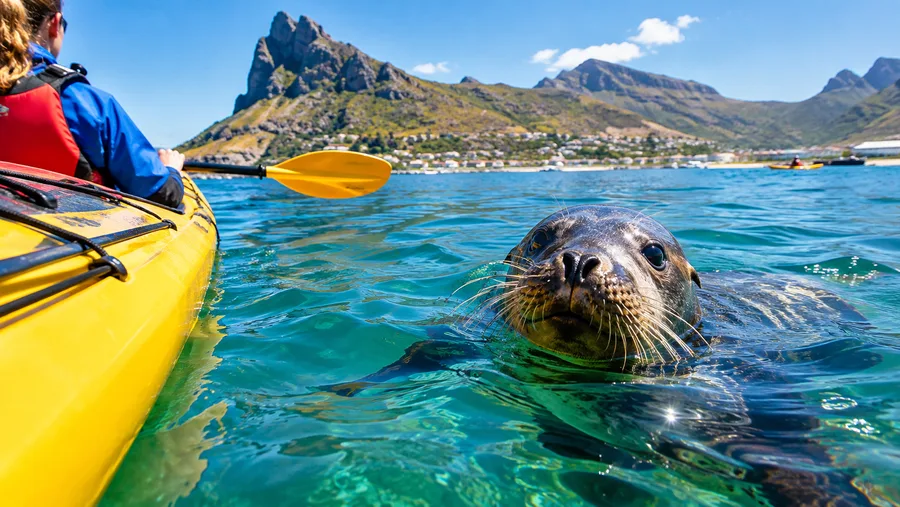
Cape fur seals dominate this bay. There are thousands of them living on the rocky outcrops near the base of the cliffs and across at Duiker Island. While the large tour boats dump exhaust fumes and stay twenty meters off the rocks, a silent kayak allows you to drift right along the edge of the kelp beds. Seals will swim directly beneath your hull, belly-up, staring through the green water with big brown eyes before bursting into the air a few feet away.
They are playful, sometimes startlingly so. I have had young pups nip at paddle blades or slap the surface with their flippers just to see how the boat responds. If you are quiet and stop paddling, three or four of them will often gather around your kayak to sun their flippers. Unlike the calmer waters of False Bay, which you can read about in our guide to kayaking in Simon's Town, Hout Bay gives you an encounter that feels unpredictable and wild.
Note: Never reach out to pet a seal, no matter how close it floats to your boat; they are wild predators with strong jaws and carry nasty mouth bacteria that cause severe infections.
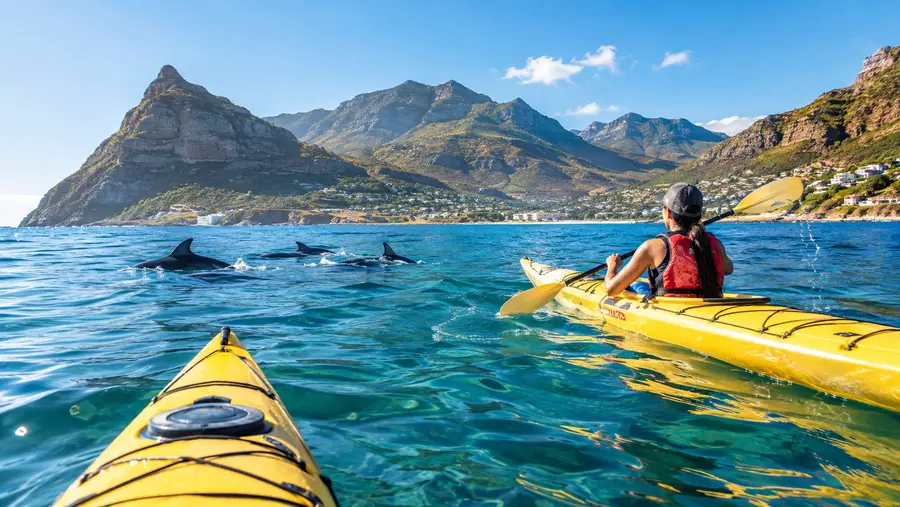
Beyond the seal colonies, the bay hides weirder ocean wanderers. From late spring through autumn, ocean sunfish - Mola mola - frequently drift near the surface to warm their huge, flat bodies in the sunlight. They look like prehistoric floating disks, often taller than your kayak is wide. Southern right whales sometimes slip into the bay between July and November to rest in the shelter of the cliffs, while pods of endemic Heaviside's dolphins occasionally zip through the harbor mouth in small, quick groups.
Cormorants, kelp gulls, and black oystercatchers line the granite rocks along the base of the cliffs. You will hear the harsh screeching of the birds long before you paddle near them, their guano painting the dark cliffs white above the pounding tide lines.
Routing and Conditions: Kayaking Hout Bay Waters Safely
The route your guide takes depends entirely on what the ocean is doing that morning. If there is a light southerly wind and low swell, groups head west along the base of the Sentinel towards the seal colonies near the open ocean. This is the classic route that gives you towering cliff faces on your right side and wide open ocean to your left. The drop-offs beneath the kayak are deep, with thick fronds of sea bamboo swaying in the clear current below.
When the swell from the south gets heavy, the cliffs of the Sentinel turn into an amphitheater of crashing white foam that makes paddling close to the rocks unsafe. On those days, groups usually cut across the bay toward the eastern shore, ducking under the cliffs below Chapman's Peak Drive. This side offers shallower water, bright sandy patches beneath the boat, and shelter from the worst of the ocean groundswell. It is a completely different paddle, quieter and less dramatic, but lovely in its own right.
To understand how shifting winds and big swells shape these choices, it helps to read about sea kayaking in Cape Town Atlantic ocean conditions before heading out. The water here demands respect because things turn quickly.
| Route Option | Distance | Primary Scenery | Best Wind Direction |
|---|---|---|---|
| Sentinel & Seal Colony | 5.5 km | Sheer cliffs, deep water, massive seal groups | Light North / North-East |
| Chapman's Peak Coast | 4.2 km | Sandy coves, road cliffs, quiet kelp forests | South-West / Light South |
| Harbor & Bay Crossing | 3.5 km | Fishing fleet, breakwater, mountain skyline | Moderate South-East |
Book your kayaking cape town experience:
Choosing Kayak Tours Hout Bay Operators and Gear
You cannot simply roll up with a rented kayak and launch on your own unless you have proper open-ocean sea kayaking experience and safety gear. The Atlantic swell here is deceptive. Tour operators provide stable, rotomolded plastic sit-on-top double kayaks. Purists might look down on plastic sit-on-tops, but out here they make sense. They do not swamp with water, they are almost impossible to flip in normal conditions, and two people paddling together can easily push through choppy headwind.
Singles are usually reserved for guides or paddlers with documented ocean experience. When booking a trip with kayak tours Hout Bay outfits, check what gear is included. Most provide a standard life jacket, paddle, and sometimes a windbreaker top if the morning is bitter. Wet suits are rarely supplied because paddling in thick neoprene rubs your underarms raw within twenty minutes.
A few local outfits offer morning slots starting around R450 to R550 per person, which is roughly 25 to 30 US dollars. That is remarkably cheap compared to wildlife paddles in North America or Europe. The guides are almost always local paddlers who grew up on these waters, know the individual seal colonies, and understand every current pulling around the harbor mouth.
- PFD (Life jacket): supplied by the outfitter and compulsory from the slipway onwards.
- Splash jacket: essential to keep wind off your damp torso during the paddle back.
- Waterproof phone pouch: bring your own with a neck lanyard; guides do not carry your phone.
- Footwear: cheap neoprene surf booties or water sandals that can survive harbor slipway slime.
- Hydration: a 500ml water bottle strapped under the deck bungees is plenty for ninety minutes.
Seasonal Shifts: When Hout Bay Kayak Adventures Are at Their Peak
Summer runs from December through March and brings long sunny days, warm air, and the infamous Cape Doctor. That southeasterly wind can howl down the mountain slopes at thirty knots by midday. If you kayak hout bay during these months, the 7:30 AM or 8:30 AM launches are non-negotiable. By 11:30 AM, whitecaps often cover the harbor mouth, and tours get canceled for safety.
Autumn, roughly April and May, is honestly my favorite time of year for a hout bay kayak outing. The fierce summer wind dies down, the air feels crisp, and the ocean often sits flat like oily glass. The water is actually slightly clearer during autumn, giving you pristine views down through the kelp forests where starfish, sea urchins, and small sharks rest on the rocky bottom.
Winter brings rain and heavy groundswells from the roaring forties. Launching can be hit or miss for weeks at a time, but if you catch a calm window between cold fronts in July or August, the bay is quiet, empty of leisure boats, and Southern right whales may be resting right inside the bay mouth. Just make sure to dress warmly; ocean spray combined with 12-degree water can numb your fingers before you make it past the harbor jetty.
Frequently Asked Questions about houtbay kayaking
Is kayaking in Hout Bay safe for complete beginners?
Yes, guided trips use wide, stable sit-on-top double kayaks that are very hard to overturn. You do not need previous paddling experience, though you should feel comfortable being on deep ocean water with gentle swells lifting the boat.
Do great white sharks come near the kayaks in Hout Bay?
While white sharks live in Cape waters, sightings inside Hout Bay are very rare. The resident seal colony attracts marine life, but commercial and guided kayaking groups have operated here for decades without shark incidents. Guides monitor ocean conditions continuously.
What should I wear for a kayak tour in Hout Bay?
Wear quick-drying board shorts or athletic leggings, a lightweight thermal top, and a windbreaker. You will get wet from paddle drip and ocean chop. Avoid heavy cotton or jeans, wear sunblock, and bring water shoes or sandals for the launch ramp.
Will I definitely see seals during the paddle?
Yes. The seal population in Hout Bay is resident year-round. You will almost certainly see them swimming around the harbor slipway before you even paddle past the breakwater, and hundreds more wait along the cliff routes.
Quick Reference
- Launch point: Hout Bay Harbor public slipway
- Typical cost: R450 to R550 ($25-$30 USD) per person
- Paddle time: 85 to 95 minutes on open water
- Best launch window: 07:30 to 09:00 AM
- Core wildlife: Cape fur seals, sunfish, cormorants, dolphins
Book your kayaking cape town experience:
The Bottom Line
Hout Bay does not offer a quiet, mirror-flat lake paddle, and it certainly will not give you warm tropical water. What you get instead is an authentic coastal Atlantic experience with sheer granite mountains rearing out of the sea, smelling of kelp and fish scales, with wild seals splashing inches from your paddle blade. If you want a morning adventure that clears your head and makes your shoulders ache in the best possible way, put your phone in a dry bag, drive down to the harbor before breakfast, and paddle out past the breakwater wall.
Read more about kayaking cape town.