Is Kayaking in Cape Town Safe Weather Currents Skills
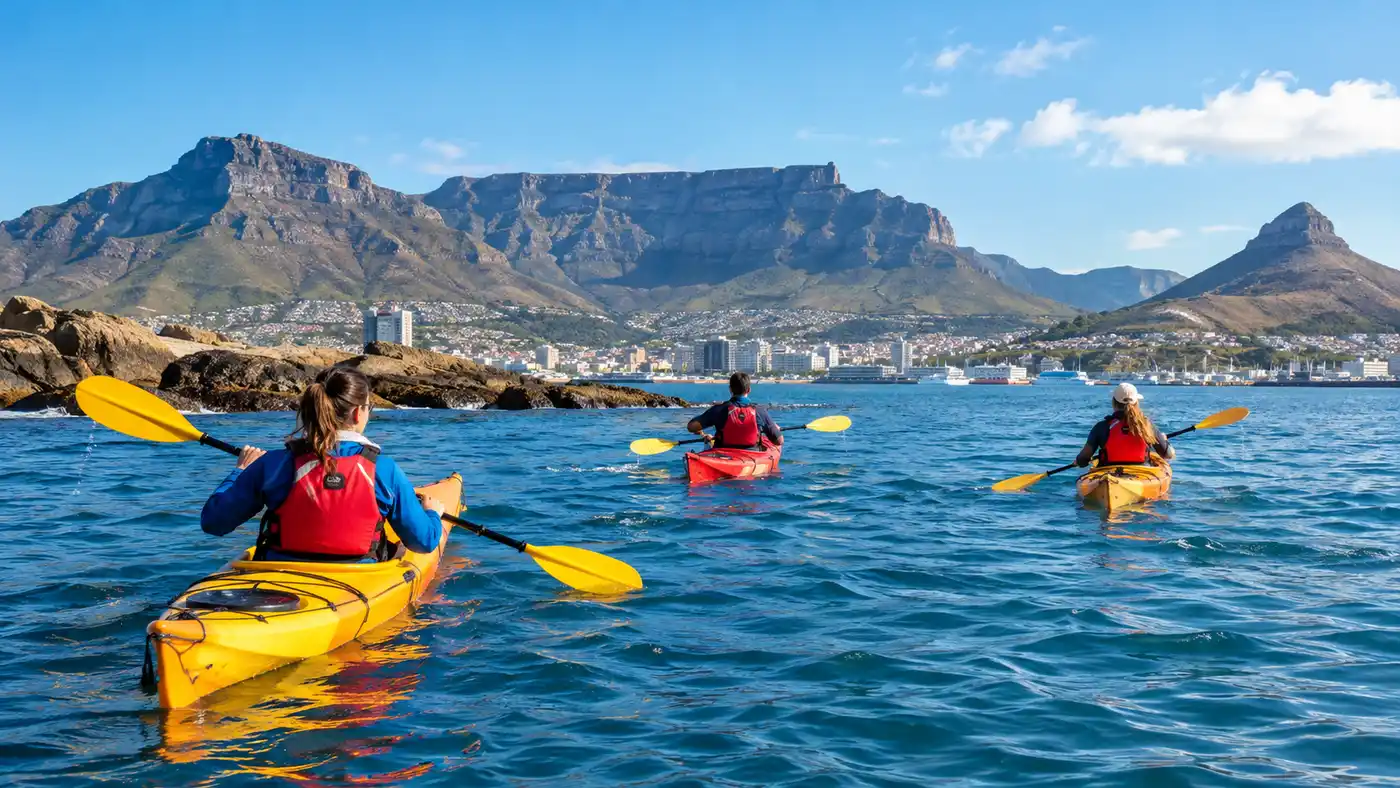
People see postcard photos of Three Anchor Bay with dolphins curving through glassy water and immediately ask: is kayaking in cape town safe? The short answer is yes, but with a massive asterisk attached to it. The Atlantic here is serious water. It is not a gentle resort lagoon where you drift around with a cocktail and paddle back whenever you get bored.
I learned this lesson five years ago watching a paddler get pulled past the Green Point lighthouse by an unexpected offshore gust. He had to be plucked out by a local fishing crew. If you treat the shoreline with respect, monitor the forecasts, and paddle within your limits, it is an unbelievable experience. If you get arrogant, this coast will humble you inside twenty minutes. Here is what you actually need to know about the weather, swells, currents, and skill requirements before pushing off the slipway.
Book your kayaking cape town experience:
Is kayaking in Cape Town safe when the wind picks up?
Wind rules every single decision on this peninsula. You can wake up at 06:00 to dead stillness, walk down to the water, and see water like oiled silk. By 10:30, the Cape Doctor - our notorious southeasterly wind - can scream off Table Mountain at 35 knots, ripping spray off the chop and turning the bay into white foam. When people ask "is it safe?", my immediate question back is always: what does the wind graph look like for midday?
Offshore winds are the real killer here. On the Atlantic Seaboard, around Sea Point and Mouille Point, a strong southeaster blows directly off the land toward open ocean. From the beach, the water right against the rocks might look flat because the cliffs block the breeze. You push out 150 meters, clear the wind shadow, and suddenly you are fighting a wall of moving air that wants to push you toward South America. Paddling against a 20-knot headwind in a plastic sit-on-top kayak is exhausting, and for an unfit paddler, it is practically impossible.
Summer brings the strongest winds. November through February sees relentless southeasters that can last for four or five days straight. Winter brings northwest fronts that bring rain and massive groundswells, though the days between storms often feature glassy, windless mornings that offer spectacular paddling. You have to read the local hourly forecasts, not just generic weather apps that give a single daily summary.
Pro tip: Download the Windfinder or Windy app and look at the gusts, not just the base wind speed. If gusts exceed 14 knots on an offshore forecast, stay off the ocean entirely.
When assessing morning conditions, watch for these obvious signs that mean you should leave the boat on the car:
- Tablecloth cloud formation: A thick white cloud pouring over Table Mountain indicates high-pressure southeasterly winds are accelerating down into the bays.
- Whitecaps past the kelp line: If you see white horses breaking more than 200 meters out, the wind speed is already above 12 knots.
- Rapidly dropping barometric pressure: Sudden pressure drops often precede violent squalls coming off the Atlantic.
- Shifting surface ripples: Dark patches of cat's-paw ripples moving fast across the surface mean gusts are hitting the water from above.
Ocean swells, rip currents, and the Atlantic chill
Even on windless days, the swell has its own agenda. Cape Town sits directly in the path of long-period swells generated thousands of miles away in the Roaring Forties. A two-meter swell might not sound terrifying on paper, but when that energy hits a shallow kelp reef or a rocky point, it jacks up into heavy shorebreak. Understanding sea kayaking in Cape Town's Atlantic ocean conditions means realizing that swell height and swell period are two very different beasts.
A ten-second period swell is choppy and manageable. An eighteen-second period swell carries tremendous underwater energy that creates sudden, unpredictable surge against the cliffs. Getting too close to rocky outcrops to inspect cormorants or seals can end with your kayak flipped onto granite boulders by a backwash wave you never saw coming. Keep at least 40 meters of clear water between your hull and any breaking water or exposed rock shelf.
Rip currents exist along sandy beaches like Camps Bay and Muizenberg, but around the rocky launch points, surge channels are the bigger hazard. Water pours over a reef shelf, fills a depression, and rushes back out through narrow gaps between rocks. If you get sucked into one of these guts, do not panic. Point the bow out to sea and paddle through it into deeper water rather than trying to claw your way sideways onto slippery barnacles.
Then there is the cold. Atlantic water around Cape Town usually sits between 9 and 14 degrees Celsius. Falling into 11-degree water without a wetsuit causes an involuntary gasp reflex that can fill your lungs with water before your head breaks the surface. Hypothermia starts chipping away at your muscle control within 25 minutes. Even on a hot 30-degree summer day, dress for the water temperature, not the air temperature.
Note: A standard 3mm farmer-john wetsuit or paddling pants paired with a windproof paddle jacket provides enough thermal protection for a swim without restricting your shoulder rotation.
Is kayaking in Cape Town safe for beginners and solo paddlers?
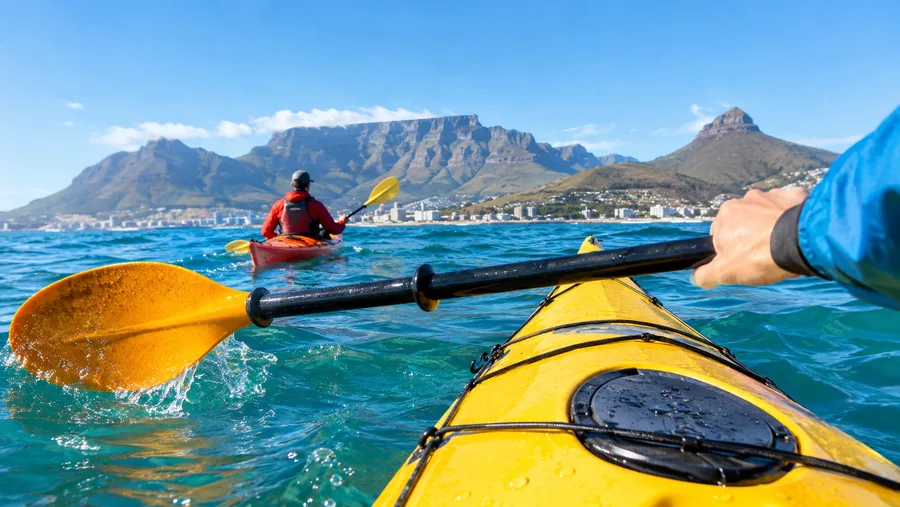
If you join a guided commercial trip, the safety margin increases dramatically. Reliable outfits like Cape Kayak Adventures have been running trips off the Atlantic Seaboard for decades. Guides know the specific wind funnels, carry VHF radios, monitor radar forecasts, and herd groups in stable, sit-on-top double kayaks that are almost impossible to tip over unless you deliberately lean over the gunwale.
Beginners thrive on guided tours because someone else does the risk calculation for them. If conditions turn sour, the guides turn the group back early, no arguments. The tour operators also carry towing lines. If someone tires out after 45 minutes of paddling, a guide clips on and pulls them back to shore.
Paddling solo is a different matter. I often hear people say, "I have my own kayak, so I can just drop in anywhere." That casual attitude causes problems every year. If you capsize alone 400 meters offshore, can you right a swamped boat and climb back in while your fingers are going numb from the chill? Can you summon help if your paddle breaks or drifts away?
If you are venturing out alone, you need solid self-rescue skills. Practice wet entries in calm tidal pools before trying them in open chop. Tell someone on land your exact route and expected return time. The local kayak world is full of capable paddlers who still refuse to paddle the Atlantic coast alone simply because cold water leaves very little room for error if gear fails.
Book your kayaking cape town experience:
Where to launch: assessing conditions across different bays
Cape Town's geography gives you options. The peninsula divides two ocean bodies: the Atlantic Ocean on the west and False Bay on the east. When the Atlantic side is blown out or battered by swell, the eastern side might be calm and glassy. Knowing which bay suits your skill level makes all the difference.
Three Anchor Bay on the Atlantic Seaboard offers an easy launch from a sheltered beach slipway. It is the main hub for commercial dolphin and seal trips. Hout Bay is deeper, surrounded by towering cliffs, and offers access to the seal colony at Duiker Island, but swell entering the bay mouth can create massive rebound waves against the Sentinel cliffs. Over in False Bay, kayaking in Simon's Town provides significantly warmer water, usually between 16 and 20 degrees Celsius, along with far gentler conditions behind the naval harbour wall.
| Launch Location | Swell Exposure | Dominant Wind Hazard | Skill Level Needed | Typical Water Temp |
|---|---|---|---|---|
| Three Anchor Bay | Moderate | Offshore Southeaster | Novice (guided) / Intermediate | 10°C - 13°C |
| Simon's Town Waterfront | Low to Moderate | Sideshore Southeaster | Beginner friendly | 16°C - 20°C |
| Hout Bay Harbour | High at mouth | Gusty valley funnels | Intermediate to Advanced | 11°C - 14°C |
| Mouille Point Slipway | Very High | Direct offshore wind | Advanced only | 9°C - 12°C |
Simon's Town is easily the safest option for novices who want to paddle unguided. The granite boulders of Boulders Beach break the southerly swells, and the water is warm enough that an accidental spill does not trigger immediate thermal shock. Atlantic launches demand far more vigilance.
Essential gear, communication, and emergency protocols
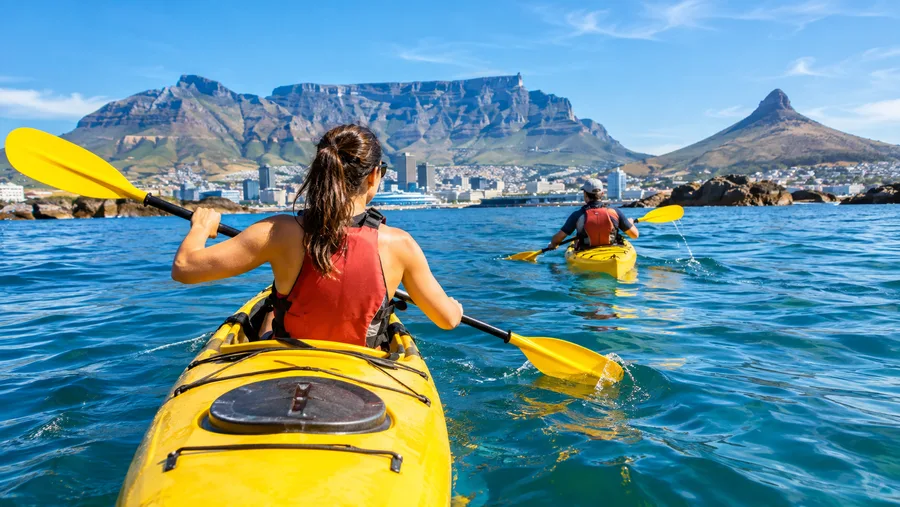
Heading out onto the open ocean with just a paddle and shorts is reckless here. You need dedicated gear to manage the Atlantic's specific challenges. Most guided tours supply what you need, but private paddlers must carry their own safety setup.
Communication is your primary lifeline. Cell service along the Atlantic Seaboard is surprisingly consistent, even a kilometer offshore. A smartphone sealed inside a certified waterproof pouch hung around your neck works well, provided your screen can read wet fingers. Even better is the free NSRI SafeTrx app, run by the National Sea Rescue Institute. You enter your intended route, launch time, and emergency contact details. If you fail to check back in by your designated return time, the app alerts rescue services and sends your last recorded GPS coordinates.
Make sure you have these core safety items secured to your person or kayak deck before launching:
- Properly fitted life jacket: A high-visibility PFD (personal flotation device) equipped with a pealess whistle; inflatable belt packs are not adequate for these waters.
- Paddle leash: A coil leash tethering your paddle shaft to the kayak hull prevents your blade from blowing away during a capsize.
- Cell phone with SafeTrx: Loaded with the NSRI emergency number (087 094 9774) and kept on your chest, not buried in a dry bag behind your seat.
- Pencil flares or distress smoke: Compact marine flares tucked into your PFD pocket for signaling nearby vessels if your phone fails.
- Fluorescent safety cap: A bright orange or neon yellow hat that makes your head visible to passing boats among ocean chop.
Commercial fishing boats and recreational ski-boats operate out of Granger Bay and Hout Bay constantly. They sit high in the water and travel fast. A low-profile kayak sitting in the trough of a swell is virtually invisible to a skipper looking into morning glare. Give working vessels a wide berth, paddle defensively, and never assume they can see you just because you can hear their diesel engines.
Wildlife encounters are another frequent safety question. Great white sharks spend more time in False Bay than the Atlantic side, though seal colonies naturally attract apex predators. Attacks on kayaks are extraordinarily rare. Cape fur seals are curious and frequently splash beside paddlers or bump boat sterns playfully. Southern right whales visit between June and November. Keep at least 300 meters away from whales; a startled whale breaching or slapping its tail fluke near a plastic boat can cause catastrophic damage purely by accident.
Frequently Asked Questions about is kayaking in cape town safe
Do I need previous kayaking experience to join a tour?
No previous experience is required for standard guided trips. Commercial operators use stable, sit-on-top double kayaks and provide a safety briefing covering paddle strokes, posture, and capsize protocols before leaving the slipway.
Are shark attacks a realistic danger while kayaking in Cape Town?
Shark encounters on kayaks are exceptionally rare. While both great white sharks and bronze whalers patrol coastal waters, they rarely interact with human paddlers. Following guide instructions and avoiding paddling through the middle of dense seal feeding frenzies eliminates most potential risk.
What happens if the wind suddenly picks up during an excursion?
Professional guides continuously monitor horizon cues and marine radio channels. If conditions deteriorate, the group turns immediately, staying close to the shoreline contour to utilize windbreaks from cliffs until reaching shelter.
Quick Reference
- Water temp: 9°C to 14°C (Atlantic) / 16°C to 20°C (False Bay)
- Best paddling window: 06:30 to 10:00 AM before wind builds
- NSRI Emergency Number: 087 094 9774
- Mandatory app: NSRI SafeTrx tracking
Book your kayaking cape town experience:
My Take
Cape Town from the water is magic. Gliding past the granite cliffs of the Twelve Apostles while Heaviside's dolphins ride your bow wave is worth every second of preparation. But treat this coast like the wild environment it is. Check the wind twice, respect the water temperature, keep your life jacket buckled tight, and book with a certified guide unless you have genuine open-ocean rescue experience under your belt.
Read more about kayaking cape town.