Whale Encounters While Kayaking in Cape Town
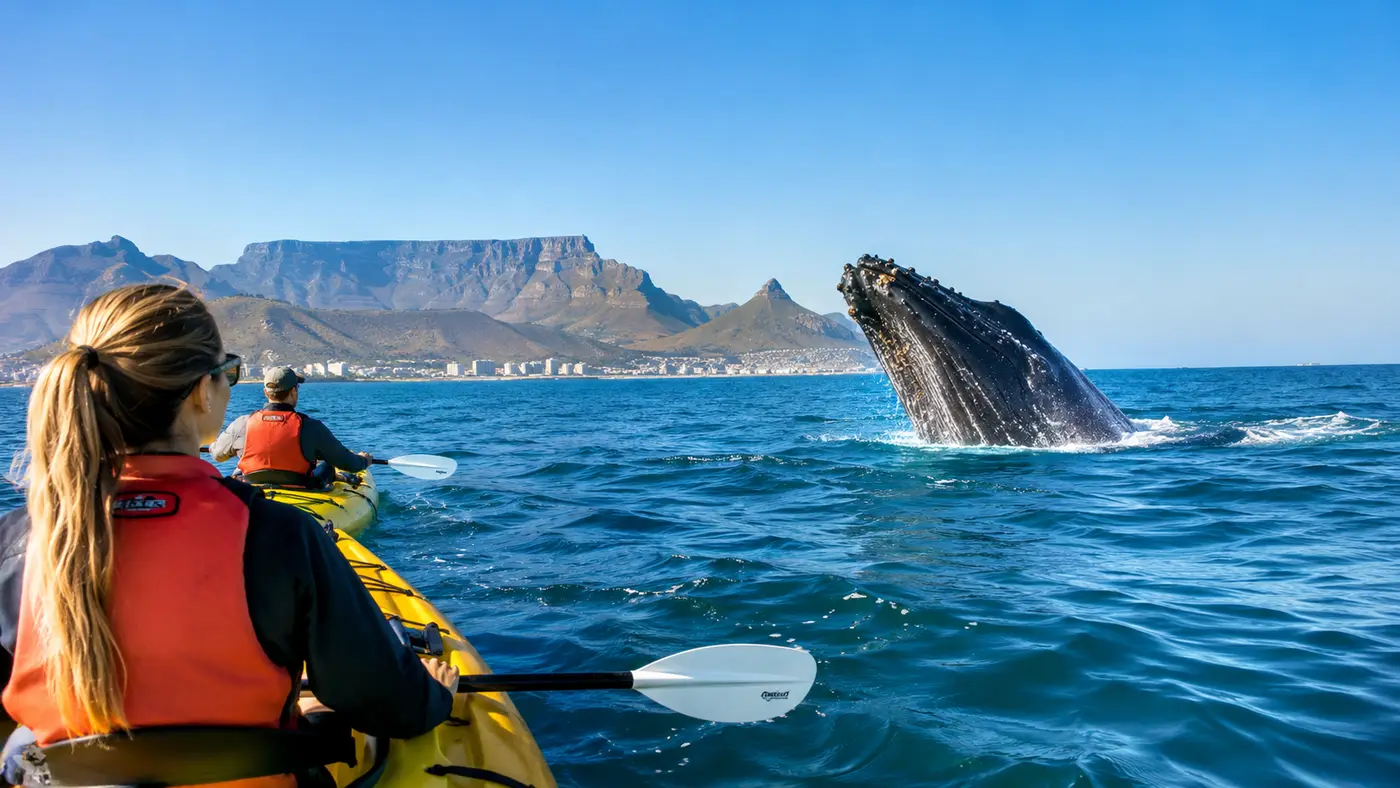
The first time a southern right broke the surface forty meters off my bow, I forgot how to paddle. You hear the exhale before you see anything: a sharp, violent hiss echoing across the swell like an industrial pipe bursting under pressure. Looking for whales in cape town from the deck of a commercial ferry is fine, but sitting four inches above the Atlantic in a molded plastic kayak changes the equation completely. Your knees vibrate with the water displacement. The ocean suddenly feels bottomless.
Cape Town sits along a major migratory corridor where massive marine mammals travel north from Antarctica each winter. Paddling out to meet them sounds romantic, and on calm mornings it truly is, but it requires patience, thick neoprene, and a healthy respect for maritime law. Let us walk through what actually happens when you try to encounter these leviathans from a kayak, where to go, and why you should never paddle straight at a forty-ton animal.
Book your kayaking cape town experience:
Spotting Whales in Cape Town: Which Giants Visit and When
Winter brings the giants. Southern right whales begin trickling past the peninsula around June, seeking the shallow bays of the Western Cape to mate and calve. They stay through November, sometimes lingering into early December if the feeding remains decent down south.
Humpbacks run a slightly different schedule. You tend to see them passing through in pulses, moving up toward Mozambique in early winter and filtering back down between October and January. They are the acrobats. A southern right mostly wallows, breathes, and shows a fluked tail before slipping into the deep, but humpbacks breach with sheer muscle power. Seeing several tons of barnacle-crusted mammal launch clean out of the water while you are seated at sea level will recalibrate your nervous system.
Bryde's whales live here year-round. They are fast, sleek, and notoriously unpredictable. They rarely break the surface for long, preferring to surface once or twice before running deep chasing schools of baitfish. Honestly, counting on a Bryde's whale is an exercise in disappointment because they do not care about your kayak itinerary.
Here is how the three main species compare when you look for them from a kayak:
| Species | Peak Months | Average Group Size | Typical Behavior Near Shore |
|---|---|---|---|
| Southern Right Whale | July to October | 1 to 3 (often cow and calf) | Slow-moving, logging at the surface, curious |
| Humpback Whale | May to July, Oct to Dec | 2 to 6 (pods or loose groups) | Active travel, breaching, loud surface slaps |
| Bryde's Whale | Year-round | Solo or pairs | Erratic routing, fast lunges, shy around boats |
Water temperatures in the winter months hover around 12 to 14 degrees Celsius on the Atlantic seaboard. If you capsize because you panicked at a whale rolling nearby, the cold knocks the wind out of you instantly. Staying relaxed is the only way to paddle safely out here.
Top Launch Spots to Kayak with Whales Around the Peninsula
The Atlantic seaboard offers the most direct access from central Cape Town. Guided tours routinely push off from Three Anchor Bay, slipping past the kelp forests toward Sea Point or Granger Bay. Some mornings you will pick up waterfront kayaking routes where paddlers encounter visiting humpbacks directly off the main shipping breakwaters. It is bizarre to see Table Mountain towering over a spout of whale mist while container ships idle two nautical miles offshore.
False Bay is completely different. Over on the east side of the peninsula, paddling conditions feel slightly more sheltered from the open Atlantic swells, although the wind can pick up within fifteen minutes. Launching from Simon's Town offers access to protected coves. When conditions align, kayaking in Simon's Town gives you a solid shot at sheltered water where mother whales nurse newborn calves in relatively calm shallows.
Pro tip: Launch before 8:00 AM. Cape Town winds - especially the winter north-wester and summer south-easter - tend to sleep until mid-morning, giving you flat glass surfaces that make spotting whale blows effortless.
Hout Bay is another option, though you deal with heavier ocean rollers near the bay mouth. Whales often slip into the bay to shelter from rough storms. You paddle past the seal colony at Duiker Island, and if you are lucky, pick up a travelling pod skirting the cliffs toward Chapman's Peak.
No guide can guarantee an encounter. Whales do not keep appointments.
I have spent three hours paddling until my shoulders burned without seeing more than a stray cormorant. Then, on days when I expected nothing, three humpbacks cruised within fifty yards of our group before sounding. Keep your expectations low and the ocean will usually surprise you.
Legal Rules and Staying Safe When You Kayak with Whales
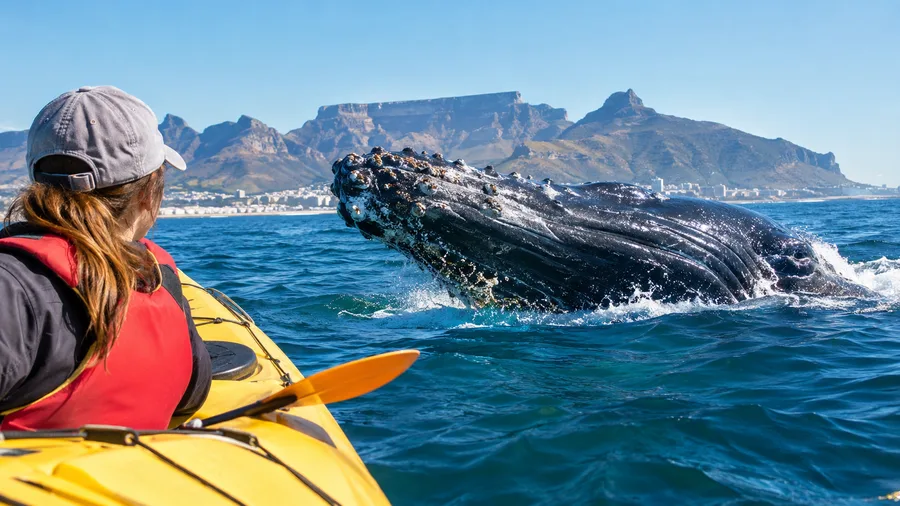
South Africa takes marine conservation seriously. By law, non-permitted vessels, including human-powered sea kayaks, must maintain a strict 300-meter buffer zone from any whale. You cannot deliberately paddle straight into a pod. Doing so constitutes harassment under the Marine Living Resources Act, and the coastal authorities will confiscate equipment or issue hefty fines if they catch you buzzing wildlife.
What happens when the whale chooses to approach you? It happens regularly.
Note: If a whale surfaces within your 300-meter zone, stop paddling immediately, lay your paddle flat across your lap, and let the animal dictate the encounter without making erratic movements.
Whales are acutely aware of their surroundings through low-frequency hearing and water displacement sensing. A plastic kayak does not present a threat, but thrashing your paddle blades against the water might agitate them. Put your paddle down. Let the kayak drift.
Safety around these animals comes down to three basic behaviors:
- Keep your distance: Never cut across an animal's path or position your kayak between a mother and her calf.
- Stow loose gear: Secure your dry bags and cameras before approaching any active water; unexpected tail flicks create rolling swells.
- Stay in a pod: Keep your kayak close to your paddling partners so your group appears as a single, predictable floating silhouette.
A slap from a southern right's tail fluke weighs roughly as much as a small car hitting a brick wall. They are gentle creatures, yes, but sheer mass means even an accidental flick while turning can roll a double kayak and send paddlers swimming.
Book your kayaking cape town experience:
The Sensory Reality and Other Marine Animals Found Along the Route
People expect whale watching kayak cape town trips to look like a glossy documentary. They forget about the smell. A whale's breath smells like sulfur and rotting fish, an oily cloud that hangs in the cold air long after the blow has drifted away. If you find yourself directly downwind of an adult humpback venting its lungs, you will taste it on your tongue for twenty minutes. It is strange, wild, and oddly thrilling.
Then there is the sheer diversity of other creatures out there. Whales get all the marketing attention, but the South Atlantic is packed with life. You rarely paddle for an hour without encountering several other species that call these kelp forests home.
Some common marine animals found along our paddling routes include:
- Cape fur seals: Clumsy on land, but pure lightning in the water, often surfing your bow wake or nipping at your rubber rudder.
- African penguins: Small solitary hunters bobbing like corks near Simon's Town and Boulders Beach, diving under your hull when spooked.
- Heaviside's dolphins: Shy, blunt-nosed coastal dolphins native only to the Benguela Current along the southwest coast of Africa.
- Ocean sunfish (Mola mola): Bizarre, disk-shaped creatures basking flat on the surface during summer, totally unfazed by passing boats.
You might go out targeting a whale watching trip and end up surrounded by seventy seals playing tag beneath your hull. That is the beauty of the Atlantic seaboard. The entire ecosystem operates on its own timeline, indifferent to what you planned to photograph.
If you are trying to maximize your odds across all marine life, picking the best time of year for kayaking in Cape Town requires balancing whale migration windows with seasonal wind trends. Late winter and early spring remain the undisputed sweet spot.
Gear, Wind, and Timing for Whale Watching Kayak Cape Town Trips
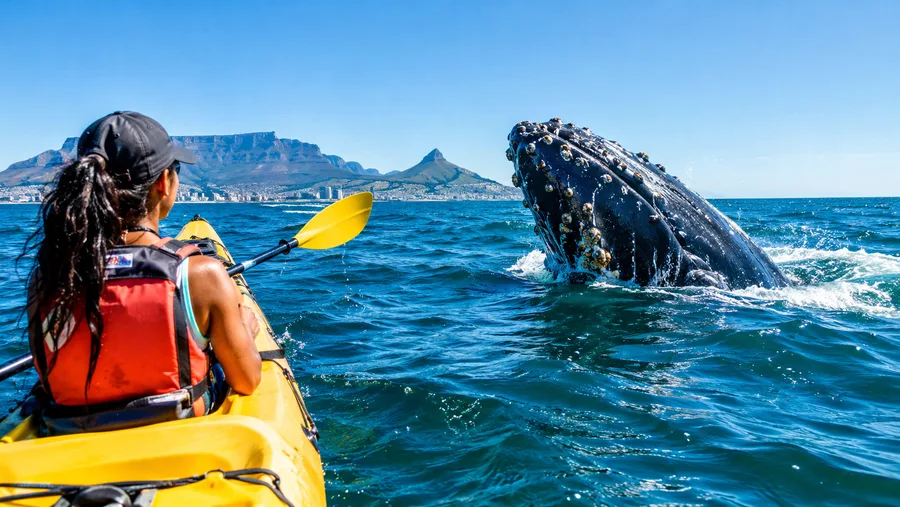
Winter paddling requires real preparation. The water is freezing, the air can bite, and fog banks roll off the Benguela Current with very little warning. Showing up in cotton sweatpants or gym shorts is an invitation to hypothermia if a stray chop washes across your deck.
Local operators provide basic gear, but bringing your own layers makes the difference between enjoying a three-hour paddle and shivering until your teeth chatter. A windproof paddling jacket over a decent 3mm neoprene long-john keeps your core warm even when sea spray drenches your shoulders.
Before booking any trip to kayak with whales, keep these practical points in mind:
- Footwear matters: Wear dedicated neoprene booties; cold feet drain your warmth faster than wet hands.
- Dry storage: Put your phone or camera in a hard-shell dry box tethered to the boat, because soft pouches often leak when dropped into bilge water.
- Seasickness medication: Take a motion sickness tablet an hour before launch if you have any sensitivity, as sitting stationary while bobbing next to a whale will test your stomach.
- Sun protection: Winter sunshine reflected off ocean swells causes severe sunburn even on chilly, overcast mornings.
Pay close attention to the swell charts. A two-meter swell in deep ocean is comfortable, but when those long-period swells strike coastal shallows near Sea Point or Mouille Point, they jack up quickly. If an operator tells you the launch is canceled due to heavy surf, do not argue with them. Getting dumped by a shorebreak while trying to launch a seventeen-foot double kayak is violent and expensive.
Commercial tours generally run between R450 and R650 per person for an outing of about two hours. You will paddle roughly four to five kilometers total, which sounds short until you factor in the resistance of ocean swell and a steady crosswind on the paddle home.
Frequently Asked Questions about whales in cape town
What months are best to see whales from a kayak in Cape Town?
August and September offer the highest probability. Southern right whales gather in peak numbers along False Bay and the Atlantic seaboard, while humpbacks pass through steadily on their seasonal migration routes.
Can you deliberately paddle up to a whale in South Africa?
No. South African maritime law forbids any vessel, including non-motorized kayaks, from intentionally approaching within 300 meters of a whale. You must give them space, though whales frequently choose to swim closer to stationary paddlers on their own terms.
Is it dangerous to kayak near whales?
Whales are non-aggressive, but their size makes them inherently hazardous. A sudden tail flick or breach within thirty meters can capsize a kayak or cause injury. Paddling with a registered, experienced guide who understands cetacean body language keeps the risk low.
Do I need previous sea kayaking experience?
Most commercial tours use wide, stable sit-on-top double kayaks that require no prior experience. A reasonable level of fitness helps, as you will paddle against tide and light wind for up to ninety minutes.
Quick Reference
- Peak season: July through October
- Legal buffer zone: 300 meters
- Average tour cost: R450 to R650
- Key species: Southern right and humpback
- Best launch time: 07:00 to 09:00 AM
Book your kayaking cape town experience:
My Take: Keep Expectations Grounded
Do not paddle out expecting a private performance of breaching whales beside your bow. Kayaking with whales is a waiting game played on a freezing, shifting ocean, and on many days the whales simply swim elsewhere. But when a southern right decides to cruise underneath your hull, showing off white belly skin through transparent emerald water, every cold toe and aching shoulder muscle disappears. Respect the distance rules, book a qualified local guide, dress warmly, and accept whatever the Atlantic decides to show you.
Read more about kayaking cape town.