What to Expect from a Kayaking Experience in Cape Town
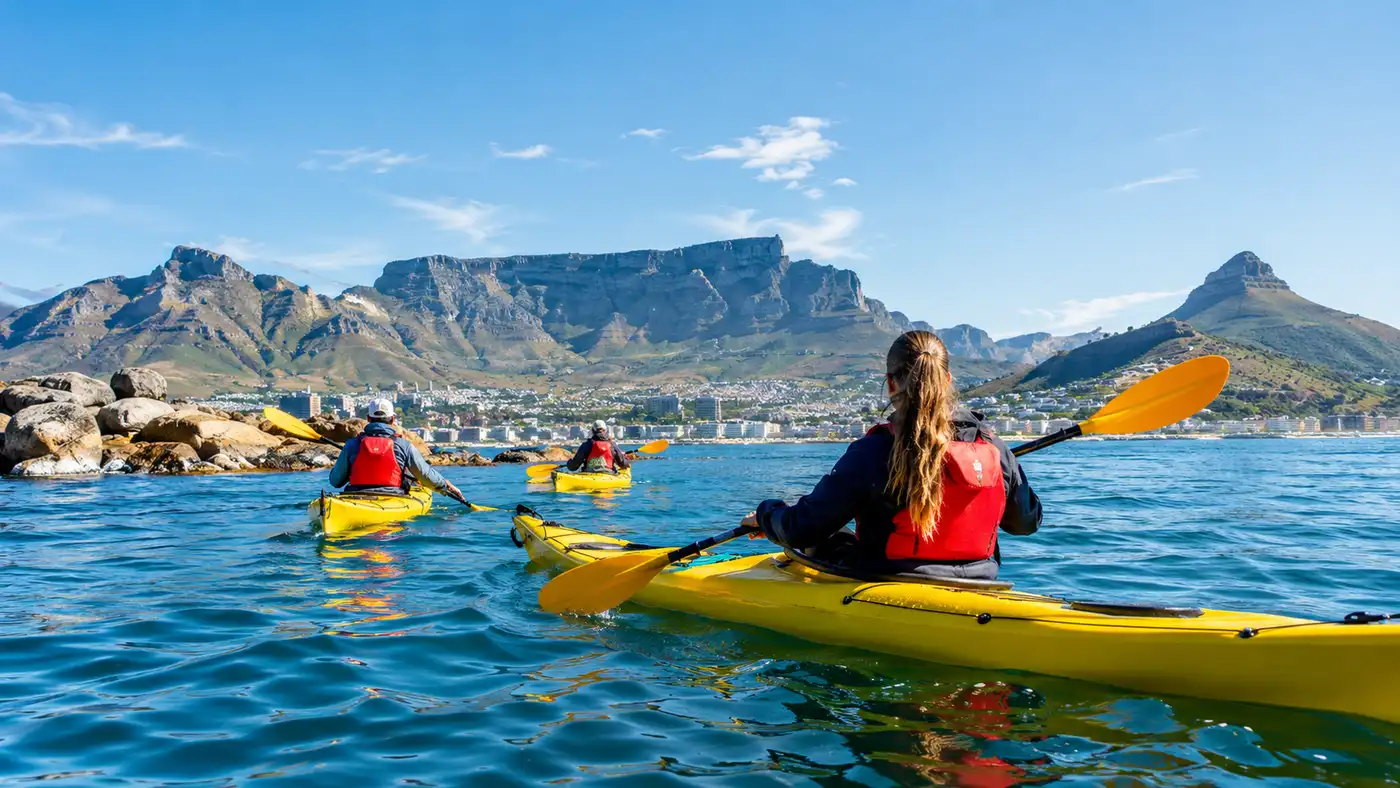
Standing on a damp slipway at 7:15 in the morning while clutching a neoprene spray deck is a very specific Cape Town feeling. The Atlantic water looks glassy from the road above, but down at sea level, the ocean is breathing with a slow, heavy pulse. If you are researching what to expect from a kayaking experience in cape town, you should understand straight away that this is an open-ocean outing rather than a lazy drift across a municipal pond. The Atlantic is freezing, the kelp forests below are thick and alien, and the sheer scale of the mountains towering behind you makes you feel remarkably tiny.
Most paddlers head out expecting postcard scenes and effortless glides alongside dolphins. You get those moments, certainly, but you also get salty spray stinging your eyes, a dull ache between your shoulder blades after forty minutes of steady paddling, and the sudden, startling shock of a Cape fur seal barking right beside your gunwale. Knowing how the morning unfolds, what gear you will wear, and how the water behaves will keep you from feeling overwhelmed once your hull clears the breakers.
Book your kayaking cape town experience:
The Launch: What to Expect from a Kayaking Experience in Cape Town at Dawn
Tours almost always kick off early. Ocean winds in the Western Cape - especially the notorious southeaster - tend to pick up by midday, churning the bay into whitecaps. That means you are usually meeting your guide between 6:45 AM and 8:00 AM at places like Three Anchor Bay, Granger Bay, or Simon's Town on the False Bay side. The air is crisp, often hovering around 14 degrees Celsius, and you will likely stand around in your shorts shivering slightly while signing an indemnity form on a wet clipboard.
Guides run through a short safety briefing on the sand or concrete slipway. They show you how to hold the paddle correctly, how to sit up straight against the backrest to avoid lower back cramps, and what signal to give if you feel sick or need a tow. Then you get geared up. Most commercial operators use durable plastic sit-on-top double kayaks because they are virtually unsinkable and forgiving of mistakes. If you capsize, you simply tumble off into the water rather than getting trapped upside down.
Note: Your shoes will get soaked right at the start. Wear strap-on sandals, old running shoes, or neoprene booties, and leave your favorite leather sneakers locked in the trunk of your car.
Getting past the shorebreak is the only part that tends to spike people's heart rates. You wait waist-deep in the surf, hold the kayak steady against incoming foam, jump in on the guide's command, and paddle hard. A couple of quick, firm strokes push you beyond the breaking sets into the calm, rolling swell beyond. Once you clear the surf line, the noise of the shore drops away instantly. Cape Town looks completely different from the water. The urban sprawl recedes, leaving just the stark granite mass of Lion's Head and the flat wall of Table Mountain dominating the skyline.
- Life jackets: High-buoyancy PFDs are fitted securely before you touch the water.
- Dry bags: Small dry pouches are usually supplied for car keys and phones, though leaving valuables on land is smarter.
- Sun protection: Reflection off the open sea burns pale skin in under thirty minutes, so zinc and polarized sunglasses are essential.
- Layering: A windbreaker over a quick-dry shirt works better than bulky cotton hoodies that stay wet forever.
Hitting the Open Water: Ocean Swell and Paddling Cape Town
Once you are about 200 meters offshore, the true nature of sea kayaking Cape Town becomes obvious. The Atlantic does not sit flat like an inland lake. Even on the calmest, windless summer mornings, you will ride a deep groundswell rolling in from the Southern Ocean. Rising two meters up on the crest of a smooth swell and then sliding two meters down into the trough feels like being on a gentle, slow-motion roller coaster. It is relaxing for some, but if your inner ear dislikes movement, it can sneak up on you fast.
You paddle in loose pods. Guides pace the group so nobody gets left behind, stopping every ten minutes to let everyone gather, sip fresh water, and look around. You will navigate around vast beds of sea bamboo - thick, rubbery kelp that grows up from the seafloor twenty meters below. The kelp acts as a natural breakwater, smoothing out the surface chop and creating sheltered channels where marine life congregates.
Pro tip: Keep your eyes locked on the horizon or the mountain ridge if you start feeling slightly green, and avoid looking down at your hands or inside the footwells.
The water clarity changes wildly depending on the wind direction. When the southeaster blows, it triggers upwelling, stripping the warm surface layer away and replacing it with ice-cold, crystal-clear water that glows electric turquoise. On these days, you can peer straight down into the kelp forests to watch starfish, sea urchins, and small shy sharks swimming among the stalks. It looks like an underwater jungle, though reading about Atlantic ocean conditions gives you a clearer sense of why the water temperature fluctuates so violently between seasons.
Marine Encounters: The Reality of Wildlife on the Water
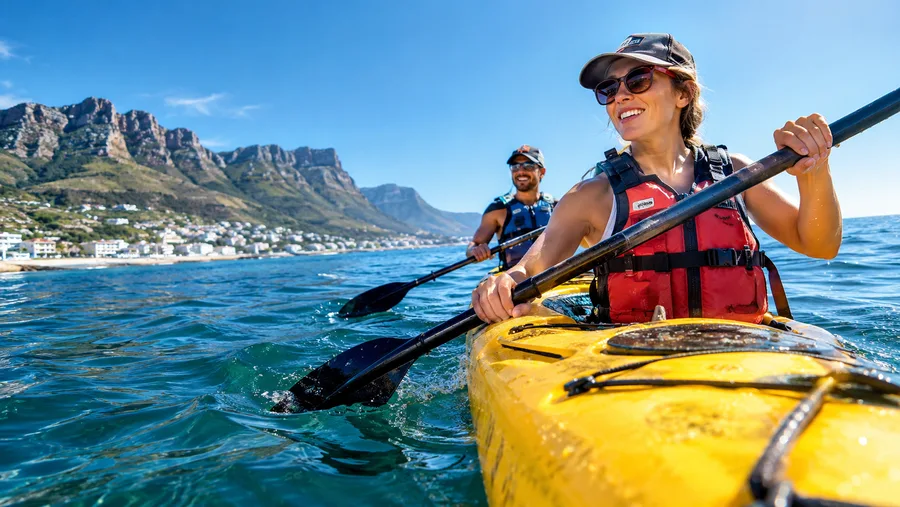
People often book kayaking in Cape Town hoping to see a dolphin superpod or a humpback breaching twenty yards away. Honestly, you should manage your expectations. Wildlife is wild. Some mornings the bay is dead quiet, and all you see are cormorants skimming the swell and kelp gulls fighting over crab legs. Other mornings, you find yourself floating in the middle of chaos.
Cape fur seals are the one encounter you can safely bet on. Colonies at Duiker Island in Hout Bay and scattered haul-out rocks along the Atlantic Seaboard mean seals are constantly hunting in these waters. They are curious animals. They love swimming right underneath the kayaks, flashing their pale bellies, or sticking their flippers into the air to regulate their body temperature. Occasionally, a yearling seal will pop its head up three feet from your paddle blade, blink its dark eyes at you, snort a mist of salt spray, and vanish with a flick of its rear flippers.
Dolphins do show up, particularly endemic Heaviside's dolphins near Sea Point and larger bottlenose pods that patrol the coastline. They travel fast. A guide might spot them five hundred meters out, yell for everyone to raft up together, and within ninety seconds, sleek grey fins are slicing through the water alongside the boats. If you paddle down south, kayaking in Simon's Town gives you a much better shot at spotting African penguins swimming like torpedoes through False Bay, where the water runs several degrees warmer than the Atlantic Seaboard.
Book your kayaking cape town experience:
Comparing Cape Town's Main Paddling Routes
Different coastal stretches offer entirely different paddling experiences. Sea Point gives you dramatic urban-meets-nature views, Hout Bay feels raw and rugged, and False Bay offers calmer water with better birdlife. Here is how the three main commercial kayaking hubs compare on an average day.
| Launch Location | Water Conditions | Primary Wildlife Seen | Trip Duration | Typical Cost (ZAR) |
|---|---|---|---|---|
| Three Anchor Bay (Sea Point) | Long ocean swells, light chop | Seals, Heaviside's dolphins, sunfish | 2 hours | R450 - R550 |
| Hout Bay Harbour | Protected bay mouth, heavy surge near cliffs | Dense seal colonies, marine birds | 2 hours | R450 - R500 |
| Simon's Town (False Bay) | Calmer surface, warmer water | African penguins, cormorants, occasional whales | 2 hours | R450 - R600 |
Choosing between these spots comes down to what you want to gaze at while your shoulders work. Simon's Town is generally the easiest option for absolute beginners because the bay is partially sheltered from the massive open-ocean groundswells that batter the Atlantic shoreline. The Atlantic Seaboard, running between Mouille Point and Bantry Bay, offers that classic postcard view of Table Mountain and the Twelve Apostles unspooling above the sea cliffs. Hout Bay sits somewhere between the two, giving you dramatic mountain amphitheatres and a quick route across to the teeming seal colony at Duiker Island.
Fatigue, Weather Shifts, and What Nobody Tells You
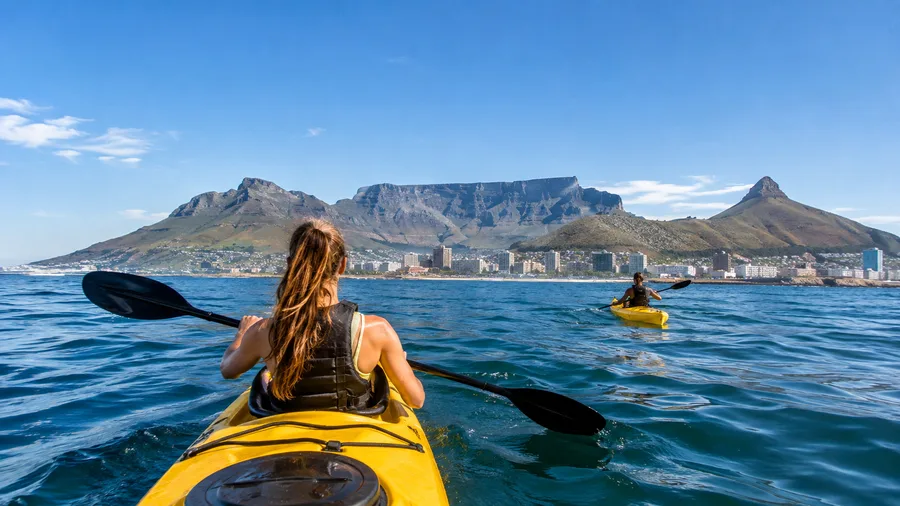
Paddling Cape Town waters takes more effort than people anticipate. You are out on the water for roughly an hour and a half to two hours, covering between three and five kilometers. If the wind stays down, the rhythm of paddling is meditative and smooth. If a headwind kicks up while you are two kilometers from the slipway, the return leg becomes an honest workout. Your forearms get tight, salt crusts over your lips, and your core muscles will definitely feel the strain the next morning.
Weather along the Cape Peninsula is notoriously fickle. A morning that starts out with clear skies and mirror-flat water can shift in twenty minutes if the wind turns. Tour guides monitor marine weather charts obsessively. They will not hesitate to cut a tour short or alter the route if they see a fog bank rolling around the corner of Lion's Head or feel the wind swinging offshore. Getting frustrated when a guide cancels a trip is understandable, but taking an open kayak into heavy offshore winds is how tourists end up drifting toward Antarctica.
- Eat a light breakfast: Avoid heavy, greasy fry-ups an hour before launching, as the ocean movement will bring it right back up.
- Hydrate beforehand: Paddling makes you thirsty quickly, and salt spray leaves your mouth dry within fifteen minutes.
- Listen to your guide's line: Staying inside the sheltered path carved out by the kelp beds saves an enormous amount of physical energy.
- Rhythm beats power: Long, easy, synchronized strokes with your paddling partner work far better than frantic thrashing.
One aspect rarely mentioned in glossy brochures is the smell. When you paddle near a seal colony or pass a rocky reef covered in roosting cormorants, the odor is powerful. It smells like old shrimp, guano, and damp dog hair baking in the sun. It is part of the raw reality of the marine ecosystem here, but it catches plenty of travelers off guard if they expect pristine ocean breezes.
Capsizing does happen, although it is relatively rare. When it does, it is almost always during the final landing through the shorebreak when an inexperienced paddler turns sideways to an incoming wave. The kayak tips, you splash into hip-deep water, the guides drag your boat up the sand, and everyone has a good laugh. You walk away with sandy knees and a soggy life jacket, which is usually the worst of it.
Frequently Asked Questions about what to expect from a kayaking experience in cape town
Do I need previous kayaking experience to join a tour?
No prior experience is necessary for commercial trips in Cape Town. Guides use stable, sit-on-top double kayaks that are difficult to overturn, and they pair beginners with stronger paddlers or place them in the front seat while a guide or experienced partner steers from behind.
What happens if the weather turns bad on the morning of my trip?
Operators will cancel or reschedule trips if winds exceed safe limits, usually around 12 to 15 knots, or if the ocean swell makes launching dangerous. Most companies will either rebook you for the next calm morning or provide a complete refund without hassle.
Is there a real risk of encountering great white sharks while paddling?
Shark sightings from kayaks around the Atlantic Seaboard and Hout Bay are exceptionally rare. While great whites and bronze whalers inhabit South African coastal waters, they show zero interest in kayaks, and commercial operators maintain constant contact with shore spotters.
Quick Reference
- Trip duration: 90 to 120 minutes on the water
- Water temperature: 10°C to 16°C (very cold)
- Fitness level needed: Moderate, basic upper body stamina
- Best launch window: 7:00 AM to 9:00 AM
- Key wildlife: Cape fur seals, dolphins, sunfish, penguins
Book your kayaking cape town experience:
The Bottom Line
Heading out on a sea kayak gives you an intimate perspective on Cape Town that you cannot replicate from the top of Table Mountain or the window of a tour bus. You are sitting inches above an ocean that feels ancient and wild, propelled entirely by your own muscles. Even if your arms end up sore and your clothes smell faintly of salt and kelp for the rest of the day, floating quietly while a seal swims under your paddle blade is an experience you will remember long after you pack your bags to leave.
Read more about kayaking cape town.