Sunset Kayaking in Cape Town Light Wind Safety
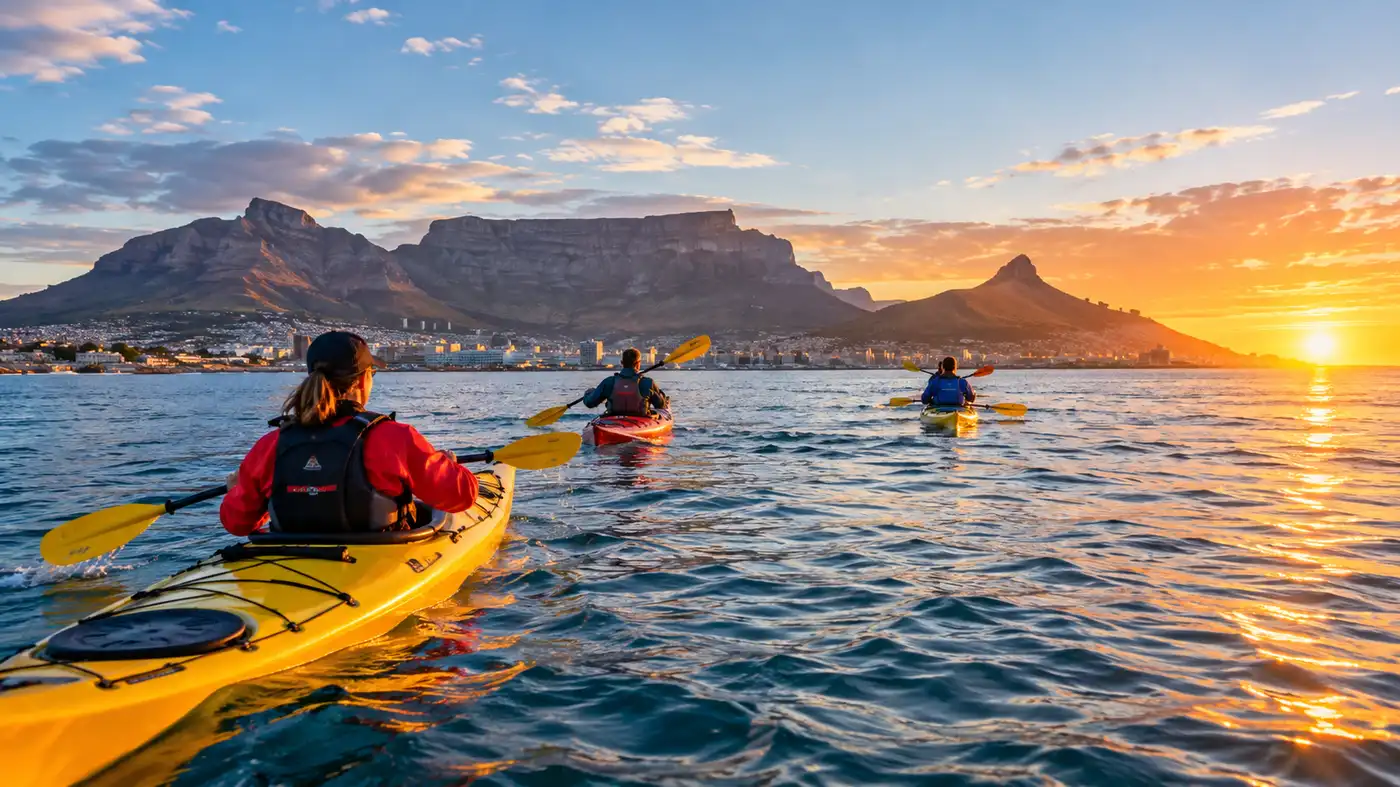
The Atlantic Ocean off the Atlantic Seaboard turns a strange shade of ink blue about twenty minutes before the sun hits the horizon. If you are sitting on the water in a plastic boat, the swell lifts you two meters up, lets you see the orange glow blazing behind Lion's Head, and then drops you right back down into a dark trough where the shoreline disappears. Booking a sunset kayak cape town trip is one of those things visitors treat like a quiet harbor cruise. It is definitely not a quiet harbor cruise.
Out here, the water is roughly 12 degrees Celsius year-round, and the weather looks calm right until it suddenly decides not to be. Enjoying a paddle at dusk means knowing how evening breezes work, what light you need to stay visible to powerboats, and why the wind speed at 17:00 tells you almost nothing about what the bay will feel like by 18:30. Here is how to handle the light, the changing sea, and the breeze when you head out into the golden hour.
Book your kayaking cape town experience:
The Magic of a Sunset Kayak Tour in Cape Town Waters
Most late afternoon trips shove off from the tiny, slipway-sheltered beach at Three Anchor Bay. It smells of kelp, dried brine, and old granite. You drag your boat down the slippery concrete, pop your spray deck or sit down on the molded plastic, and shove through the shore break. The first five minutes are always slightly tense. Then you clear the kelp beds, the chop eases out into long ocean rollers, and the city traffic along Beach Road fades into a low hum.
Floating past the Sea Point and Mouille Point coastline at golden hour gives you a view of the peninsula that walkers up on Signal Hill never get. You see cormorants skimming the wavetops in small groups of four or five, heading for their roosts on the offshore rocks. Cape fur seals usually pop their heads up around your rudder. They float on their sides with a single flipper raised in the air to regulate their body heat, staring at you with glassy, dark eyes before slipping silently beneath the surface. It feels calm, almost sleepy. But ocean paddlers know dusk is also the exact window when coastal thermodynamics flip.
A guided sunset kayak tour usually lasts about an hour and a half. That timing is deliberate. Guides want to get you out to see the sky turn fire-red over Clifton and Camps Bay, but they want you off the water before true nautical twilight sets in. When the light goes, your depth perception on the water goes with it, making it much harder to time the swell when you return to the slipway.
Pro tip: Pack a lightweight, windproof paddling jacket even if the city feels hot at 16:00. The air temperature drops fast the second the sun dips below the horizon, and cold sea spray makes it feel ten degrees colder.
Reading the Evening Wind and the Summer Southeaster
Cape Town has a reputation for brutal winds, and most of it centers on the Cape Doctor, the famous southeaster that scours the city during the summer months between November and March. What confuses many travelers is how the wind behaves along the Atlantic Seaboard compared to Table Bay or False Bay. You might sit in an outdoor cafe in Kloof Street getting your napkin blown off the table, while the water off Sea Point looks like a sheet of rippled glass.
Lion's Head and Table Mountain cast a massive wind shadow over the inshore water. As long as you stay within 400 meters of the rocks, you might feel only a light breeze. Paddle 300 meters further out toward the shipping lanes, though, and you punch straight through the wind line. Suddenly you are fighting a 25-knot offshore gust that wants to push your kayak toward open ocean. Reading the surface texture of the water tells you everything you need to know. Look for dark, ruffled streaks on the sea ahead of you, which locals call cat's paws. Where those ripples turn into white horses, the sheltered zone ends.
Winter brings a different dynamic altogether. Northerly and northwesterly winds roll in ahead of cold fronts, bringing heavy groundswell and onshore chop. You rarely get the Cape Doctor in July, but you get long ocean rollers that break hard over shallow reefs. Understanding these seasonal shifts is fundamental to ocean safety and paddling skills along this stretch of coast.
| Wind Speed (Knots) | Water Surface Conditions | Sunset Paddling Safety Level | Action Required |
|---|---|---|---|
| 0 to 6 | Glassy to light ripples | Ideal | Standard route along Sea Point or toward the lighthouse |
| 7 to 12 | Small waves, occasional whitecaps | Moderate | Stay close to the kelp line; beginners require a guide |
| 13 to 17 | Frequent whitecaps, spray | Difficult | Experienced paddlers only; shorten trip duration |
| 18+ | Streaked foam, heavy chop | Unsafe at dusk | Trips canceled; high risk of offshore drift |
A light wind of 5 to 8 knots is actually pleasant because it keeps the air crisp and clears away sea mist. Anything over 14 knots at sunset should make you think twice. Paddling back into an offshore breeze when you are tired, cold, and losing daylight is exhausting work that drains your energy twice as fast as paddling out with the wind at your back.
Sunset Kayaking Cape Town: Essential Light and Visibility Safety
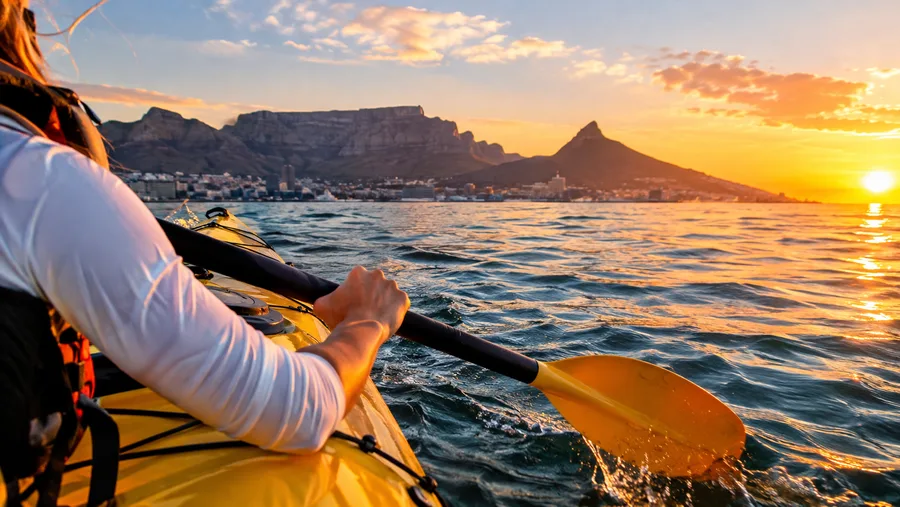
Being small and sitting low in the water makes a kayak practically invisible to other boats once the sun goes down. Speedboats heading back to the V&A Waterfront, harbor patrol vessels, and local crayfish dinghies are all scanning the surface for floating hazards, not plastic hulls. If you do not have active illumination, you are gambling with your life.
Commercial operators equip each boat with high-visibility gear, but private paddlers often get lazy. A small red-and-green bow light is rarely required on non-motorized craft under seven meters in South African waters, but maritime regulations do require you to carry an all-round white light or at least a powerful torch that can be flashed at approaching vessels. A reliable 360-degree white light mounted on a small pole behind your seat is the standard choice. It keeps the glare out of your eyes while ensuring anyone within two nautical miles can spot your position.
Note: Never use a headlamp aimed straight ahead across the water. The light reflects off the mist and water spray right into your eyes, ruining your night vision and making it impossible to read incoming swells.
Reflective tape on your paddle blades also works wonders. Every time you take a stroke, the moving blade catches the light of coastal streetlamps or nearby boats, creating a rhythmic flash that screams human presence to anyone watching from the helm of a larger vessel.
- All-round white stern light: elevated at least 50 centimeters above the deck so your torso does not block it.
- Waterproof strobe light: clipped to your personal flotation device (PFD), ready for emergency signaling if you get separated from the boat.
- Reflective paddle stickers: placed on both sides of each blade to catch peripheral boat lights during strokes.
- Pealess whistle: attached to your lifejacket zipper; sound travels far better over water than a human shout.
Book your kayaking cape town experience:
Sunset Kayak Rentals Versus Guided Trips
You can find sunset kayak rentals in several seaside neighborhoods, but rental shops tend to have strict rules for evening paddling. Most reputable shops will flatly refuse to hand over gear after 16:30 unless you show verifiable open-water paddling certification or local sea experience. This is not gatekeeping. It is because the Atlantic Seaboard offers very few exit ramps if something goes wrong.
If you launch at Three Anchor Bay and the southeaster suddenly kicks up to 20 knots, you cannot simply paddle to shore anywhere you like. The entire shoreline between Sea Point and Clifton is an unbroken barrier of jagged granite boulders and crashing surf. If you try to land there in a plastic sit-on-top, you risk getting flipped, smashed onto barnacle-encrusted rocks, and losing your boat. The only safe exits are the few sheltered slipways or small pocket beaches. A guided group knows these entry points by heart and watches the weather closely.
Some people ask about renting a sunset canoe for these waters. True open canoes have no place on the open Atlantic Seaboard. A canoe sits high, catches wind like a sail, and lacks the self-bailing scuppers that keep ocean kayaks afloat when waves crash over the deck. If someone offers you an evening canoe experience, ensure it takes place inside the sheltered V&A Waterfront canals, not out on the open ocean.
Before launching your kayak at dusk, run through a quick gear and route check:
- Check the marine forecast: verify wind speed trends on Windfinder or Windy specifically for Mouille Point, not just general Cape Town weather.
- Inspect your hatch seals: make sure your storage compartments are completely watertight so the boat stays buoyant if swamped.
- Verify emergency communication: keep a mobile phone in a certified waterproof pouch hung around your neck, programmed with the Sea Rescue (NSRI) emergency number.
- Establish a shore contact: tell someone on land your exact launch point, intended route, and agreed return time with a 30-minute grace window.
Navigating Coastal Landmarks and Return Routes
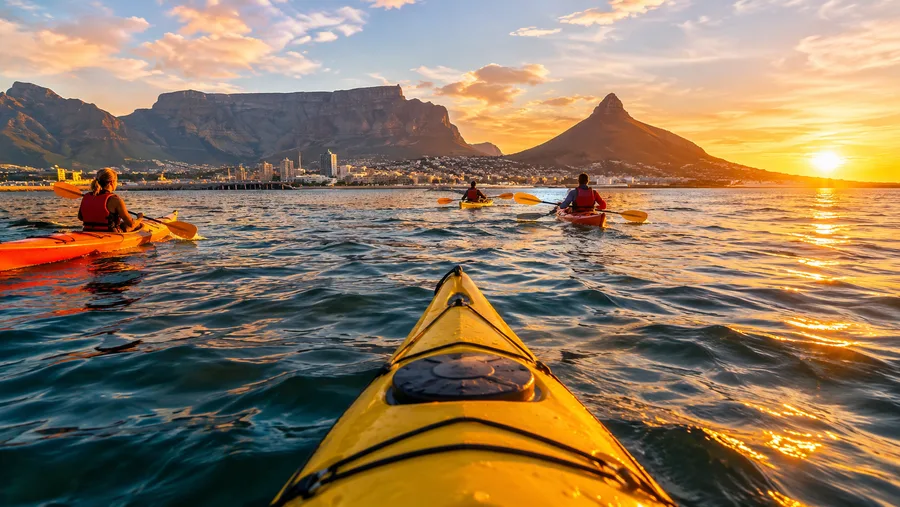
Coming back into land in fading light is the hardest part of the trip. The city lights blaze along the coastline, creating a confusing wall of yellow, white, and neon glare that washes out the low, dark silhouettes of the shoreline. From a kilometer out, Three Anchor Bay looks like an unbroken black wall of rock.
Experienced paddlers use the Green Point Lighthouse as their primary night guide. Its bright red-and-white tower flashes a white light every ten seconds, visible up to 25 nautical miles out to sea. Once you locate that steady rhythm, you can orient yourself relative to Mouille Point and work your way south toward the launch ramp. If you paddle too far north toward Granger Bay, you run into shallow kelp beds and the breakwater of the harbor, where commercial tugs and charter catamarans maneuver in tight channels.
Stay roughly 150 to 200 meters off the rocky shoreline during your return run. That distance keeps you safely outside the surf zone where unexpected set waves can jack up over submerged reefs, while keeping you well clear of deep-water boat traffic. Listen carefully. In the dark, your ears pick up the roar of breaking swell long before your eyes can see the white foam against the rocks.
When you finally line up with the entrance to Three Anchor Bay, wait outside the narrow channel for a minute. Watch the sets roll in. Count the waves. Once the lull comes, paddle decisively straight down the center of the channel into the calm water behind the protective wall. The relief of sliding your bow onto the gravel beach in the cool evening air is part of why paddlers love this stretch of coast.
Frequently Asked Questions about sunset kayak cape town
What time do sunset kayak trips usually launch?
Departure times change with the seasons. During midsummer in December and January, trips usually launch around 17:30 or 18:00, because the sun does not set until after 20:00. In shoulder months like March or April, launches shift earlier, typically between 16:30 and 17:00, to ensure you are off the water before darkness sets in.
Can beginners join a sunset kayak tour in Cape Town?
Yes, provided you go with a licensed commercial operator using sit-on-top double kayaks. Double kayaks are wide, stable, and forgiving for paddlers who have never held an ocean blade before. You will be paired with a stronger paddler or a guide if you are on your own, and the group stays together throughout the trip.
What should I wear for an evening ocean paddle?
Wear quick-drying synthetic layers such as boardshorts or leggings paired with a thermal rash vest. Avoid cotton shirts or denim, which stay cold and wet against your skin. Bring a windbreaker or paddling cag to block the evening ocean chill, and wear neoprene booties or strap-on water sandals that you do not mind soaking.
Do tours get canceled often due to evening wind?
Yes, safety cancellations happen fairly frequently in Cape Town. Summer southeaster winds can gust over 25 knots in the late afternoon, making paddling hazardous. Reputable operators make the go or no-go call around 14:00 or 15:00 based on live anemometer readings along the promenade, offering a reschedule or full refund if conditions turn sour.
Quick Reference
- Launch hub: Three Anchor Bay slipway
- Water temp: 10 to 14 degrees Celsius
- Wind threshold: 14 knots max for dusk
- Navigation aid: Green Point Lighthouse flash
- Standard duration: 90 minutes total
Book your kayaking cape town experience:
Before You Push Off
Sunset from the water gives you a look at Cape Town that roads and viewpoints simply cannot match. The city slows down, the cliffs of the Twelve Apostles turn deep amber, and the Atlantic swell rolling beneath your hull reminds you how wild this coastline really is. Respect the wind, check the water conditions honestly before you push away from the beach, and never head out into the fading light without proper illumination on your deck. If you treat the ocean with the caution it deserves, floating out past Sea Point as the lights flicker on across the city will be one of the best hours you spend in South Africa.
Read more about kayaking cape town.