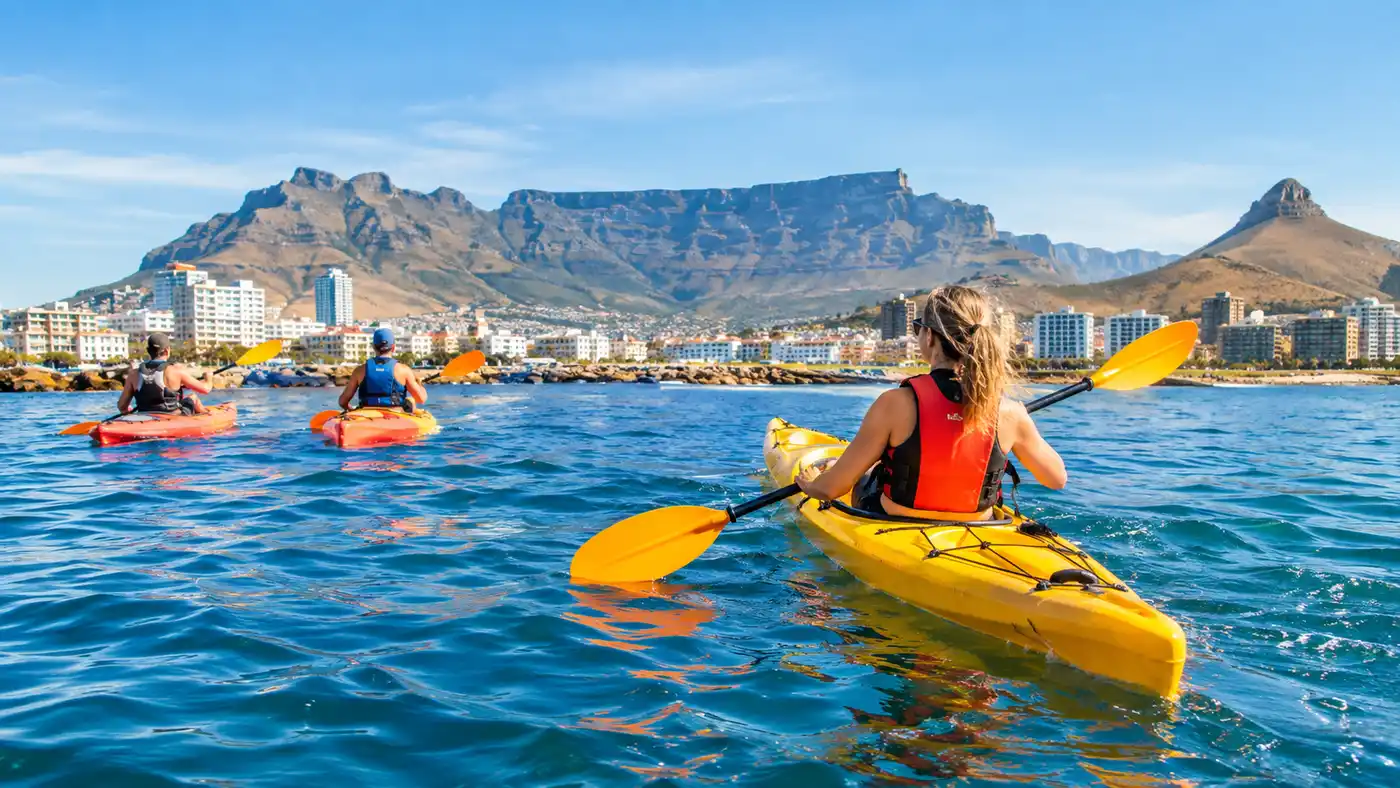
Sea Point Mouille Point Kayaking Guide
The Atlantic hits your ankles like a bucket of ice water at 7:15 in the morning. If you book an outing for kayaking cape town sea point, you will likely drag a bright plastic double kayak down the sloped concrete slipway at Three Anchor Bay, dodging wet sea lettuce and broken mussel shells while the sun clears the crest of Signal Hill. It smells sharply of iodine and low tide. The water in the tiny inlet looks deceptively peaceful, almost oily, until your guide tells you to drop into the molded seat, plant your heels against the footrests, and punch straight through the shore break before the next set arrives.
This stretch of coastline between Bantry Bay and the Mouille Point lighthouse offers one of the most immediate wildlife encounters in South Africa. You paddle past dense forests of sea bamboo, gaze up at the cliffs of Lion's Head from sea level, and listen to the rhythmic thrum of morning traffic along the promenade. It looks effortless from the paved walking paths above. Out past the breaker line, though, the ocean reminds you immediately who is in charge.
Book your kayaking cape town experience:
Launching from Three Anchor Bay and the Sea Point Coastline
Almost every commercial tour along this Atlantic Seaboard fringe operates from the small beach at Three Anchor Bay. It is a quiet indentation tucked between residential apartment blocks, sheltered by black dolerite boulders that take the brunt of the open sea swell. The launch site feels modest. A few shipping containers house the gear, guides pace around sizing up neoprene booties, and local dog walkers stroll overhead along the railing without sparing the kayakers a second glance.
Getting out requires a quick sequence of moves. You hold the paddle across the cockpit, steady the boat against the surge, sit down quickly, and swing your legs inside. If you hesitate, a dumping wave can spin the plastic kayak sideways, filling the footwells with chilly ocean water before you even take three strokes. Once through the gap in the rocks, the entire Atlantic opens up.
Paddling south toward Sea Point brings you parallel to the paved promenade. The water here is deep green, almost black in the shadows of the kelp beds. These giant kelp stalks, known locally as sea bamboo, act as natural breakwaters. Their bulbous heads float on the surface with thick brown fronds trailing in the current, creating calm channels where a sea point kayaking tour can catch its breath.
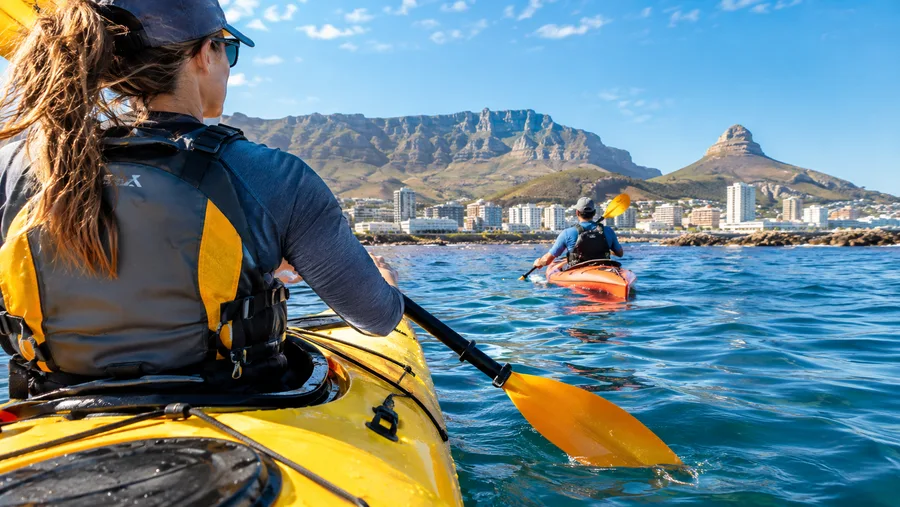
Out here, you look back at high-rise flats and the towering mass of Lion's Head. Most tourists view the ocean from the mountain; looking up from water level reverses the scale. You feel tiny. The city hums quietly on shore, the red hop-on hop-off buses rattle along Beach Road, and yet three hundred meters off the rocks, you share the water with nothing but cormorants, seals, and the occasional sunfish drifting beneath your hull.
Note: The launch slipway at Three Anchor Bay is covered in slick green algae at mid-tide. Tread directly on bare concrete patches or dry gravel to keep from sliding flat on your back while carrying gear.
Paddling Mouille Point and the Green Point Lighthouse
Heading north from the bay takes you directly toward Mouille Point. The coastline changes here, turning rocky and exposed. The red-and-white candy-striped Green Point Lighthouse stands watch over this corner, having warned ships off these treacherous shallows since 1824. Long before luxury apartments covered the shoreline, dozens of vessels ran aground along these reefs, leaving skeletal wrecks hidden beneath the kelp canopy.
Out near the lighthouse point, the ocean swells organize themselves into broad, rolling mounds. If you are doing mouille point kayaking, this is usually where the motion becomes noticeable. The kayak rises gently, hangs suspended on a liquid peak for three seconds, and then slides down into a wide trough where the shore disappears behind a wall of water. It is not dangerous on a calm morning, but it can trigger sudden queasiness if you have never experienced open-water roll.
A typical kayak mouille point excursion hugs the outer boundary of the marine reserve. Keep an eye out for odd floating objects. Ocean sunfish, or Mola mola, frequent this shallow offshore reef during the warmer months. These bizarre creatures look like giant swimming dinner plates with long vertical fins that poke through the water like clumsy shark fins. They often lie flat on the surface to warm their skin in the sun, letting gulls peck parasites off their leathery hide.
You might also spot remnants of shipwrecks if the water clears up after a sustained south-easterly wind. The wreck of the RMS Athens, which broke apart during an 1865 winter storm, still sits in pieces just off the Mouille Point shore. Paddling directly over twisted iron ribs resting in eight meters of clear water provides a cold reminder of the Atlantic's historical violence.
Marine Encounters: Seals, Sunfish, and Dolphins
Wildlife along this coast does not follow a strict timetable. Cape fur seals are the one near-guarantee. They lounge on the surface in small groups called rafts, sticking a single flipper in the air to regulate body temperature. When a kayak approaches, they roll over lazily, inspect you with large dark eyes, and dive underneath with a sudden flick of water that splashes your chest.
Dolphins create genuine pandemonium on these trips. Schools of Heaviside's dolphins, small coastal cetaceans endemic to southwestern Africa, feed along the shallow surf zones near Granger Bay and Mouille Point. They are shy and quick. Dusky dolphins, on the other hand, travel in large pods and love to jump. When a school passes through, they ride the kayak bow waves and breach clear out of the water, throwing sheets of spray across your face. Read more about kayaking with dolphins in Cape Town to understand their seasonal feeding loops and sighting odds.
Southern right whales and humpbacks appear between June and November. By law, non-motorized vessels must maintain a distance of three hundred meters from any whale. If a whale surfaces closer on its own terms, the standard protocol is to lay your paddle across the deck and sit completely still. Watching forty tons of mammal exhale a misty plume twenty yards from your plastic boat will stay in your mind for the rest of your life.
Pro tip: Fasten a floating strap to your sunglasses and your waterproof phone pouch; the Atlantic floor around Mouille Point is littered with hundreds of lost phones that slipped out of wet fingers.
Book your kayaking cape town experience:
Understanding Sea Conditions, Swell, and Water Temperatures
The Atlantic side of Cape Town is cold. Fed by the deep Antarctic Benguela Current, water temperatures hover between 10 and 15 degrees Celsius throughout the year. Even on a sweltering summer day when the city sizzles at 32 degrees, falling into the water will take your breath away instantly. That shock can turn panic into trouble fast, which is why commercial operators insist on certified buoyancy aids and stable sit-on-top boats.
The wind dictates whether anyone launches at all. Cape Town's prevailing summer wind is the South-Easter, often called the Cape Doctor. It roars down the slopes of Table Mountain and blows offshore, pushing calm surface water away from the coast. While this creates a flat sea surface close to the rocks, it can push an inexperienced paddler straight out toward Robben Island if they lose their grip on the paddle or fatigue sets in.
Understanding local swell patterns helps set reasonable expectations before heading out. Long-period swells generated in the deep Southern Ocean travel thousands of miles before hitting Sea Point. Check out our breakdown of Atlantic ocean conditions for a deeper look at wind, tides, and safety factors.
| Time Slot | Average Wind | Swell Height | Wildlife Activity | Skill Level |
|---|---|---|---|---|
| Early Morning (07:00 - 09:00) | Light breeze (3-8 knots) | 1.0 - 1.8 meters | High (feeding dolphins, active seals) | Beginner friendly |
| Mid-Morning (09:30 - 11:30) | Moderate wind (8-14 knots) | 1.2 - 2.2 meters | Moderate (basking sunfish, seals) | Beginner to intermediate |
| Afternoon (12:00 onwards) | Strong wind (15-25+ knots) | Choppy (1.5 - 3.0 meters) | Low visibility due to chop | Usually cancelled by operators |
Winter storms flip the script entirely. From May to September, north-westerly fronts roll in, bringing massive ocean swells that break cleanly over the outer reefs, throwing sea spray thirty feet against the promenade walls. Operators cancel tours immediately during these storms, moving launches to sheltered bays or waiting for post-front glass conditions.
Essential Gear and Practical Route Planning
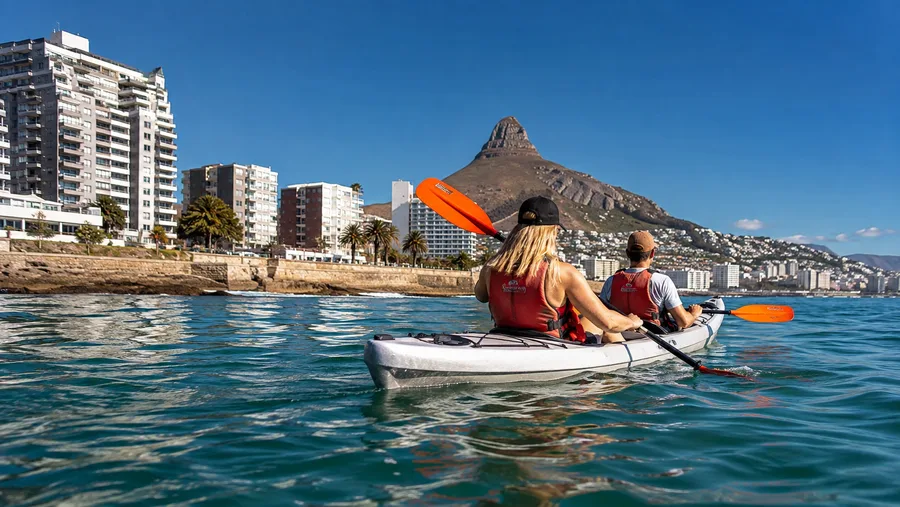
Most outfitters supply standard equipment: a two-seater sit-on-top kayak, lightweight paddles, and a 50N certified buoyancy aid. You will get wet from the waist down simply from paddle runoff and small chop breaking over the nose of the hull. Dressing properly makes all the difference between enjoying the view and shivering uncontrollably for two hours.
Pack these essentials to stay comfortable:
- Quick-drying clothes: Avoid cotton track pants or heavy hoodies that retain cold sea water; choose nylon shorts or boardshorts with a synthetic thermal rash vest.
- Neoprene booties or water shoes: Essential for protecting your soles against jagged barnacles and slippery granite ledges at the Three Anchor Bay launch.
- Strap-on sun protection: Polarized sunglasses cut through ocean glare to spot kelp and wildlife, while mineral sunscreen protects against reflection from the water.
- Windbreaker jacket: A light, splash-proof shell keeps the chilly morning breeze off your chest once you stop paddling.
The standard route follows a loop that covers approximately five kilometers over ninety minutes. Depending on morning winds, your guide will choose either a southern swing toward Sea Point swimming pool or a northern push toward the Green Point lighthouse and the outer edge of Granger Bay.
Key checkpoints along the route include:
- Three Anchor Bay slipway: The staging area where you practice wet exits and receive the basic safety briefing before launching through the rock channel.
- Sea Point Kelp Beds: Dense offshore kelp bands where seals play and kayakers can raft up together for water breaks and photos.
- Mouille Point Lighthouse Reef: The northernmost turnaround point where swells wrap around the cape, offering views toward the V&A Waterfront breakwater.
- The Outer Drift: Open water about four hundred meters offshore where guides scan the horizon for dolphin dorsal fins and migrating whales.
I think the hardest part for most people is syncing their paddling rhythm with their partner in a tandem kayak. If the person in back tries to steer while paddling out of sync with the person in front, the paddles will clatter against each other endlessly. Let the front paddler set a steady, relaxed pace. The rear paddler matches the stroke and uses subtle sweep strokes to adjust heading.
Frequently Asked Questions about kayaking cape town sea point
Can complete beginners join a kayak tour at Sea Point?
Yes. Commercial trips use wide, stable sit-on-top kayaks that are nearly impossible to flip over in standard morning conditions. Guides instruct paddlers on basic strokes before launching and accompany the group the entire time.
What happens if I get seasick while on the ocean?
Tell your guide right away. Focusing your eyes on fixed landmarks like Lion's Head or the lighthouse helps steady inner-ear balance. If motion sickness persists, guides can cut the loop short and paddle you back to the calm bay.
Do I need to know how to swim to go sea point kayaking?
Basic water confidence is required. You will be wearing a tightly fastened buoyancy vest that keeps you floating effortlessly if you fall in, but you should be comfortable floating in deep water while a guide helps you back aboard.
Where do I park for launches at Three Anchor Bay?
There is free public parking directly along the Sea Point Promenade adjacent to Three Anchor Bay beach. It fills up quickly on sunny weekends by 8:30 AM, so arriving fifteen minutes ahead of your booking is wise.
Quick Reference
- Launch location: Three Anchor Bay beach
- Average trip duration: 90 to 120 minutes
- Typical water temperature: 10 to 14 degrees Celsius
- Best time for calm water: 07:00 to 09:00 AM
Book your kayaking cape town experience:
The Bottom Line
Heading out onto the Atlantic in a plastic boat gives you a perspective on Cape Town that you cannot replicate from a restaurant deck or a rental car. The city feels completely different when you are bobbing in the cold swell, listening to kelp gulls screech while your paddle blades slice through salt water. Morning conditions change rapidly, so book your slot for the earliest morning departure possible. If the weather holds and the water stays flat, glide out past the lighthouse, look back at the dramatic ramparts of Table Mountain, and enjoy the paddle.
Read more about kayaking cape town.