Sea Kayaking in Cape Town Atlantic Ocean Conditions Explained
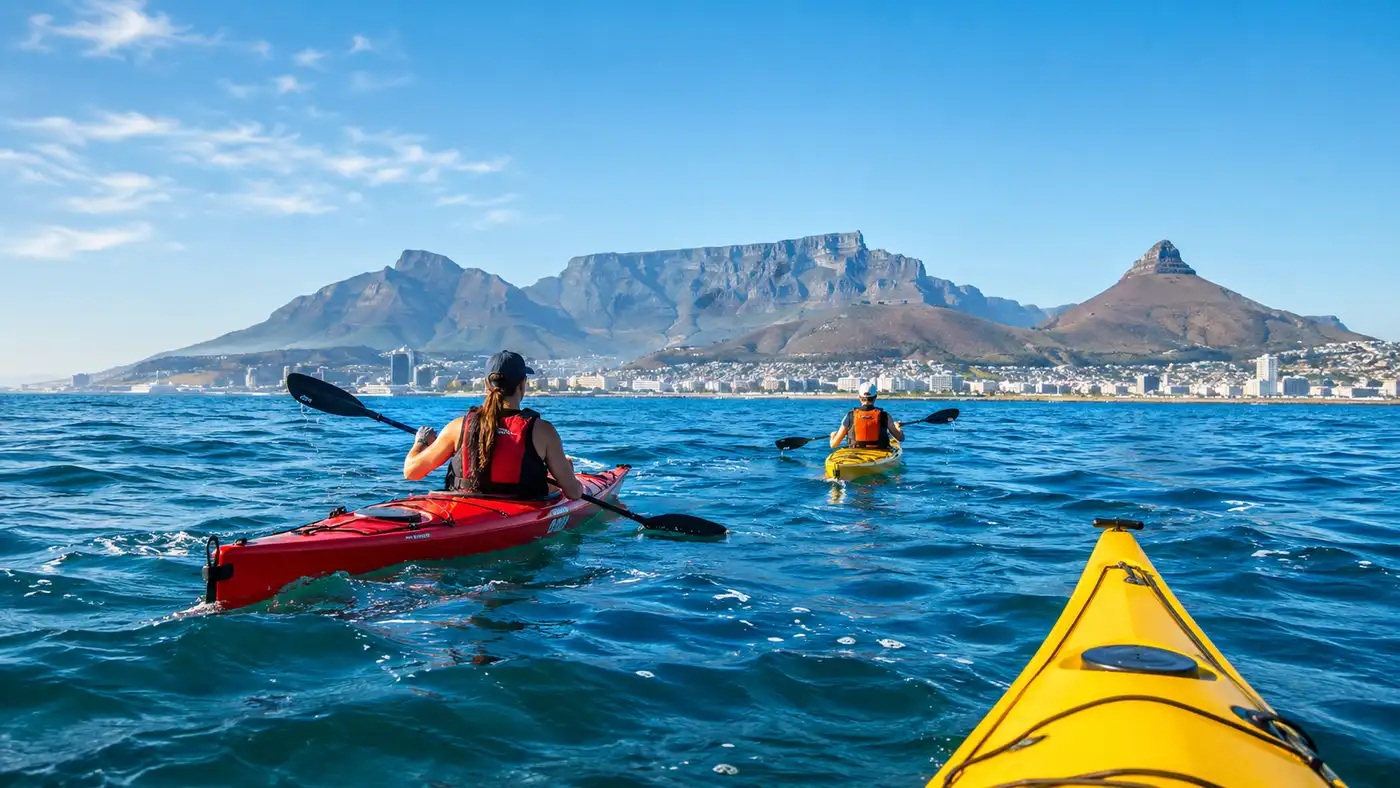
Standing on the slipway at Three Anchor Bay at 6:45 AM, the water often looks like poured bottle glass. You slide your boat in, take three paddle strokes past the granite boulders, and immediately feel the ocean breathing beneath you. That sudden drop under your hull is your introduction to cape town ocean access on the Atlantic side. The Atlantic Seaboard does not behave like a sheltered Mediterranean bay or an inland dam. It is raw, exposed ocean water straight off the Roaring Forties, and learning its quirks makes the difference between an incredible morning on the water and a frantic scramble back toward shore.
Most paddlers who arrive here underestimate the Atlantic. They see sunny skies, check a generic weather app on their phone, and assume an ocean kayak cape town session will be smooth sailing. Then they hit the backline swell, meet the icy upwelling, or get caught when the midday wind switches on like a desk fan. If you want to paddle a sea kayak cape town style without unnecessary drama, you need to understand swells, winds, kelp beds, and water temperatures.
Book your kayaking cape town experience:
The Atlantic Swell: Long Period Energy and Backline Dynamics
The waves hitting the Atlantic Seaboard are rarely generated locally. They travel thousands of kilometers across open ocean from deep south in the Antarctic basin. By the time that energy reaches Mouille Point or Sea Point, it organizes into long-period swells. A swell with an 8-second period feels like a bumpy road. A swell with a 15-second period is a giant, rolling mountain range that moves fast, lifts your sea kayak three meters into the air, and drops you into a trough where the city skyline briefly disappears from view.
It is not necessarily dangerous, but it takes getting used to. Your brain wants to fight the tilt. Beginners often stiffen their hips, lean away from the wave, and end up tipping themselves over. Keep your lower body loose and your blade in the water. The boat can pitch up and down violently while your torso stays balanced. Once you get used to riding those rolling hills, it becomes intoxicating.
The real hazard is where that deep swell touches the seabed. Shallow reef ledges ring the coast around Bantry Bay, Clifton, and Green Point. A smooth, rolling wave out in 20 meters of water will suddenly jack up and break if it runs across a shallow shelf. Local paddlers watch the color of the water closely. Deep indigo means plenty of depth below you. Pale turquoise or brown water churning with foam means rock shelves lie just under the surface, which is where you do not want to be when a rogue set rolls through.
Note: Never paddle inside the surf zone along the Atlantic cliffs unless you have dedicated surfski training. Breaking waves against sheer granite walls create rebounding backwash that can capsize even wide, stable plastic boats within seconds.
Wind Systems and Cape Town Ocean Access Launch Spots
Wind dictates everything here. You can have flat water at breakfast and whitecaps by eleven. The dominant summer wind is the southeaster, locally nicknamed the Cape Doctor. It blows off Table Mountain, howling down through the city bowl and pushing out to sea. This offshore wind creates deceptive conditions. Near the slipways around Granger Bay or Three Anchor Bay, the water looks calm because the coastline shelters you. Paddle 600 meters out, though, and you lose that windbreak. Suddenly you face twenty knots of wind blowing you directly toward Robben Island.
Winter brings northwesterly winds. These bring cold fronts, rain, and heavy onshore swells. An onshore wind makes launch slips messy and drives chop straight onto the rocks, so winter paddling demands careful planning between passing storms. Before you push off, check an app like Windfinder or Windy specifically for gust speeds rather than average wind. When learning how to manage these shifts, reviewing our guide on Cape Town kayaking safety will help you gauge safe margins.
Here is how the main Atlantic kayak launch spots compare under typical seasonal conditions:
| Launch Location | Primary Exposure | Best Wind Direction | Entry Difficulty | Kelp Density |
|---|---|---|---|---|
| Three Anchor Bay | Sheltered cove | Light South / Southeast | Easy (gentle sand/pebble beach) | Moderate |
| Granger Bay (Oceana) | Semi-sheltered harbor | South / Southwest | Moderate (busy boat ramp) | Low |
| Hout Bay Harbor | Enclosed bay | North / Northwest | Easy (slipway inside harbor) | Low to medium |
| Oudekraal | Exposed rocky coast | Dead calm only | Hard (boulder carry) | Very dense |
Water Temperature and the Kelp Forest Buffer
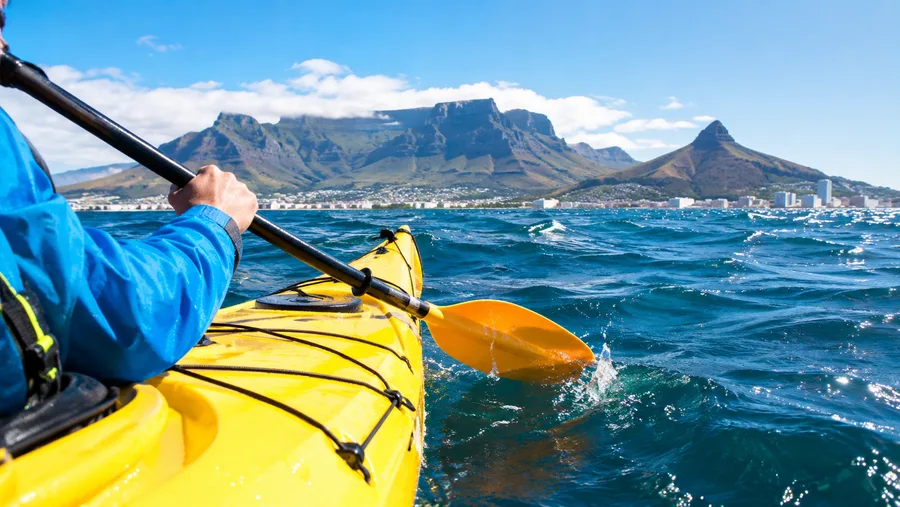
The Atlantic side of the peninsula is freezing. There is no gentle way to put it. Due to Benguela Current upwelling, surface temperatures range from 9 to 14 degrees Celsius, even in mid-January when the air hits 32 degrees. In fact, strong southeasterly summer winds actually pull surface water offshore, dragging the coldest deep water straight to the beaches. If you capsize without thermal protection, cold shock sets in fast. Gasp reflexes can drown an unprepared paddler before they even think about scrambling back into their seat.
Always dress for the water temperature, not the air temperature. A 3mm neoprene farmer john suit combined with a windbreaker paddling top works best for Atlantic ocean kayak trips. It gives your shoulders full rotation while protecting your core if you end up swimming.
The kelp forests, however, are a gift. Huge ribbons of sea bamboo (Ecklonia maxima) anchor themselves to the granite bottom and float to the surface using gas-filled bulbs. Paddling through them feels like navigating an aquatic jungle. Kelp acts as a natural breakwater. It knocks the crest off wind chop and smooths out short swells, giving you safe channels to rest, adjust your gear, and watch for marine life.
Pro tip: If an offshore gust kicks up while you are paddling back, tuck directly into the thickest kelp beds along the shoreline. The kelp suppresses surface chop and wind drag, making your return paddle noticeably easier.
Book your kayaking cape town experience:
Seasonal Cycles and the Best Time for Kayaking
People assume summer is the only window for good sea kayaking cape town outings. That is a mistake. Summer brings warm sun, but it also brings relentless gale-force southeasters that can lock paddlers off the water for five days straight. Autumn, running from March through May, offers some of the absolute glassiest paddling days of the year. The summer winds die down, the winter cold fronts have not arrived yet, and morning water conditions along Sea Point can be calm as a swimming pool.
To pick the right day, look for specific clues in the maritime forecast:
- Swell height: keep Atlantic outings under 1.8 meters if you are paddling a sit-on-top kayak or lack an ocean roll.
- Swell period: look for periods between 11 and 14 seconds for smooth, predictable wave trains rather than jumbled sea states.
- Wind velocity: launch when wind is below 10 knots, and aim to be completely off the water before the midday breeze climbs past 15 knots.
- Tide movement: outgoing spring tides create strong outward pulls near harbor mouths and narrow reef cuts.
Timing your paddle with seasonal weather patterns makes all the difference. For a broader look at the peninsula across all twelve months, check our breakdown on the best time of year for kayaking in Cape Town.
Reading the Sea Before Pushing Off
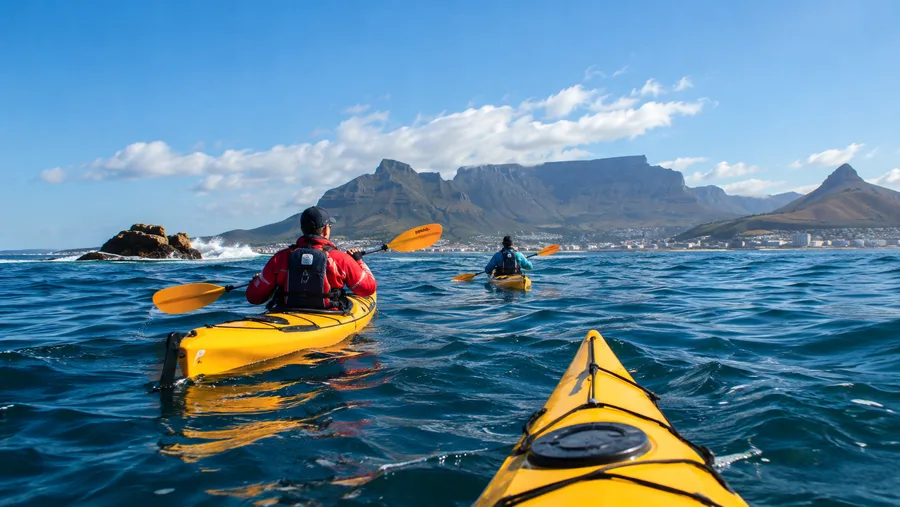
Never rush your launch. When I arrive at the water, I spend at least 12 minutes sitting on the wall or standing near the slipway watching the ocean. Set intervals tell you everything. The ocean runs in pulses. You might see five minutes of dead flat water, followed by a set of three larger swells rolling over the outer reef. If you launch during the lull without watching first, those set waves will surprise you right when you reach the backline.
Look at bird behavior too. Cape cormorants and swift terns hovering and diving in tight groups usually mean a bait ball is being pushed toward the surface. In Atlantic waters, that often means common dolphins or Cape fur seals are working underneath. Seals will frequently pop up within two meters of your hull, snorting loudly to clear their nostrils. They can scare you if you are daydreaming, but they are curious and harmless around kayaks.
Keep these launch habits front of mind before untying your boat:
- Scan the horizon: check for distant whitecaps out toward the shipping lane, which signal that wind is already building offshore.
- Tether your gear: attach your paddle leash and secure dry bags before your hull touches wet sand, because loose gear disappears quickly in kelp.
- Pick your landmark: choose an obvious shore landmark, like the red-and-white Green Point lighthouse, to monitor your drift while paddling.
- Confirm local traffic: give wide clearance to commercial crayfish boats and harbor tenders running out of Granger Bay.
Paddling out here demands humility. The Atlantic does not care about your schedule. If the sets look messy, or the wind is humming through telephone wires onshore, have a coffee on the promenade instead. The ocean will still be there tomorrow.
Frequently Asked Questions about cape town ocean access
Where is the safest place for cape town ocean access on a sea kayak?
Three Anchor Bay is the safest launch site along the Atlantic Seaboard. It sits inside a protected rocky cove with a gentle sandy gradient, shielding paddlers from the worst of the direct ocean swell during launch and landing.
Do I need a wetsuit for sea kayaking on the Atlantic coast?
Yes, thermal protection is strongly advised. Water temperatures frequently sit around 11 to 13 degrees Celsius. A 3mm neoprene long john suit with a windproof paddling jacket keeps you safe from cold shock without restricting arm movement.
How far offshore can I paddle along the Atlantic Seaboard?
Recreational paddlers should stay within 300 to 500 meters of the coastline. Going further puts you in active commercial shipping lanes and exposes you to powerful offshore winds that can quickly push small craft into open ocean.
Quick Reference
- Water temps: 9°C to 14°C year-round
- Ideal swell limit: under 1.8 meters
- Safe wind threshold: under 12 knots
- Best Atlantic launch: Three Anchor Bay
- Peak calm months: March through May
Book your kayaking cape town experience:
The Bottom Line
Kayaking Cape Town Atlantic waters is one of the most rewarding coastal adventures in southern Africa, provided you give the ocean the respect it demands. Watch the swell sets, dress for the cold water, and always wrap up your paddle before the afternoon wind picks up. Grab a buddy, check your forecast carefully, and get out there early to enjoy that clean Atlantic glide.
Read more about kayaking cape town.