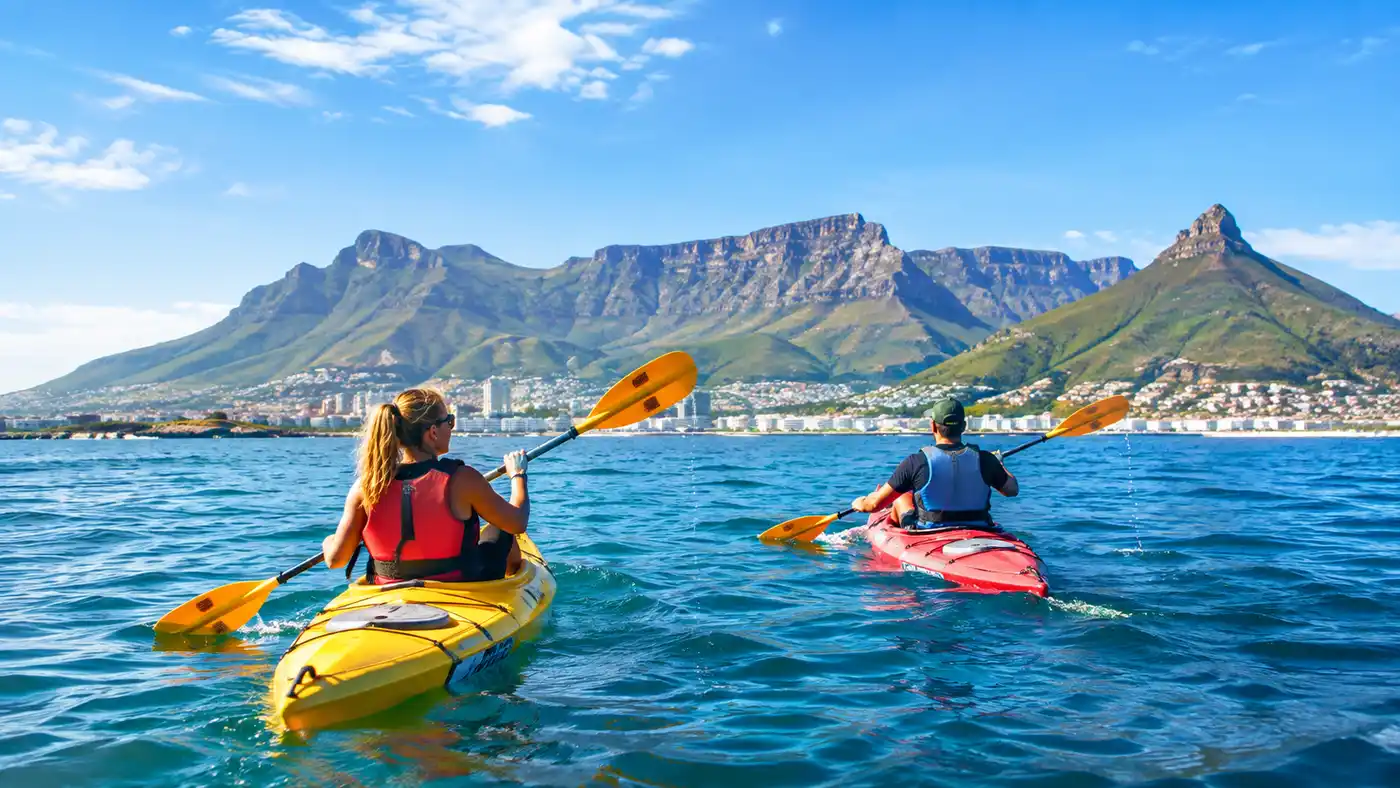
Kayaking vs Canoeing in Cape Town
If you wander down to Three Anchor Bay around 6:30 on a calm February morning, you will see dozens of plastic hulls lined up on the concrete slipway. Tourists regularly ask operators about kayaking vs canoeing cape town, often using the two words interchangeably as they pull on neoprene booties. The confusion makes sense if you grew up paddling quiet lakes or flat rivers, but out here where two oceans collide around a rocky peninsula, the distinction between these small craft dictates where you can go and whether you stay afloat.
Cape Town has plenty of water, though very little of it is forgiving. From the icy rollers of the Atlantic Seaboard to the gentler shallows of False Bay and the brackish lagoons tucked behind coastal dunes, choosing the right vessel shapes your entire morning. Many travelers arrive hoping to rent a traditional canoe for sea exploration, only to find that commercial outfits along the coast run sea kayaks almost exclusively. Understanding why that is, and where you actually can paddle a canoe or kayak across the Western Cape, will save you a lot of wasted driving and soggy gear.
Book your kayaking cape town experience:
What's the difference between canoeing and kayaking in local waters?
People constantly ask if canoeing and kayaking is the same thing, and the short answer is no. A traditional canoe is an open-deck vessel where you sit on an elevated bench or kneel on the hull bottom, using a single-bladed paddle to propel yourself forward. A kayak sits much lower to the water surface. You stretch your legs out straight inside a cockpit or sit on top of a molded plastic deck, driving the boat with a double-bladed paddle that dips alternately on your left and right sides.
That double blade changes everything on coastal waters. When a stiff breeze kicks up off Lion's Head, a double-bladed kayak paddle gives you constant cadence, rhythmic leverage, and the ability to brace against rolling chop. Trying to feather an open-water stroke with a single wooden canoe paddle against a 15-knot offshore wind is exhausting work. In South Africa, you will hear old-timers refer to surfskis and touring kayaks simply as canoes, which muddles things further for international visitors searching online for canoe and kayak rentals.
Sit-on-top cape town kayaks have become the standard workhorse for guided excursions. They are molded from thick polyethylene, featuring hollow air pockets that make them virtually unsinkable even when completely swamped by a dumping shorebreak. Traditional open canoes lack those drainage scuppers. If water washes over the gunwales of an open canoe, it stays inside the boat until you bail it out with a bucket or drag it onto dry sand.
You might occasionally see specialized outrigger canoes cutting through Granger Bay with six paddlers moving in unison. These ocean canoe rigs feature a lateral float called an ama, rigged to the main hull with wooden spars to prevent capsizing in big ocean swells. Unless you join an organized outrigger club, your paddling options in the city center will almost certainly feature rotomolded kayaks rather than open canoes.
Can you canoe in the ocean around the Cape Peninsula?
The short answer is: practically never in a conventional canoe. People occasionally ask local rental shops, can you canoe in the ocean along the Atlantic Seaboard? You could theoretically launch an open canoe into a glass-calm cove on an exceptionally rare windless morning, but doing so is a terrible idea. Cape Town sits directly in the path of southern ocean groundswells. Even on days when the surface looks flat from the road, long-period swells rise suddenly as they drag across shallow kelp beds, easily cresting over the low sides of an open vessel.
Understanding local maritime weather helps explain why sea kayaking in Cape Town Atlantic ocean conditions explained by guides always emphasizes stability and self-draining decks. Water temperatures along Clifton and Sea Point hover between 10 and 14 degrees Celsius for most of the year. If you capsize an open canoe 800 meters from shore, righting the craft and clambering back inside while treading frigid water is nearly impossible for an unassisted paddler. Hypothermia sets in rapidly, often within 25 minutes.
Note: Open Canadian-style canoes are completely unsuitable for Table Bay or False Bay. Even a modest 1-meter swell will swamp an open hull within minutes, leaving you stranded in frigid water.
A sit-on-top sea kayak handles those exact same conditions with calm predictability. If a rogue wave sloshes across your lap, the water drains instantly through self-bailing scupper holes beneath your heels. If you roll over, you simply flip the plastic boat back right-side up and haul your torso over the top deck like a seal scrambling onto a rock. That fundamental safety margin is why ocean canoe trips for tourists simply do not exist here without outriggers or sealed kayak cockpits.
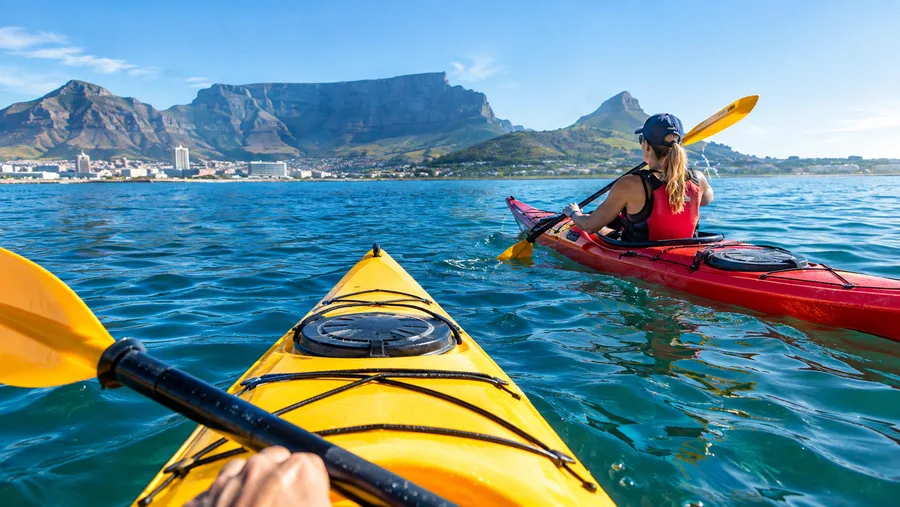
Kayaking vs canoeing cape town: comparing locations and watercraft
Paddlers looking for genuine canoeing cape town experiences need to look slightly inland toward protected vleis, rivers, and estuaries. The city has several wetland reserves where flatwater canoeing thrives without the relentless Atlantic surge. Meanwhile, kayaking cape town operators monopolize the coastal bays where marine life congregates around kelp forests and rocky points.
Here is how the typical paddling spots, vessel types, and water conditions compare across the region:
| Launch Location | Craft Type Used | Water Type | Typical Cost (ZAR) | Experience Needed |
|---|---|---|---|---|
| Three Anchor Bay | Sit-on-top sea kayak | Open Atlantic ocean | R450 - R550 | None (guided) |
| Simon's Town Waterfront | Twin sit-on-top kayak | Sheltered ocean bay | R450 - R500 | Beginner |
| Zandvlei Estuary (Muizenberg) | Canoe / flatwater kayak | Protected tidal lagoon | R100 - R200 | None |
| Hout Bay Harbour | Ocean touring kayak | Working harbor / swell | R450 - R550 | Beginner to intermediate |
| Berg River (Velddrif) | Open canoe / touring kayak | Slow-moving river | R250 - R350 | Beginner |
Zandvlei, located near Muizenberg on the False Bay coast, serves as the local hub for flatwater canoing and recreational kayaking. Local clubs keep racks of open canoes, sprint kayaks, and stand-up boards here. The water is shallow, wind-whipped at times, but free of breaking waves. If you have young children or want a relaxed morning testing your J-stroke with a single-blade paddle, an inland lagoon or quiet estuary makes far more sense than booking a trip out into the ocean swells.
For wildlife watching, the ocean routes beat the vleis every single time. Launching a sit-on-top kayak into False Bay lets you paddle right past the granite boulders of Boulders Beach. While paddling near the shore, check out kayaking in Simon's Town calm waters and wildlife to see how close you can safely get to African penguins without disturbing their nesting areas. Inland canoeing spots offer kingfishers, flamingos, and roosting herons, but you will not encounter Cape fur seals surfing your wake in a lagoon.
Book your kayaking cape town experience:
Managing wind, swell, and cold water safety
Cape Town has a fierce reputation for wind, and local paddlers respect it daily. The prevailing summer wind, the southeaster, blows diagonally off the land along the Atlantic Seaboard. A gentle morning breeze can build into a 30-knot gale by midday, kicking up whitecaps and pushing unwary paddlers out toward open water. Whether you choose kayaks or canoes, checking the morning wind forecast using apps like Windfinder or Windy is mandatory before loading your car.
Pro tip: Schedule your ocean paddling for the first morning of your Cape Town stay. South Atlantic weather systems shift quickly, and having buffer days lets you reschedule if heavy swell or gale-force winds cancel your original launch.
Commercial kayak guides follow strict operating windows. Launches usually happen between 6:00 and 9:00 in the morning, long before the thermal sea breezes wake up. By 11:30, ocean conditions are often too choppy for relaxed exploration, and operators haul their trailers back up the ramp. Canoeing on inland waterways allows for slightly more flexibility, though afternoon gusts can still turn a peaceful river paddle into a grinding arm workout.
If you plan to rent canoes and kayaks independently without a guide, keep these practical factors in mind:
- Life jacket fit: Ensure your life jacket sits snugly against your ribcage without riding up to your ears when seated.
- Thermal protection: Wear a windbreaker or 2mm neoprene top even under bright sunshine, as ocean spray drops your core temperature quickly.
- Leash discipline: Always attach your paddle leash to the boat hull on open water, because a dropped paddle blows away faster than you can swim after it.
- Dry storage: Place car keys and phones inside certified dry bags, then tie those bags securely to deck bungees rather than resting them between your feet.
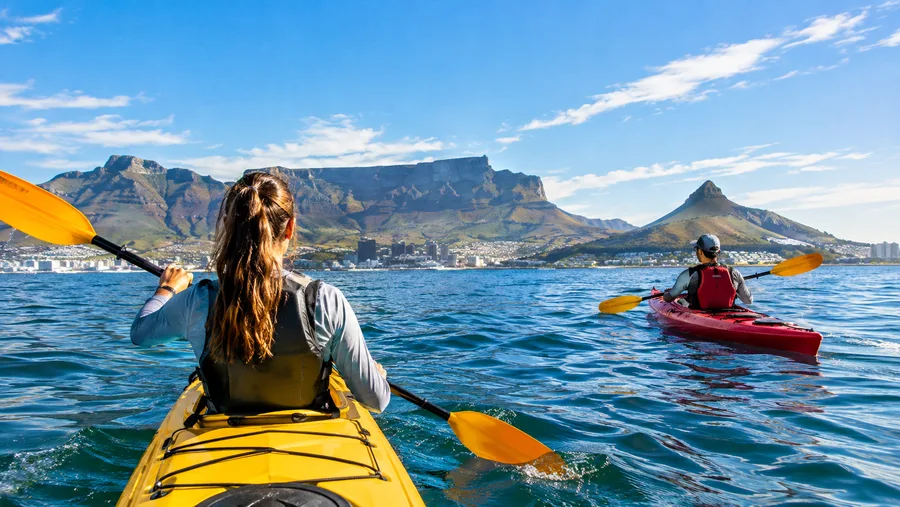
Choosing between kayaking or canoeing for your itinerary
Deciding between canoeing vs kayaking comes down to the kind of adventure you want during your trip. If your goal is seeing dolphins, watching sunfish basking in kelp beds, or staring up at the sheer cliffs of the Twelve Apostles from sea level, sea kayaking is your only realistic option. There are no commercial operators running canoe trips along those ocean cliffs, simply because the boats cannot handle the hydraulic backwash off the granite boulders.
On the other hand, traditional canoeing offers a quiet, unhurried rhythm that kayaks struggle to match. Canoes carry significantly more gear, making them ideal for multiday camping excursions along the Breede River, about two hours east of Cape Town. Out there, families pack large cooler boxes, folding chairs, and tents right into the belly of Canadian-style canoes, drifting downstream between vineyards and limestone bluffs without wearing heavy spray skirts or worrying about rogue swells.
Consider your personal priorities before booking your rental:
- Choose sea kayaking: If you want to encounter marine mammals, view iconic landmarks from the ocean, or only have a two-hour window available in your city sightseeing schedule.
- Choose inland canoeing: If you prefer calm freshwater, want to bring picnic hampers and camera tripods without waterproof housings, or are traveling with small dogs and toddlers.
- Choose surfski paddling: If you have high aerobic fitness, solid ocean balance, and want to surf downwind swells at high speeds along the coast.
Most travelers find that an early morning coastal kayak run fits neatly into a holiday schedule. You can launch from Three Anchor Bay at 7:00, spend 90 minutes paddling alongside playful seals, rinse off the salt spray, and be sitting in a beachfront cafe drinking flat whites in Sea Point before 9:30. An inland canoe trip usually demands a full day commitment, driving out past the suburban perimeter to find suitable flat water.
Frequently Asked Questions about kayaking vs canoeing cape town
What's the difference between canoeing and kayaking in Cape Town?
In Cape Town, kayaks are closed-deck or sit-on-top boats with double-bladed paddles used primarily on the open ocean. Canoes are open-deck craft using single-bladed paddles, restricted to flatwater vleis, estuaries, and sheltered rivers like the Breede or Berg rivers.
Can you canoe in the ocean around Cape Town?
No, standard open canoes cannot handle Atlantic swells or wind chop safely. Seawater quickly washes over the low sides, swamping the craft. Only sealed sit-on-top sea kayaks or specialized outrigger canoes with lateral floats are used in coastal waters.
Do I need previous experience to go sea kayaking in Cape Town?
No previous experience is needed for guided trips. Operators use wide, stable sit-on-top plastic kayaks that are very difficult to tip over, and professional guides provide paddling instructions and safety briefings before launching into the water.
Where can I rent a canoe for freshwater paddling near the city?
Zandvlei Estuary near Muizenberg is the closest reliable freshwater location for canoeing near Cape Town. For multi-day river trips, canoe hire outfits operate along the Breede River near Robertson and Swellendam.
Quick Reference
- Ocean tours exclusively use sit-on-top sea kayaks
- Canoes are restricted to inland vleis and rivers
- Atlantic water stays cold (10°C to 14°C) year-round
- Best ocean conditions occur between 6:00 AM and 9:00 AM
- Guided kayak trips average R450 to R550 per person
Book your kayaking cape town experience:
The Bottom Line
Do not let terminology trick you into booking the wrong adventure. If you want to see Table Mountain from the water or paddle through thick strands of sea bamboo with seals darting beneath your hull, look for guided sea kayaking along the Atlantic Seaboard. If your heart is set on quiet drifting with a single-blade paddle across glassy reed beds, pack a picnic and head out toward the inland vleis. Cape Town has room for both craft, provided you put each hull in the water it was actually built to handle.
Read more about kayaking cape town.