Kayaking Near V&A Waterfront: Routes and Restrictions
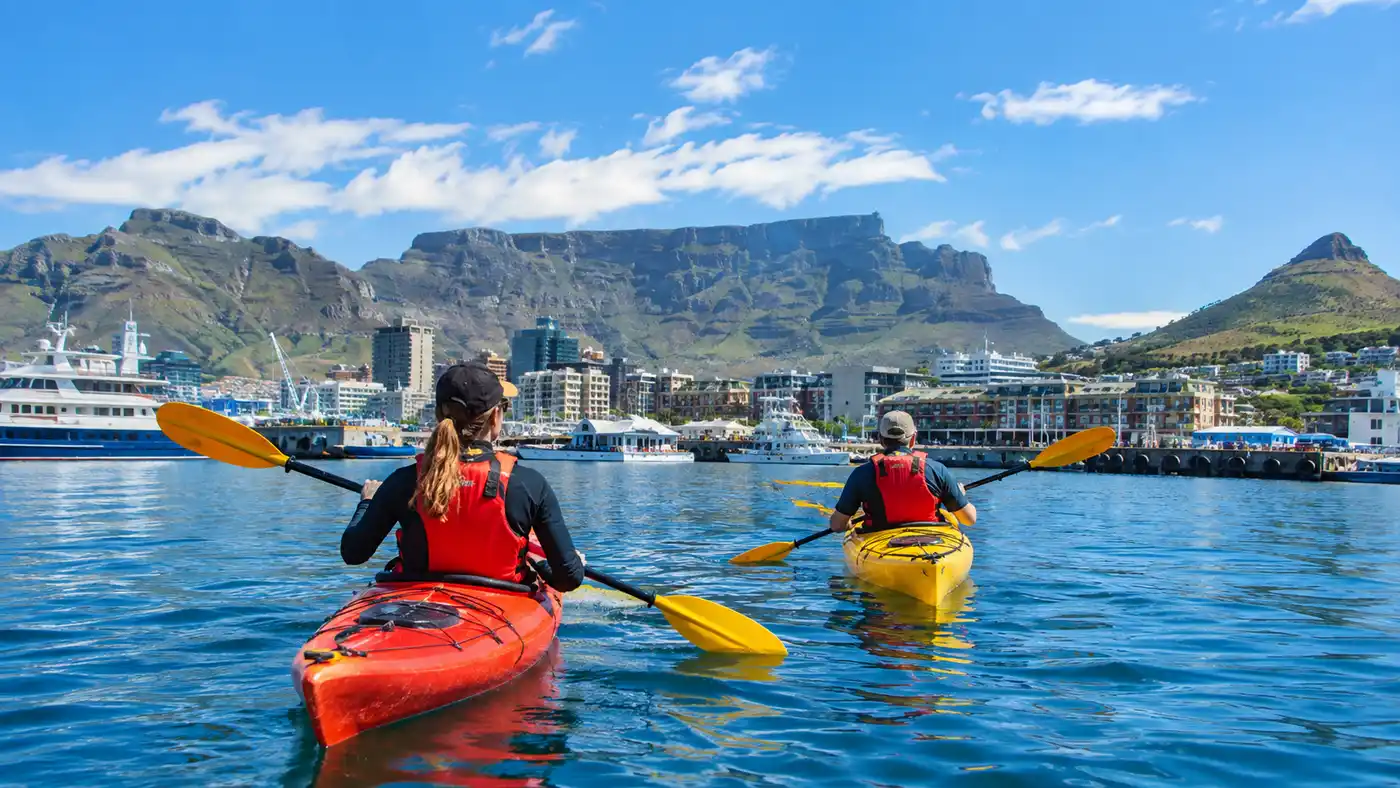
Most travelers see the Victoria & Alfred docks from the deck of a sunset catamaran, sipping cold bubbly while twin diesel engines hum underneath the floorboards. That is fine, I suppose, but you miss the sheer scale of the place when you are twelve feet above the waterline. Settling low into a plastic cockpit right at sea level is completely different, which is why kayaking cape town waterfront waters has become one of the most rewarding ways to spend two hours in the city. You hear the clanking rigging of commercial trawlers, smell the salt spray clinging to giant black mooring buoys, and often find yourself eye-to-eye with an inquisitive Cape fur seal scratching its belly on an old wooden jetty.
Before you drag a boat down to the nearest stone slipway, you need to understand that this is not a casual free-for-all swimming pool. The waters wrapped around the precinct are divided between a strictly managed commercial port and a sheltered inland canal system, each carrying its own distinct legal boundaries, hazards, and permits. Getting your route wrong can leave you facing a stern maritime security patrol or paddling frantically against a sudden southeasterly gale. Here is an honest breakdown of where you can actually put a blade in the water, what the harbor master says about it, and how to stay out of trouble.
Book your kayaking cape town experience:
Understanding Kayaking Cape Town Waterfront Routes
If you tell a local you want to do some waterfront kayaking, they will usually ask whether you mean the canals behind the shopping mall or the open ocean out past Granger Bay. They are two entirely separate experiences, separated by concrete seawalls, heavy security gates, and massive steel swing bridges.
The canal system begins near the CTICC and threads past luxury residential apartments, the One&Only hotel, and Battery Park before dead-ending at the marina lock gates. This is flat, sheltered, brackish water. It feels like an urban river paddle where the biggest hazard is dropping your phone or drifting too close to a luxury yacht anchor line. On any sunny morning, you will see people trying out canal kayaking or trying their hand at canal canoeing alongside stand-up paddleboarders.
Out beyond the breakwaters, the Atlantic Ocean is a different beast entirely. You are paddling exposed ocean along the Mouille Point coastline, facing genuine swell, cold Benguela currents, and brisk offshore winds. For true ocean excursions, paddlers launch from the small, gritty slipway at the Oceana Power Boat Club in Granger Bay, just around the corner from the shopping precinct. Understanding that physical divide saves a lot of confusion when booking an outing or planning an independent paddle.
Pro tip: If you are planning an independent paddle in the canals, park at Battery Park underground parking on Chiapinni Street. The lift drops you about 40 meters from the canal steps, saving you from hauling gear across the main pedestrian quays.
The Battery Park Canal Route: Relaxed Urban Paddling
For beginners, families, or anyone nursing a mild hangover from wine tasting in Constantia, canal kayak routes are blissfully easy. Battery Park serves as the operational hub for most inland water sports here. You step off a low pontoon straight into water that rarely develops more than a slight ripple, even when the wind is whistling through the masts in the yacht basin. A morning session along the canals is peaceful, with early dog-walkers pacing the brick paths while hotel staff set out breakfast tables across the water.
The full route runs roughly 1.6 kilometers in one direction, giving you a leisurely 3.2-kilometer round trip that takes about 45 to 60 minutes at a gentle pace. Paddling south leads you beneath arched pedestrian bridges toward the convention center, flanked by manicured reed beds and modern apartment balconies. Paddling north takes you past the private islands of the One&Only, where massive residences hang directly over the water. You cannot paddle all the way through to the working harbor basins because the canal terminates at lock gates designed to isolate the canal water levels from the tidal ocean swings.
A few companies run rentals right off the grass at Battery Park. You generally pay around R150 to R250 per person for an hour on a sit-on-top craft. It requires no previous paddling experience, no heavy drysuits, and very little physical strain. If someone asks me for an easy introduction to kayaking v&a waterfront waterways without the threat of sea sickness, yes please, the canal is the answer every single time.
Still, remember that these canals are surrounded by high-end private residences. Sound carries across water with shocking clarity. Yelling across the canal at seven in the morning will earn you angry glares from residents sipping espresso on their verandas. Keep your voices down and enjoy the quiet.
Harbor Kayaking Cape Town Waterfront Rules and Restrictions
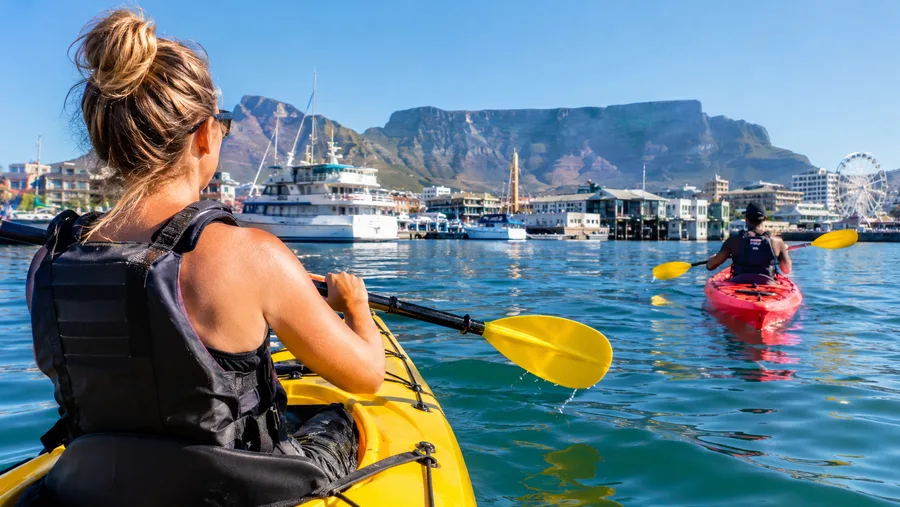
This is where many independent paddlers get caught out. Transnet National Ports Authority manages the Port of Cape Town, which includes the working basins of the V&A Waterfront. It is one of the busiest maritime commercial hubs in South Africa, handling everything from deep-sea fishing trawlers and oil rig service vessels to giant cruise liners that dwarf three-story buildings. Because of that heavy industrial traffic, private unguided paddling inside the working harbor basins is completely banned.
You cannot simply roll up to Quay 4, slide your kayak waterfront craft past the seals lounging on the slipway, and paddle among the tugboats. If you attempt this, Port Control will spot you on camera within three minutes, and a harbor patrol boat will intercept you with zero patience. Fines are stiff, and you run a very real risk of having your gear confiscated. Propeller wash from a working pilot tug can flip a small plastic boat in seconds, and commercial skippers sitting high on a bridge cannot see a low kayak sitting in their blind spot fifty meters ahead.
Note: Commercial harbor basins - including Victoria Basin, Alfred Basin, and the Duncan Dock tanker berths - are strictly closed to recreational paddlers. Never cross past the pedestrian swing bridge into ship berths without official port clearance.
If you want to experience waterfront kayak cape town ocean views safely, you must launch from authorized ocean access points outside the commercial basin gates. Licensed operators hold special commercial permits that allow them to guide small groups out from the Granger Bay slipway, hugging the shoreline toward the Mouille Point lighthouse. These guided groups maintain radio contact with port control and know precisely where the invisible boundary lines sit.
Book your kayaking cape town experience:
Comparing Waterfront Kayak Launch Sites and Options
To help you decide which route matches your comfort level and appetite for adventure, it helps to see the two primary options side by side. One is a calm freshwater-mix canal stroll; the other is a genuine Atlantic marine expedition.
| Route / Spot | Water Type | Average Cost (ZAR) | Skill Level | Permit Needed |
|---|---|---|---|---|
| Battery Park Canals | Sheltered Canal | R150 - R250 / hr | Complete Beginner | Operator Rental / Local Club |
| Granger Bay Ocean Route | Atlantic Open Ocean | R450 - R600 / tour | Moderate Fitness | Guided Operator / SAMSA Compliant |
| Inner Harbor Basins | Commercial Port | Not Available | Prohibited | Port Captain Special Clearance Only |
If you venture onto the ocean side near Granger Bay, the gear requirements jump immediately. Canal paddlers can get away with shorts, a t-shirt, and a basic life vest, but Atlantic waters sit around 12 to 15 degrees Celsius year-round. Falling into that water without proper flotation and thermal awareness will ruin your morning fast.
Before launching into open coastal water anywhere near the harbor precinct, check that your setup complies with local safety conventions:
- Flotation aids: A dedicated, properly fitted 50N buoyancy vest is legally mandatory for all coastal paddling craft.
- Communication device: Keep a mobile phone sealed in a certified waterproof lanyard case around your neck, programmed with the NSRI Station 3 emergency number (087 094 9774).
- Whistle and signaling: A pea-less marine whistle attached to your vest strap allows you to alert motor vessels when waves obscure their vision.
- Leash system: In coastal swell, a sudden gust can rip a loose paddle or boat away faster than you can swim after it.
Wind, Weather, and Ocean Conditions Along the Atlantic Seaboard
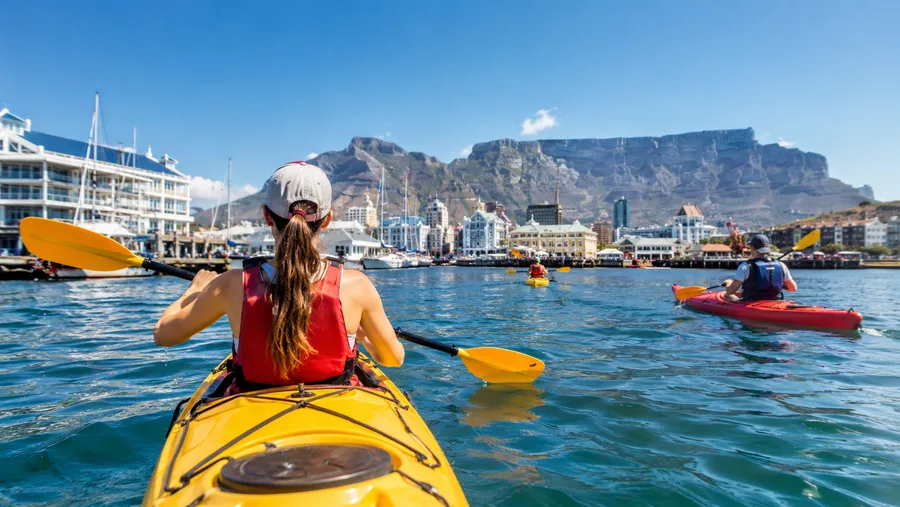
Cape Town weather has broken the spirit of many ambitious paddlers. The city is famous for its microclimates; it might be dead calm in the city bowl while forty-knot gusts are ripping whitecaps across Table Bay. When planning v&a waterfront kayaking, your entire schedule revolves around wind patterns rather than what time you feel like waking up.
The southeaster - locally called the Cape Doctor - is an offshore wind that blows hard during the spring and summer months, from November through February. Because it blows off the land out toward the open sea, the water right against the seawalls often looks deceivingly flat. Do not let that glassy surface fool you. Once you paddle two hundred meters away from the lee of the high waterfront buildings, that offshore wind catches your boat and tries to push you toward Robben Island. Fighting your way back against a twenty-knot offshore wind in a wide plastic sit-on-top kayak is exhausting, terrifying work.
Morning slots are almost always the safest window. Between 6:30 AM and 9:00 AM, the wind often sleeps, the ocean swell is organized, and marine life is actively feeding. You can learn more about general regional weather patterns in our guide to Sea Point and Mouille Point kayaking, which shares this exact stretch of exposed coastline. If the Atlantic side is simply too blown out, many paddlers make the 45-minute drive south across the peninsula for kayaking in Simon's Town, where False Bay frequently offers calmer, warmer waters shielded from western swells.
Knowing where you are legally allowed to paddle and where security will flag you down is just as important as reading the weather. To keep things clean, keep these zone definitions in mind:
- Green Zone (Canals): Battery Park through to the marina lock gate, fully open for recreational craft, canal kayak rentals, and SUPs.
- Amber Zone (Granger Bay coastal fringe): Open ocean from the Oceana slipway outward toward Mouille Point, permitted for capable ocean kayakers, preferably under commercial guide supervision.
- Red Zone (Commercial harbor basins): Victoria Basin, Alfred Basin, Robinson Dry Dock, and commercial container terminals, strictly prohibited to all private paddlecraft.
Frequently Asked Questions about kayaking cape town waterfront
Can I bring my own kayak and launch anywhere in the V&A Waterfront?
No. You cannot launch inside the commercial harbor basins. If you own a boat, you can launch at the public steps at Battery Park for the canal system, or use the boat slipway at Granger Bay for ocean access. The main shopping piers and yacht berths are off-limits for launch.
Do I need to worry about sharks while paddling near the waterfront?
Ocean-side paddlers near Granger Bay share the water with abundant marine life, including dolphins, sunfish, and Cape fur seals, but great white shark encounters along this cold Atlantic stretch are rare. Most shark activity in the Western Cape concentrates on the warmer False Bay coast or around seal colonies further south.
Can children participate in waterfront kayaking tours?
Canal kayaking is suited for kids as young as six or seven when paired with an adult in a double kayak. For open ocean tours out of Granger Bay, licensed operators set an age minimum between 10 and 12 years, depending on sea conditions and wind strength on the day.
What happens if I accidentally paddle into the commercial ship channel?
Port control actively monitors harbor traffic with radar and closed-circuit cameras. An NSRI sea rescue or port security craft will intercept you quickly. You will be escorted back to land, likely reprimanded, and could face administrative fines under the National Ports Act.
Quick Reference
- Canals: sheltered, 3.2 km round trip, ideal for beginners.
- Commercial harbor: strictly closed to private paddlecraft.
- Ocean launch: Oceana slipway in Granger Bay only.
- Wind warning: morning paddles avoid dangerous offshore afternoon southeasters.
Book your kayaking cape town experience:
My Take on Paddling the Waterfront
If you want my honest advice, do not look at waterfront paddling as a binary choice between boring canals and intimidating ocean swell. Do both if your schedule allows it. An afternoon gliding through the quiet canals gives you a peek at architectural corners of Cape Town you cannot see from the road, with zero stress and no salty spray in your eyes. It is easy, relaxing, and straightforward.
If you crave salt on your lips and your arms are ready for genuine work, book an early morning ocean trip with a licensed Granger Bay operator. Slicing through the Atlantic swell while Table Mountain towers over the harbor cranes behind you offers a perspective on this city that no open-top bus or rooftop bar can match. Watch the wind flags atop the yacht club, respect the harbor master rules, and enjoy every stroke.
Read more about kayaking cape town.