Kayaking Near Cape Town Best Coastal Areas
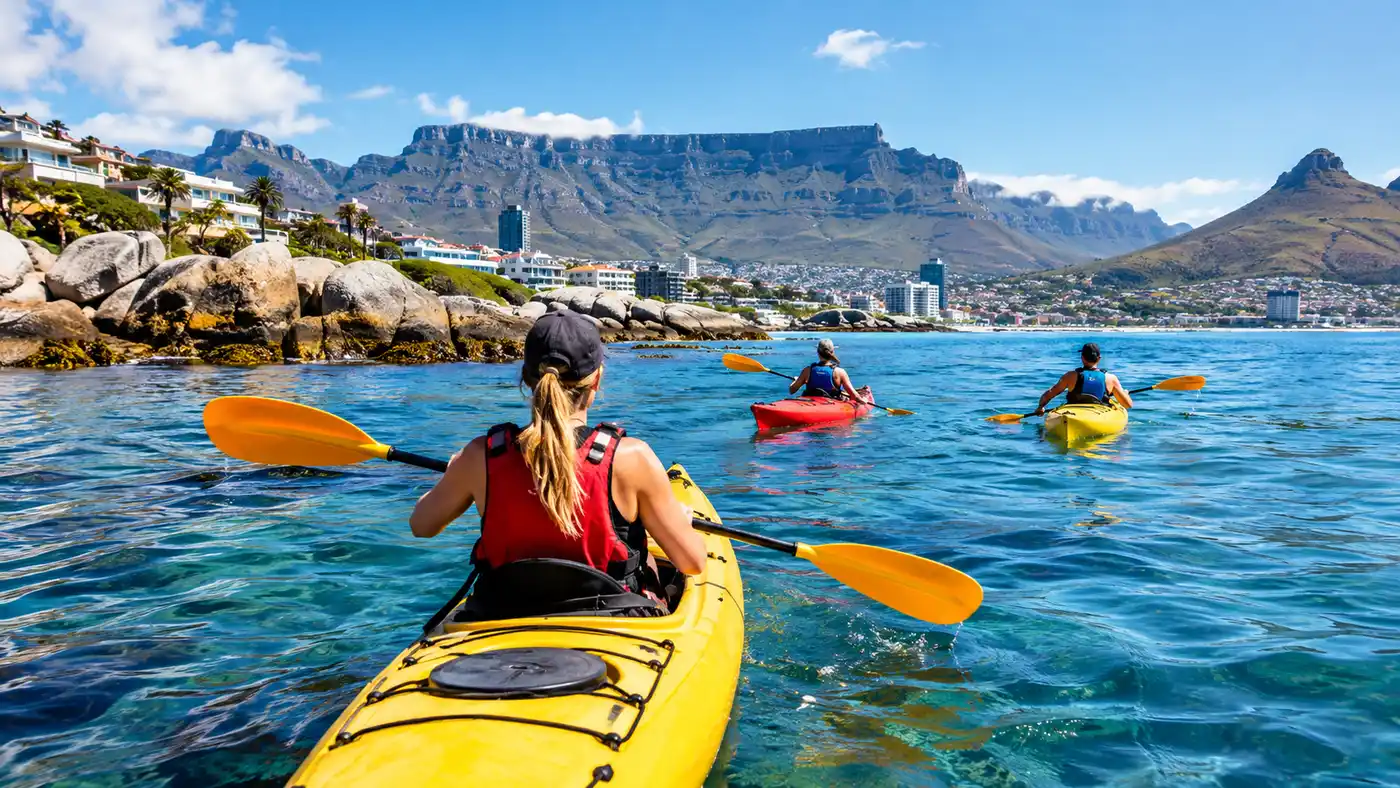
You can smell the kelp before you even hit the sand. If you launch a sea kayak cape town route from Three Anchor Bay just past 7:00 AM, the ocean sits dead flat like green glass, and Table Mountain looms overhead without its famous tablecloth cloud. Most visitors only ever view the coastline through an Uber window or from the top of the cable car. That is a mistake.
Getting onto the water changes the entire geography of the peninsula. Out past the kelp beds, the city noise disappears, replaced by the rhythmic slap of chop against plastic and the sudden puff of a cape fur seal surfacing five feet from your paddle blade. The coastline splits into two completely different marine worlds: the biting Atlantic side with its dramatic granite cliffs and roaming dolphin pods, and the sheltered False Bay side where the water is five degrees warmer and jackass penguins dart beneath your hull. Here is where you should actually put a boat in the water.
Hout Bay: The Seal Sanctuary and Atlantic Swell
Hout Bay feels like a working fishing village that accidentally collided with a dramatic amphitheater of mountains. You launch right off the slipway inside the commercial harbor, sliding past rusty trawlers smelling of diesel and salt before emerging into the open bay. On a good day, the bay is reasonably protected by the towering bulk of the Sentinel, an imposing pyramid of rock that guards the western mouth of the harbor.
The main goal for most paddlers is Duiker Island. It is not really an island in the tropical sense, just an exposed, craggy rock slab packed with roughly 6,000 Cape fur seals. Paddling out takes about 35 minutes across water that ranges from deep ink blue to pale emerald. The smell hits you first, honestly. It is pungent, fishy, and impossible to mistake for anything else. But once you settle your boat about 25 meters off the rocks, the entertainment begins. Seal pups shoot underneath your hull like torpedoes, blowing bubbles and doing corkscrews in the wash. If you want a deeper look at the marine life here, read through this Hout Bay kayaking guide for detailed animal behavior tips.
Pro tip: Book the 8:00 AM slot. The southerly winds almost always kick up around 11:30 AM, turning what was a lazy coastal kayak paddle into an exhausting grind back to the harbor slipway.
Kayak Hout Bay trips usually run for two hours, giving you plenty of time to drift along the foot of Chapman's Peak Drive. Looking up at sheer rock walls rising hundreds of meters straight out of the foaming surf makes you feel tiny in the best possible way. The Atlantic swell rolls through here with serious power, so even on quiet mornings, your kayak will lift and drop by several feet on slow, rhythmic rollers. You do not need experience for a guided paddle, but you will definitely feel your shoulders the next morning.
Book your kayaking cape town experience:
Atlantic Seaboard: Three Anchor Bay to Granger Bay
If you ask locals where to find the most convenient cape town kayaking, they will point you straight to the Atlantic Seaboard. Launches usually happen out of Three Anchor Bay, a tiny beach tucked between Sea Point and Green Point. It does not look like much from the road - just a sliver of sand hemmed in by concrete retaining walls and kelp-draped boulders. Once you clear the narrow channel, the entire curve of the Atlantic Seaboard opens up in front of you.
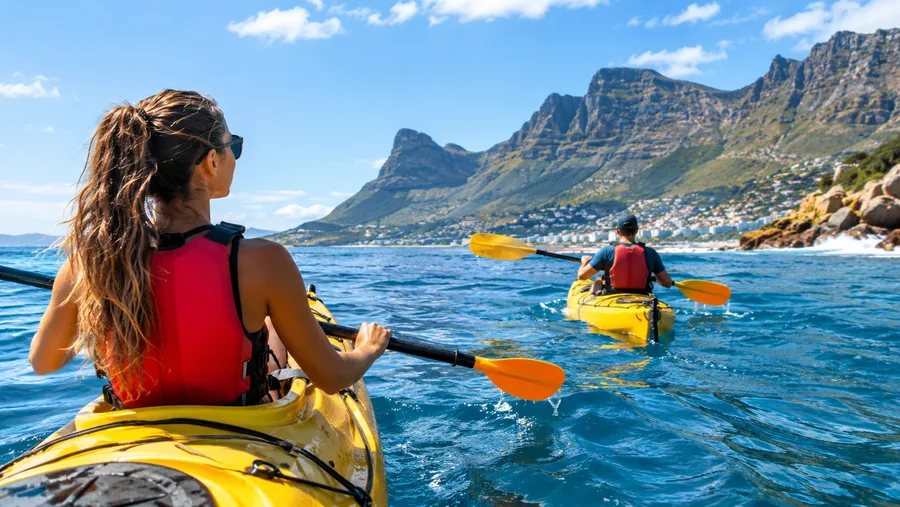
Paddling this stretch puts you directly underneath the shadow of Signal Hill and the Lion's Head ridge. On clear mornings, you can paddle east toward the Green Point Lighthouse, with its bright red and white candy stripes standing out against the grey skyline. The route past Granger Bay gets you surprisingly close to the shipping lanes and the entrance to the V&A Waterfront. Many people searching for kayaking waterfront routes actually wind up launching from this nearby shore because paddling inside the commercial shipping basins is heavily restricted for safety reasons. To see how sea conditions change along this strip, check out this Sea Point and Mouille Point route guide before picking a date.
Dolphins frequent this stretch. Heaviside's dolphins - small, shy, and endemic to this coast - show up in pods of three or four, skimming the water just beyond the kelp forests. Larger bottlenose dolphins pass through too, sometimes surfing the outer swell alongside paddlers. The water here is undeniably brisk, rarely climbing above 13 degrees Celsius, so keeping your balance is a wonderful incentive not to tip over.
Note: Ocean fog can roll in along the Atlantic Seaboard within twenty minutes, dropping visibility to almost zero. If you see white mist spilling over the Sea Point promenade, head back to shore immediately.
Simon's Town and False Bay: Warmer Waters and Penguin Encounters
Head thirty miles south toward Simon's Town if the open Atlantic swell sounds a bit too intimidating. False Bay is fundamentally different from the west coast of the peninsula. The water here can reach 18 degrees in high summer, and the bay is shielded from the prevailing Atlantic swells by the spine of the Cape Peninsula. Simon's Town harbor itself is full of naval vessels, but once you clear the pier heads, you enter a maze of giant, rounded granite boulders that look like giant marbles dropped into turquoise water.
This is the best place to kayak if your goal is getting close to the famous African penguin colony at Boulders Beach without paying the national park gate fee or jostling with crowds on wooden boardwalks. You cannot pull your boat up onto the actual nesting beach - rangers will blow a whistle at you instantly - but you do not need to. Penguins spend their mornings hunting small fish in the kelp frags right around the swimming coves. They will often surface right next to your cockpit, blinking their eyes and diving again before you can grab your phone.
The paddle route takes you past Windmill Beach and Seaforth Beach, both tucked inside sheltered granite pockets. It is leisurely. Families and beginners who might feel uneasy about open ocean rollers on the Atlantic side will find False Bay far more forgiving. You still get chop when the wind blows, of course, but the long, rolling ocean swell is absent.
Book your kayaking cape town experience:
Coastal Kayak Spots Compared
Cape Town has completely distinct launch zones. Each spot delivers a totally different experience depending on what you care about most - whether that is wildlife, water temperature, or mountain scenery.
| Location | Water Temp | Typical Conditions | Primary Wildlife | Skill Level |
|---|---|---|---|---|
| Hout Bay | Cold (11 - 14°C) | Moderate rolling ocean swell | Cape fur seals, cormorants | Beginner to Intermediate |
| Three Anchor Bay | Cold (10 - 13°C) | Low to medium swell, kelp beds | Dolphins, sunfish, whales (seasonal) | Beginner to Intermediate |
| Simon's Town | Mild (16 - 19°C) | Protected, low chop, calm bays | African penguins, octopuses | Complete Beginner |
| Langebaan Lagoon | Warm (18 - 21°C) | Flat lagoon water, shallow flats | Flamingos, coastal wading birds | All levels |
Wilder Places to Kayak: Cape Point and Langebaan
If you are willing to drive an hour or two out of town, the options get noticeably wilder. Down near the tip of the peninsula lies Buffels Bay inside the Cape Point Nature Reserve. It is remote, rugged, and completely exposed to the elements. You pay the standard park entrance fee, but you get access to a slipway that drops you right into pristine coastal water backed by fynbos-covered cliffs. You might spot baboons scavenging along the high-tide line while you float twenty yards offshore.
For something completely different, head north up the West Coast road for 90 minutes until you reach Langebaan Lagoon. This is technically salt water, but it has zero ocean swell. It forms part of the West Coast National Park, featuring electric-turquoise water so bright you would swear you were in the Mediterranean. You can rent cape town kayaks or sit-on-top boats near the main beach and paddle across to Kraalbaai, where houseboats drift on water so clear you can count the sand sharks four feet below.
Many travelers ask about canoeing cape town style on inland rivers, but honestly, our rivers are mostly seasonal streams that run brown and dry in summer. The ocean is where real paddling lives here. Still, places like the Zandvlei estuary in Muizenberg or the canal systems near Century City offer flat water if ocean waves make your stomach churn.
Planning Your Coastal Paddle: Weather, Gear, and Logistics
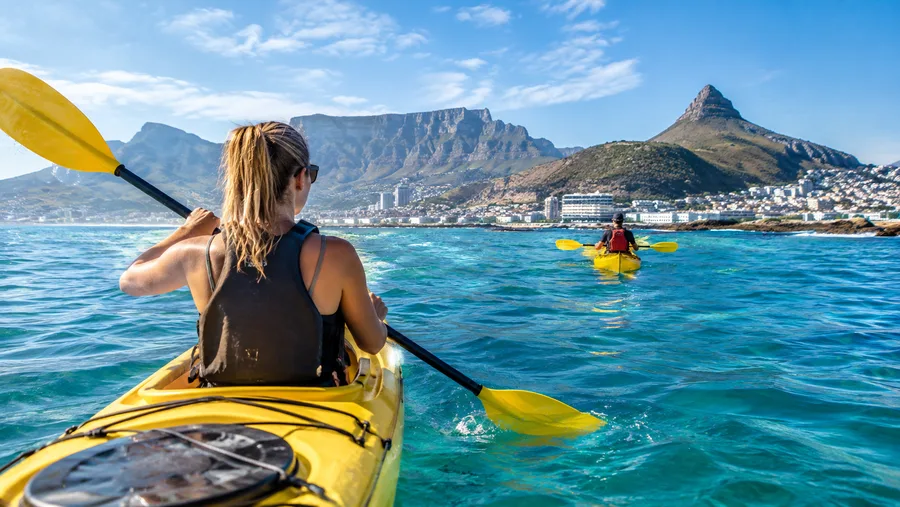
Anyone wondering where is kayaking located along the coast will find that commercial operators gather around three key hubs: Three Anchor Bay in Sea Point, Hout Bay harbor, and Simon's Town waterfront. Almost all operators supply stable, plastic sit-on-top double kayaks. They are wide, virtually unsinkable, and handle the surf easily. You do not need to be an athlete to steer one, though having someone with strong shoulders in the back seat definitely helps with tracking.
- Dress for immersion, not the air: Even if the sun is blazing at 28 degrees Celsius, the Atlantic water is chilly. Wear quick-drying boardshorts, a rash vest, and bring a windbreaker in your dry bag.
- Wind dictates everything: Check the forecast for the "Cape Doctor", our relentless southeasterly wind. If gusts exceed 17 knots, coastal operations shut down across the peninsula for safety.
- Morning slots are king: Sea conditions are typically calmest between 6:30 AM and 9:30 AM before thermal winds kick up the chop.
- Keep your gear tethered: The ocean floor off Sea Point is littered with sunglasses and expensive waterproof cameras. Use floating straps for anything you care about.
A standard two-hour guided trip runs about R450 to R600 per person depending on the operator. It usually includes paddles, lifejackets, and waterproof dry bags for small phones or keys. If you want solo rental gear to explore independently, operators will ask about your ocean paddling background, especially on the Atlantic side where rips and rocky shorelines leave little room for foolish mistakes.
Frequently Asked Questions about sea kayak cape town
Do I need previous paddling experience to sea kayak in Cape Town?
No. Almost all guided coastal tours use twin sit-on-top kayaks that are exceptionally stable and easy to steer. Guides give a brief safety talk on the beach covering paddle strokes, capsize recovery, and signals before you push into the water.
What marine life will I likely see while kayaking?
Cape fur seals are practically guaranteed in Hout Bay. Along the Atlantic Seaboard, paddlers regularly spot Heaviside's dolphins, dusky dolphins, and ocean sunfish (Mola mola). False Bay trips around Simon's Town give you high chances of seeing African penguins and occasional southern right whales between July and November.
What happens if the kayak flips over in the ocean?
Sit-on-top kayaks do not trap you inside like traditional closed-cockpit expedition kayaks. If you tip, you fall clear into the water. Your mandatory lifejacket keeps you floating, and the guides show you how to scramble back over the side in seconds.
Quick Reference
- Water temps: 10°C Atlantic to 19°C False Bay
- Best launch hour: 07:00 to 08:30 AM
- Typical outing cost: R450 to R600
- Primary spots: Three Anchor Bay, Hout Bay, Simon's Town
Book your kayaking cape town experience:
My Take
If you only have one free morning during your stay, book a boat in Simon's Town if you want calm water and penguins, or launch from Three Anchor Bay if you want raw Atlantic drama and a solid shot at seeing dolphins run the swell. Skip the midday slots completely, no matter how tempting sleep-in mornings might be. The coast wakes up early around here, and sharing the sunrise with a sleepy seal pup resting on a kelp stalk will stay with you long after your sunburn fades.
Read more about kayaking cape town.