Kayaking in Simon's Town: Calm Waters and Wildlife
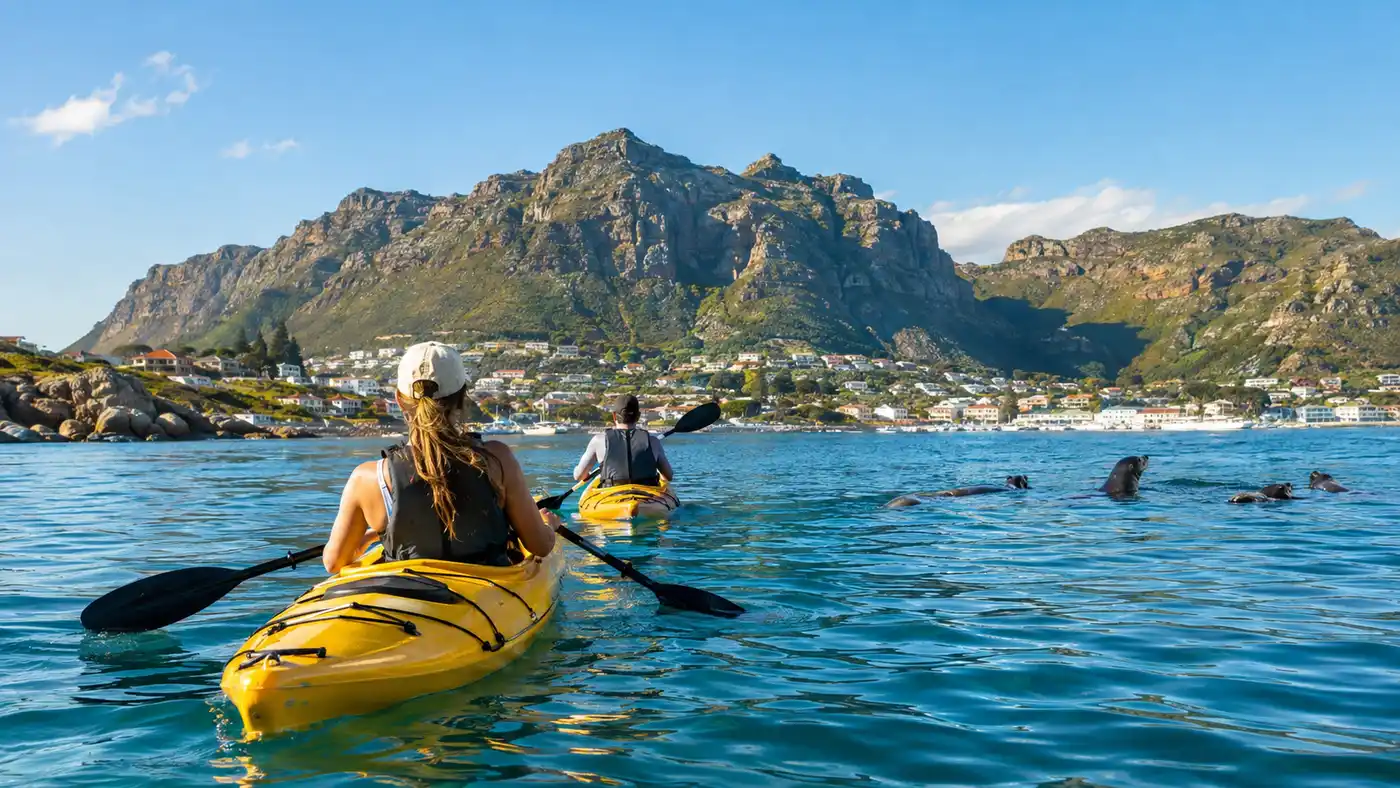
The naval harbor smells of salty iron and damp kelp at seven in the morning. Simon's Town wakes up much slower than central Cape Town, without the highway roar or morning rush. While the open Atlantic seaboard takes the direct punch of southern ocean swells, False Bay cradles this historic Victorian naval post behind the protective granite bulk of the Cape Peninsula. Anyone setting out for an early morning of simons town kayaking will quickly notice that the water here behaves more like an alpine lake than an open ocean, at least before midday.
Paddling out across this sheltered bay brings you level with granite boulders that look like giant dinosaur eggs dropped along the shoreline. It is quiet. You hear the rhythmic scrape of paddles against the gunwales, the sharp hiss of a Cape cormorant skimming past your ear, and the muffled barking of jackass penguins further down the beach. This guide pulls together the practical details of getting onto the water in Simon's Town, from wildlife rules and wind quirks to local launch ramps and post-paddle coffee stops.
Book your kayaking cape town experience:
Why Simons Town Kayaking Offers the Calmest Water in the Cape
Water conditions dictate everything on the Cape coast. If you paddle out from Three Anchor Bay or Sea Point on the Atlantic side, you immediately negotiate rolling groundswells that traveled thousands of nautical miles across the southern ocean. Simon's Town sits in a different world altogether. Tucked inside the western curve of False Bay, the town faces east and north-east, sheltered from the prevailing south-westerly swell that batters the rest of the peninsula.
The water temperature tells its own story. Atlantic water around Camps Bay regularly hovers around 10 or 12 degrees Celsius, which numbs your fingertips in minutes if you flip. False Bay water is fed by different currents and shallow shelf warming, often climbing to 17 or 19 degrees between December and March. It feels far less intimidating when a splash hits your chest.
The towering heights of Swartkop mountain cast a massive wind shadow over the inner bay in the early hours. You can glide along mirror surfaces five meters from shore while offshore winds are already starting to kick up white horses three kilometers out in the middle of False Bay. That pocket of calm is why almost every guided sea paddle for families and casual travelers happens right here.
Paddling Past Boulders Beach: Penguins, Cormorants, and Kelp Forests
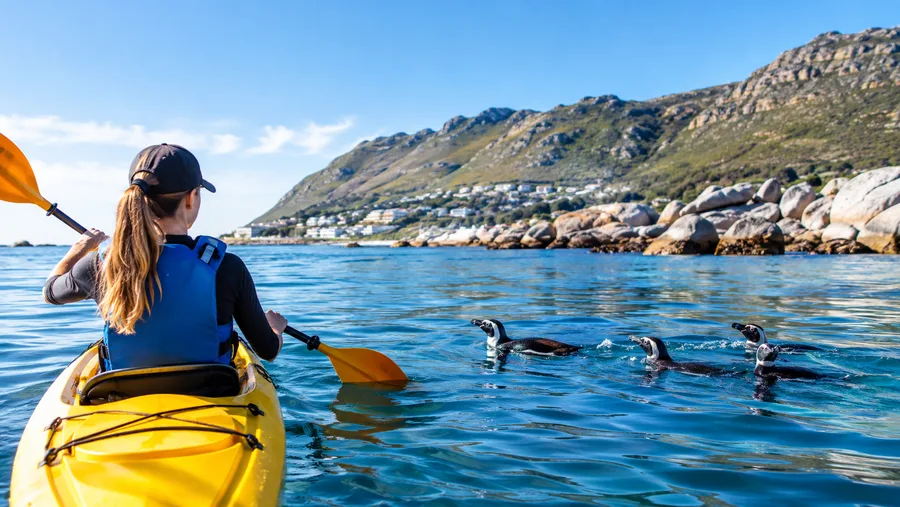
Most paddlers put their boats in the water with one specific creature in mind. Boulders Beach houses one of the few land-based African penguin colonies in the world, and seeing them from sea level is completely different from standing on the crowded wooden boardwalks above. In the water, these birds shed all their clumsy land waddling. They turn into slick, black-and-white torpedoes that shoot beneath your hull at 20 kilometers per hour, chasing shoals of anchovy through the clear shallows.
Gliding past the colony requires care and strict etiquette. The shoreline around Boulders forms part of Table Mountain National Park Marine Protected Area, meaning motorized vessels cannot enter and human disturbance is heavily regulated. You cannot simply paddle onto the sand and walk among the birds. Approaching wildlife too aggressively stresses the nesting parents, who abandon their eggs if threatened. Paddling parallel to the granite boulders around 10 to 15 meters out gives you the best view anyway, because the penguins actively swim out to inspect the colorful kayak hulls.
If you want a deeper look at what to expect around the colony, read through this breakdown of penguin kayaking in Cape Town before you finalize your plans. It clears up a lot of misconceptions about how close you can actually get.
Note: SANParks rangers monitor the waters off Boulders and Windmill Beach with binoculars. Trying to step out of your kayak onto the sandy nesting reserve carries an on-the-spot fine of R500 and quick confiscation of your gear by park officials.
The kelp forests beneath your paddle blade deserve just as much attention as the birds on top. Sea bamboo and bladder kelp grow in thick, amber-colored canopies here, anchoring themselves to the granite bottom with strong holdfasts. They act like natural breakwaters, smoothing out the surface chop. Peer straight down on a sunny morning and you will see red roman fish darting between the stalks, yellow sea anemones clinging to stone faces, and occasionally a small pyjama shark resting on the white sand floor three meters below.
Route Options and Real Costs to Kayak Simonstown
You can choose between a couple of main routes depending on your comfort level and how hard the wind is blowing. Most people stick to the classic Boulders Beach route, which hugs the coast southward. It is easy, visually stunning, and leaves you close to shore the whole time. If you have some ocean experience and want something more adventurous, paddling out to Ark Rock or the Roman Rock lighthouse gives you open-water chop and a real sense of being offshore.
Here is how the standard guided outings from Simon's Town compare against each other in duration, cost, and difficulty:
| Route Name | Distance | Duration | Typical Cost (ZAR) | Ideal Paddler |
|---|---|---|---|---|
| Boulders Penguin Route | 4 to 5 km | 2 hours | R450 - R550 | Beginners, families, photographers |
| Ark Rock Explorer | 6 to 7 km | 2.5 hours | R600 - R750 | Intermediate, fit paddlers |
| Roman Rock Lighthouse Run | 8 km | 3 hours | R750 - R900 | Experienced sea paddlers only |
| Waterfront Harbor Paddle | 2 to 3 km | 1.5 hours | R350 - R420 | Young children, nervous first-timers |
Almost all local outfits use sit-on-top double kayaks made of rotomolded plastic. They are wide, buoyant, and practically unsinkable. Serious paddlers sometimes look down on them, but for navigating kelp fringes and handling unpredictable swells, they are infinitely safer for casual visitors than narrow fiberglass touring boats. You do not need to know how to perform an Eskimo roll. If you slip off, you simply pull yourself back onto the seat from the side.
Pro tip: Book the earliest departure slot available, typically 08:00 or 08:30. False Bay surface wind almost always freshens after 11:00, turning an effortless glass-water paddle into a tiring slog against head-on whitecaps.
Single kayaks are usually reserved for solo travelers who paddle frequently or guides leading the group. If you paddle as a couple, put the stronger or heavier person in the back seat. The rear paddler controls the rudder pedals and sets the steering angle, while the front paddler acts as the engine and sets the stroke pace.
Book your kayaking cape town experience:
Wildlife Beyond the Penguins: Seals, Whales, and Sharks
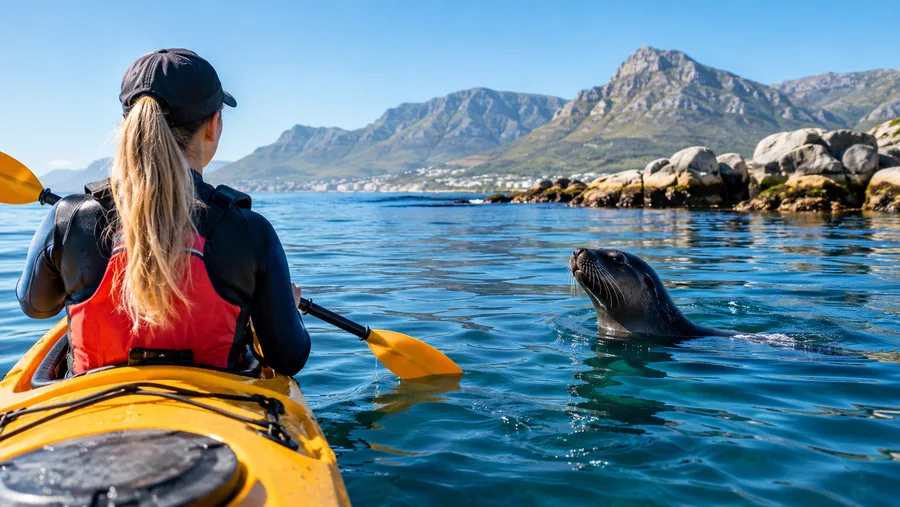
While the birds get the tourist brochures, the marine life across False Bay runs far deeper. Cape fur seals treat the outer rocks around Simon's Town harbor like their personal lounge chairs. A solitary bull seal will often surface right next to your boat with a loud snort that makes everyone jump, rolling onto his back with one flipper raised into the air to regulate his body temperature. They are wildly curious. Do not try to touch them - they have sharp teeth and carry nasty bacteria in their mouths - but let them barrel roll beneath your boat if they want to play.
Between June and November, False Bay turns into a nursery for southern right whales and humpbacks escaping the Antarctic winter. Paddling during these months is surreal. You might be floating near Seaforth when an explosive plume of spray shoots four meters into the air a hundred meters away. Marine regulations require boats and kayaks to maintain a strict 300-meter buffer from whales, but the animals do not read rulebooks. Mothers and calves often drift into Simon's Town bay to nurse in the calm shallows. Check out these guidelines on whale encounters while kayaking to understand how to handle an unexpected surfacing near your boat.
People always ask about great white sharks before they agree to kayak simonstown. It is the number one fear. Honestly, white shark sightings inside the shallow kelp shallows have plummeted over the past seven years, largely due to transient pods of mammal-eating orcas hunting them out of the bay. You are far more likely to spot harmless spotted gully sharks or small bronze whalers skimming across the sandy flats. In three decades of recreational paddling around Boulders, kayak encounters with predatory sharks remain extraordinarily rare.
Launching, Weather Windows, and Post-Paddle Rituals
Planning a trip to kayak simons town requires watching the barometric pressure and wind forecast closely. Cape Town weather changes on a whim. The summer months from December to February bring the notorious "Cape Doctor", a dry south-easterly gale that howls across the Cape Flats. While Simon's Town gets some shelter, a strong south-easter still kicks up annoying surface spray and pushes small kayaks away from the shoreline. Winter brings cold north-westerly rain fronts, which make the sea look dark and glassy between squalls.
You have three primary launch spots along this stretch of coast, each with distinct advantages:
- Simon's Town Waterfront Pier: Easy slipway access next to the public jetty, with ample paved parking and immediate protection from the harbor wall.
- Seaforth Beach: Soft white sand with almost zero shore-break, making it the most forgiving launch spot for small children and nervous paddlers.
- Frank's Bay: A tiny pebble cove closer to Boulders, great for skipping the harbor traffic if you bring your own boat, though parking is very tight.
When you get off the water, your legs will feel stiff, your hands will smell like salt, and you will be starving. Walking straight from the Seaforth launch ramp up toward Wharf Street leads you past tiny cafes and maritime antique shops. Skip the big chain fast food places and hit one of the independent bakeries along St George's Street. Hot filter coffee and a warm pastry taste twice as good when your hair is still crusted with dry sea salt.
Do not leave your wallet or mobile phone exposed in open pockets when setting out. A surprising number of visitors drop their car keys straight into the harbor muck while stepping into the cockpit, turning an incredible morning into an expensive locksmith call. Pack carefully using this essential gear checklist:
- A dry bag with shoulder straps: Essential for keeping your phone, dry t-shirt, and car keys completely dry inside the boat hatch.
- Neoprene booties or strap-on sandals: Granite rocks and broken mussel shells along the launch ramps will slice bare feet open in seconds.
- High-SPF mineral sunscreen: The glare reflecting off the bay burns fair skin twice as fast as sitting on dry land.
- R20 in loose metal coins: For the local car guards who watch your parked vehicle along the beach access roads.
Taking on simon's town kayaking requires very little technical athletic ability, but having sensible expectations makes all the difference. You do not need gym-honed shoulders to paddle three kilometers on a flat sea. If you pace your strokes, take long pauses to let the kelp beds glide by underneath, and keep your eyes peeled for slick black heads bobbing among the rocks, it quickly turns into the best two hours you will spend anywhere on the Cape Peninsula.
Frequently Asked Questions about simons town kayaking
Can children join a kayak trip in Simon's Town?
Yes. Most commercial operators accept children from age 8 and up, provided they sit in the front seat of a double kayak with a competent adult paddling in the back. Life jackets are provided in child sizes, and the sheltered bay keeps water anxiety low.
Are wetsuits necessary for paddling in Simon's Town?
Usually no. Because you sit on top of the kayak rather than swimming in the water, quick-drying board shorts, a rash guard, and a light windbreaker are plenty warm between October and April. In midwinter, a thin 2mm or 3mm neoprene springsuit keeps you comfortable against chilly morning air.
Will I definitely see penguins on a Simon's Town paddle?
Penguin sightings are practically guaranteed on the Boulders Beach route. The colony is home to over 2,000 birds that spend daylight hours feeding, bathing, and swimming in the kelp zones directly along the standard kayak route.
What should I do if my kayak capsizes in False Bay?
Stay calm and hold onto your paddle. The sit-on-top boats used by local guides will not sink or fill with water. Swim to the center of the boat, reach across the deck to grasp the far rail, kick your legs to the surface, and pull your belly onto the seat before swinging your legs around.
Quick Reference
- Launch: Seaforth Beach or Simon's Town Pier
- Water temp: 14°C to 19°C (warmer than Atlantic)
- Typical cost: R450 to R550 per person
- Best hours: 08:00 to 10:30 for lowest wind
- Key species: African penguins, Cape fur seals, southern right whales
Book your kayaking cape town experience:
The Bottom Line
If you want rough ocean breakers and adrenaline-fueled surf launches, False Bay will bore you. But if your idea of a great morning involves gliding past massive granite boulders, watching penguins hunt under your keel, and exploring quiet marine reserves without fighting brutal Atlantic swells, getting out on the water in Simon's Town is unbeatable. Book the early morning departure, throw a dry shirt in your bag, and leave your camera strapped securely to your chest.
Read more about kayaking cape town.