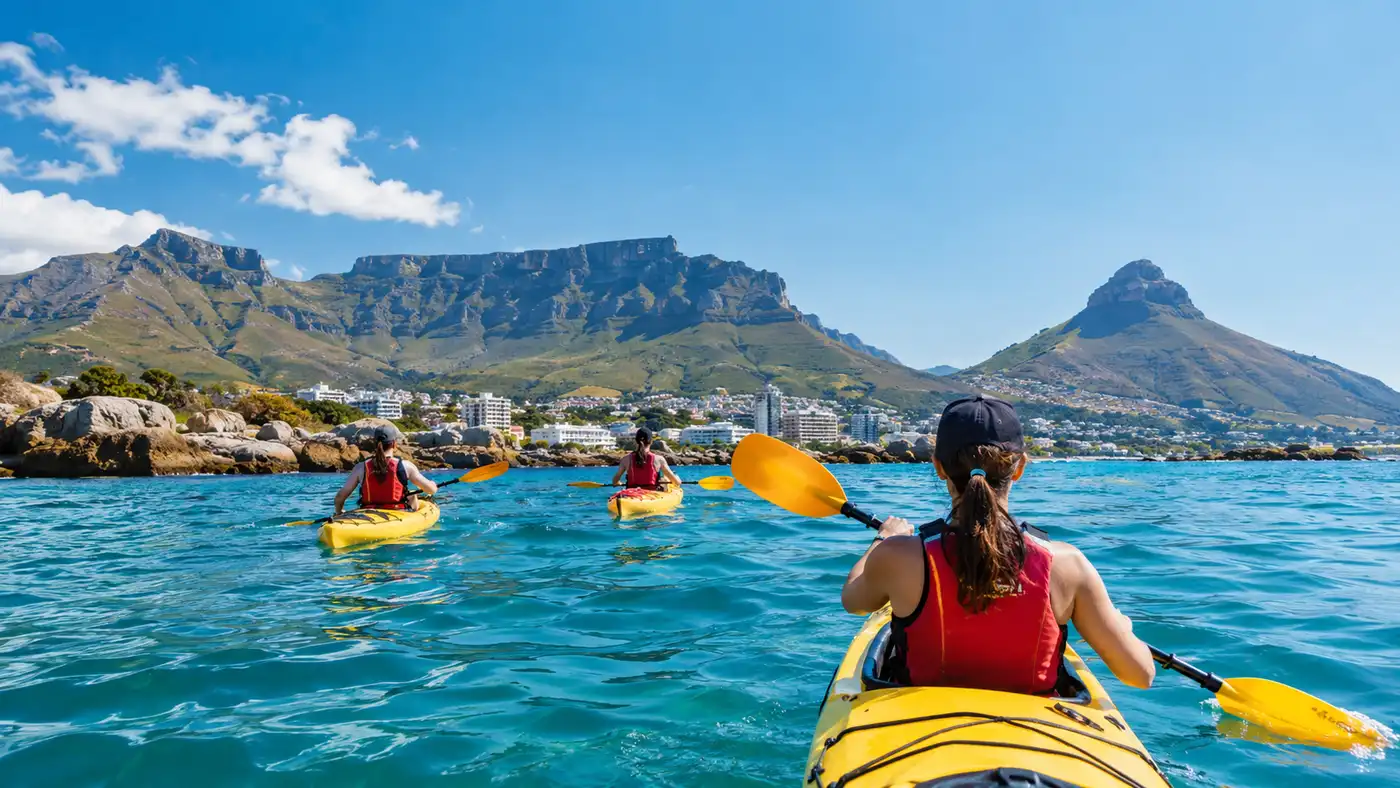
Kayaking in Cape Town Complete Guide for First Time Visitors
The Atlantic ocean looks intimidating from the Sea Point promenade. Huge granite boulders take the brunt of grey-green swells, and on windy afternoons the spray drifts right across the road into the traffic. When you sign up for kayaking in cape town for beginners, you might picture yourself getting flipped by a breaker five seconds off the slipway. Honestly, I had that exact image in my head the first time I walked down to the Three Anchor Bay launch ramp with a paddle tucked under my arm.
The reality is far gentler than the postcard breakers suggest. Protected bays, forgiving double kayaks, and seasoned local skippers mean you can paddle into open ocean water even if you have never held an oar in your life. This guide walks you through every practical detail of getting out onto the Atlantic and False Bay waters, from picking the right launch site to figuring out what to do with your car keys while you are floating three kilometers offshore.
Book your kayaking cape town experience:
Why Kayaking in Cape Town for Beginners Is Easier Than You Think
Most commercial kayak operators in the city use plastic, sit-on-top sea kayaks rather than closed-cockpit expedition boats. That single design choice removes about 90 percent of the fear factor. You do not get trapped inside if the boat rolls over. You simply slide off into the water, pop to the surface in your buoyancy vest, and climb back on from the side while the guide holds the stern steady. Most people never flip at all.
The boats are wide and stable. They track through coastal chops with surprising ease, especially when two people paddle in a loose rhythm. You do not need upper-body strength like an Olympic rower. The guides set a conversational pace, stopping every 200 meters or so to point out Heaviside's dolphins, sunfish, or a raft of Cape fur seals rolling lazily in the kelp fronds.
A lot of travelers arrive assuming they need prior paddle experience or a formal lesson. You really do not. Before anyone touches the water, the trip leaders run a quick 10-minute briefing on the sand. They show you how to hold the paddle without blistering your thumbs, how to reverse stroke to stop, and how to turn by sweeping wide from the bow. Within five minutes of pushing off, muscle memory takes over.
The Atlantic feels raw and vast, but you are rarely alone out there. Operators run their groups in pods, keeping slower boats between the lead guide and the sweep guide. If your arms turn to jelly halfway through, your guide will happily clip a short towline to your bow toggle and haul you along while you catch your breath and watch the back of Lion's Head slide past.
The Best Launch Spots for First-Timers
Cape Town has two distinct coastlines separated by a mountainous peninsula, and each offers a completely different water experience. The Atlantic Seaboard faces the open west, giving you dramatic views of Signal Hill and the twelve Apostles. False Bay sits to the east, warmed slightly by currents from the Indian Ocean, tucked into mountain shadows that block the worst of the westerly swells.
Sea Point and Three Anchor Bay are the classic hubs for sea kayaking. Tours head out past the Mouille Point lighthouse, heading toward Granger Bay or the old shipwreck remnants off Green Point. The water here is cold, clear, and rich with marine life. You launch from a sheltered slipway inside a small, rocky cove where the swell rarely breaks hard. It takes about 20 paddle strokes to get beyond the kelp line into calm ocean rollers.
Simon's Town, on the False Bay side, is ideal if you are nervous about open ocean swells. The harbour walls and natural bay geography cut down wave action significantly. Paddling out toward Boulders Beach lets you watch African penguins shooting through the turquoise shallows like little feathered torpedos. The water here is roughly 3 to 4 degrees warmer than the Atlantic side, which makes a big psychological difference if you happen to take a splash.
Hout Bay is the third major hub, tucked into a deep mountain amphitheater on the southern Atlantic side. Paddlers launch from the working harbor, thread past fishing trawlers, and cross the bay toward the seal colony at Duiker Island. The sheer cliffs of Chapman's Peak loom over you the entire way. The water inside Hout Bay can get choppy when the southeaster blows, but the bay itself protects you from heavy ocean groundswells.
Note: Atlantic water temperatures hover around 11 to 14 degrees Celsius year-round. You will not freeze during a quick spill because operators supply life vests and windbreakers, but you will definitely feel awake the second it touches your ankles.
| Launch Location | Water Conditions | Primary Wildlife Seen | Typical Cost (ZAR) |
|---|---|---|---|
| Sea Point / Three Anchor Bay | Gentle ocean rollers, occasional chop | Dolphins, sunfish, seals | R450 - R550 |
| Simon's Town (False Bay) | Calmer surface, sheltered coves | African penguins, cormorants | R450 - R500 |
| Hout Bay Harbor | Deep bay swells, harbor wakes | Cape fur seals, seabirds | R400 - R480 |
What to Expect on Your First Morning on the Water
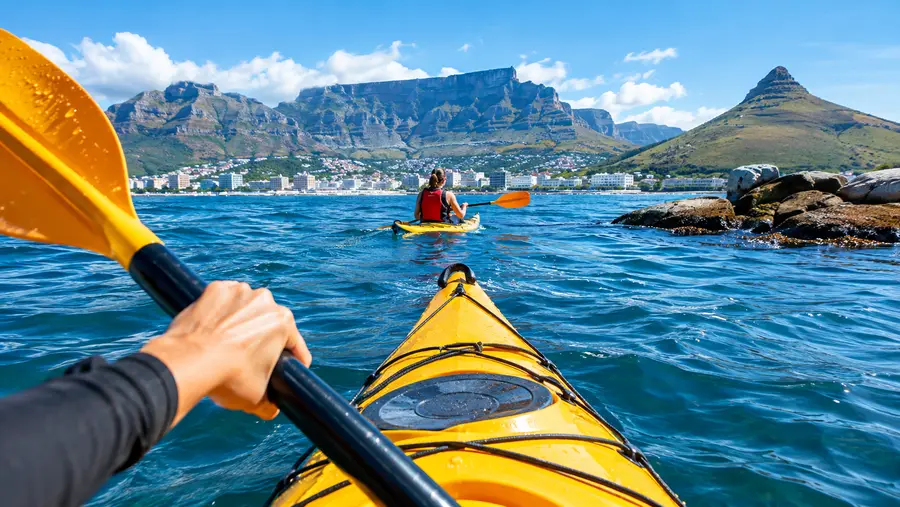
Tours almost always launch early. If you book an 07:00 or 08:00 slot, set your alarm and arrive 20 minutes before departure. Early mornings bring glassy conditions before the afternoon wind kicks up and turns the coastal waters into whitecaps. The light hitting Table Mountain at dawn from the sea is something you simply cannot experience from land.
Once you check in, you will be handed a life jacket and a lightweight windproof paddle jacket. Leave your shoes, wallets, and dry clothes in the operator's locked bins. Walking barefoot down the concrete slipway is normal, though old trainers or neoprene booties make the walk over gravel much easier. If you are curious about how a standard trip unfolds from start to finish, checking what to expect from a kayaking experience in cape town gives a good breakdown of the pacing.
- Gear check and briefing: Staff adjust your buoyancy vest straps and assign you a double kayak based on weight and experience levels.
- The slipway launch: The guides slide your boat into knee-deep water between sets, tell you when to jump aboard, and give you a firm push past the tiny shoreline wash.
- Paddling into open water: You spend the first 15 minutes finding your rhythm with your partner while your guide directs the group into a loose formation.
- Wildlife stops: The group drifts periodically for 5 to 10 minutes at a time while guides share history, point out marine life, and take photos with their waterproof cameras.
- Returning to the ramp: Landing is controlled. You wait just off the slipway until the beach crew waves you in, catches your bow, and helps you stand up without tumbling.
The whole excursion usually lasts around two hours, with roughly 90 minutes of active paddle time. You cover about 4 to 6 kilometers at an easy, cruising speed. It is exercise, certainly, but nobody expects you to sprint.
Book your kayaking cape town experience:
Essential Gear and What to Wear for Beginners
Dress knowing that your bottom half will get wet. Sit-on-top kayaks have scupper holes in the floor to drain splash water, meaning you are sitting in a shallow puddle for most of the trip. Quick-drying boardshorts, synthetic gym leggings, or running shorts are far better than anything made of cotton. Leave heavy denim and thick fleece jumpers back at your hotel.
Sun protection matters more than warmth once you are moving. The glare off the ocean doubles your UV exposure, even on overcast mornings where the clouds hang low over Lion's Head. Zinc on your nose and cheeks will save you later.
Pro tip: If you are prone to motion sickness in cars or small boats, take an over-the-counter travel pill 30 minutes before launching; gentle ocean swells can make your stomach roll when the boat stops drifting.
- Quick-dry shorts or leggings: Avoid denim or heavy cotton tracks that hold water and chafe against the plastic seat.
- Eyewear retainer strap: If your sunglasses drop into the Atlantic kelp forest, you will never see them again.
- Neoprene booties or barefoot: Flip-flops float away immediately during launch, so leave them in the locker bins ashore.
- Waterproof phone pouch: Only bring your phone if it hangs around your neck inside a certified sealed case with a lanyard.
- Compact dry towel: Keep it in your car or the office locker so you can dry off immediately after peeling off your wet vest.
Most outfitters carry dry bags for small essentials, but space on board is limited. You will not need water bottles or snacks on the water for a two-hour paddle. Drink a glass of water before you launch, leave the hydration packs in your locker, and paddle with your hands completely unburdened.
Weather, Wind, and Ocean Safety in Cape Town
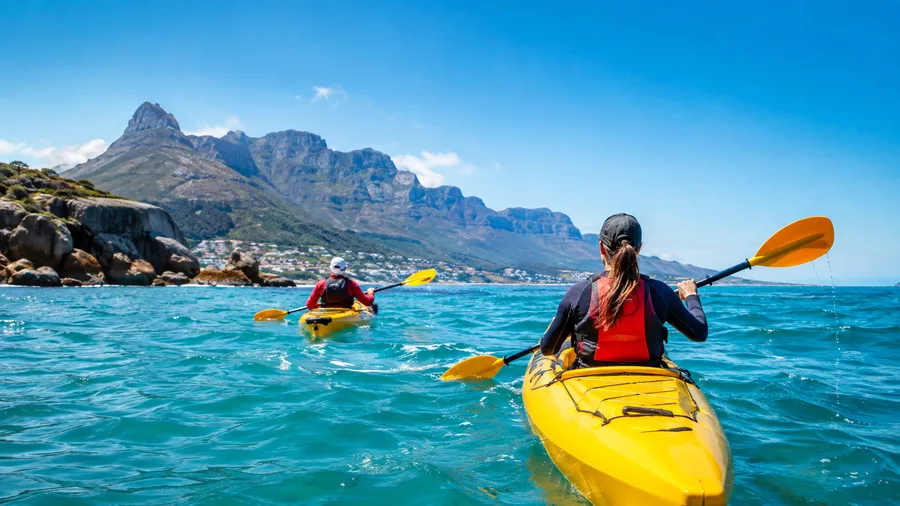
Cape Town weather changes on a dime. The city is famous for the Cape Doctor, a fierce southeasterly wind that clears the smog and flattens tourists along the foreshore throughout summer. Kayak operators watch coastal wind graphs compulsively, tracking knots and gust angles hour by hour. If conditions spike beyond safety margins, tours get cancelled or shifted to alternative days without hesitation.
Beginners often worry about safety on the open Atlantic, which is understandable given the size of the ocean. Local operators must adhere to strict South African Maritime Safety Authority regulations. Guides carry VHF marine radios, flares, cell phones in waterproof housings, and tow ropes. They know every current between Green Point and Clifton. Understanding how local skippers handle ocean swells and wind shifts is covered in depth in our guide on whether kayaking in cape town is safe for recreational visitors.
Summer runs from November to March, bringing sunny skies and warm air, but also frequent windy days. Winter, between June and August, has calmer surface water between cold fronts, though the air stays brisk. Spring is fantastic for whale watching, as Southern Right and Humpback whales cruise right past the bays on their annual migration routes from the Antarctic.
Never try to launch a private kayak off Sea Point or Hout Bay unless you have spent months reading local swells and rip currents. The kelp beds hide thick stalks that can snag rudders, and unexpected sets can flip an unwary paddler onto granite boulders in seconds. Booking with an established outfitter gives you the security of local eyes who know where the reef sits beneath the swell.
Frequently Asked Questions about kayaking in cape town for beginners
Do I need to know how to swim to go kayaking in Cape Town?
Basic water confidence is strongly recommended, but you do not need to be an expert swimmer. Every participant wears an approved 50N buoyancy life vest that keeps you floating effortlessly if you come out of the kayak, and guides stay right beside you.
Will my belongings get wet during the trip?
Yes, your clothing will get damp or soaked from paddle drips and seat water. Do not bring non-waterproof cameras, car keys, or leather wallets out on the boat. Use the secure locker facilities provided at the check-in base before launching.
What happens if the wind picks up while we are out at sea?
Guides monitor wind speed constantly and will cut the tour short and head back to the slipway if gusts reach 12 to 15 knots. Double kayaks handle headwind surprisingly well, and guides can tow any boat that struggles to maintain speed.
Are shark encounters common while kayaking around Cape Town?
Sightings from kayaks are rare. Great white sharks have largely cleared out of False Bay and Atlantic nearshore waters in recent years due to orca activity, and the resident sevengill sharks stick to the deep sea floor far below your hull.
Quick Reference
- Trip duration: 1.5 to 2 hours
- Minimum age: typically 8 years old with an adult
- Best launch time: 07:00 to 09:00 AM
- Typical cost: R400 to R550 per person
Book your kayaking cape town experience:
Before You Go
Paddling off the Cape coast puts you in direct contact with one of the most dramatic shorelines on earth. You hear the deep hiss of the kelp beds, smell the salty spray on the offshore breeze, and look back at Table Mountain without a glass window or a tour bus engine in the way. Book a morning slot early in your travel itinerary so you have room to reschedule if the wind blows hard on your first day. Grab your boardshorts, leave the nervous energy on the slipway, and let the Atlantic swell lift your bow.
Read more about kayaking cape town.