Kayaking Cape Town Prices What Influences the Cost
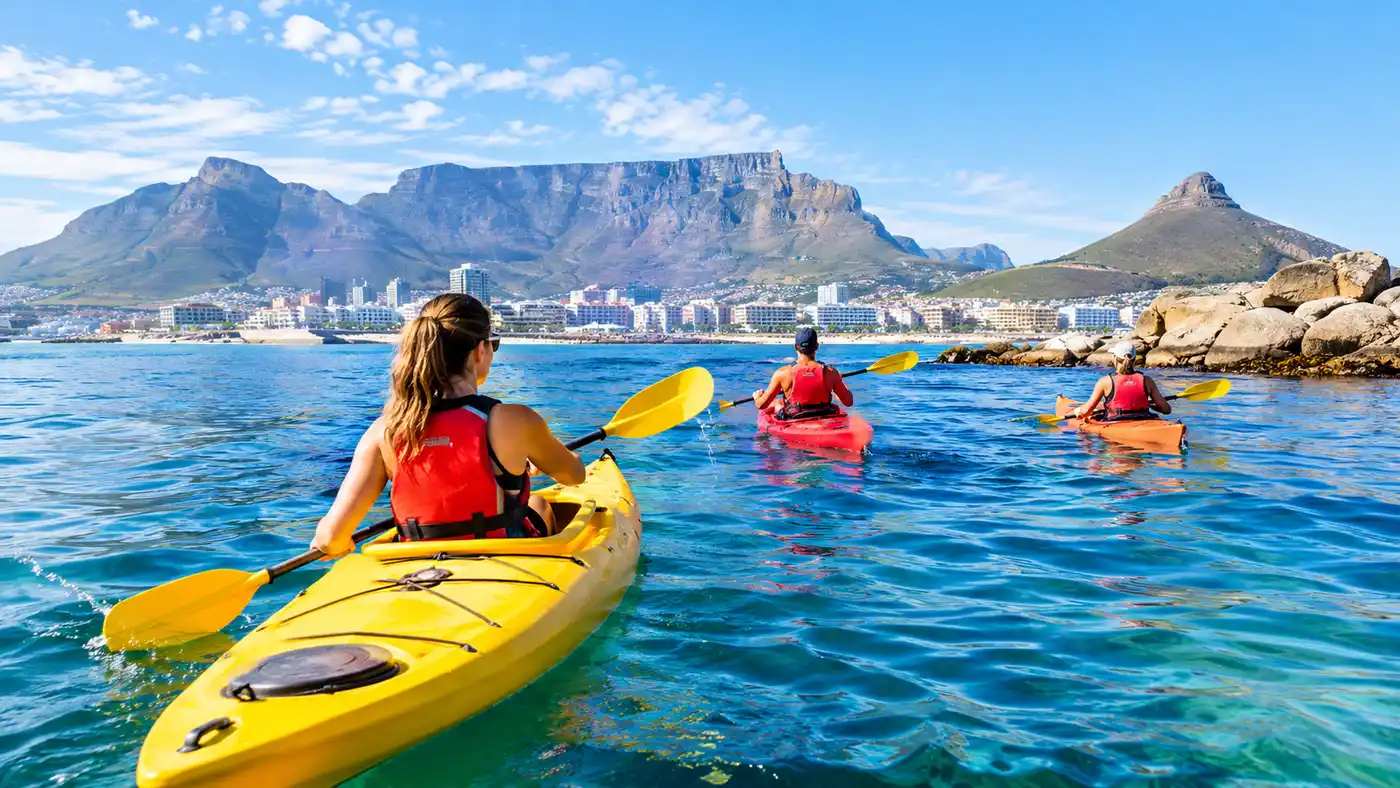
I remember standing on the Three Anchor Bay slipway on a freezing November morning, watching three different operators push yellow plastic boats into the surf. One guy beside me paid R450 through a WhatsApp booking he made the night before, while the German couple next to us had parted with R850 each through an international hotel concierge desk for essentially the identical paddle route. Navigating kayaking cape town prices can feel bizarrely inconsistent when you first start digging into outfitters online. You will see quotes as low as R350 and others climbing well past R1,200 for what looks like the same two hours on the water.
The gap comes down to tangible overheads, geographical quirks, and local ocean conditions that visitors rarely think about before strapping into a buoyancy vest. Between mandatory commercial licensing fees on the Atlantic Seaboard, marine park levies in False Bay, and the simple reality of whether an outfit runs an engine-powered support boat behind you, the quote on your screen reflects very specific operational decisions. If you know what drives those line items, you can easily avoid overpaying for unnecessary luxury or underpaying for a setup that cuts dangerous corners.
Book your kayaking cape town experience:
What You Will Actually Pay: Typical Kayaking Cape Town Prices
Most commercial tours in Cape Town sit squarely between R400 and R650 per person for an entry-level outing. That usually gets you roughly 90 minutes to two hours on the water, plastic sit-on-top boats, a paddle, a buoyancy aid, and a guide leading the pod. If you spot anything below R350, you are almost certainly looking at an unguided rental on a flat canal inside a commercial precinct, or a cut-rate operator cutting their margins to fill seats during a quiet midweek stretch. There is a place for budget options, and you can read our breakdown of cheap kayaking in Cape Town when lower prices make sense to see when shaving those rands off the bill actually works in your favor.
Private trips, sunrise slots, and long coastal expeditions scale up quickly. A private guide for two paddlers who want to track dolphins off Mouille Point without ten strangers bumping paddles usually runs from R1,100 to R1,800 total. Specialized wildlife routes out toward offshore seal colonies or kelp forests demand higher rates because the guides carry commercial coastal skipper credentials and run smaller paddler-to-guide ratios.
Here is how the numbers stack up across the major launching zones around the Cape Peninsula right now:
| Launch Location | Average Cost (ZAR) | Duration | Typical Water Type | What Is Included |
|---|---|---|---|---|
| Three Anchor Bay (Sea Point) | R450 - R550 | 2 hours | Open Atlantic swell | Sit-on-top double, paddle, life jacket, guide |
| Simon's Town (False Bay) | R450 - R600 | 2 hours | Protected bay, choppy chop | Kayak, paddle, gear, SANParks water access |
| Hout Bay Harbor | R400 - R500 | 2 hours | Harbor mouth into open bay | Basic gear, guide to seal colony |
| V&A Waterfront Canals | R250 - R350 | 1 hour | Completely flat canal | Solo or double kayak rental, no guide |
| Private Atlantic Tour | R1,200 - R1,800 | 2 to 2.5 hours | Open ocean | Dedicated guide, custom pace, digital photos |
Keep the currency conversion in mind if you are holding foreign bank cards. Because the South African Rand fluctuates unpredictably, an outing priced at R500 equates to roughly $27 or £22. That makes even the higher-tier excursions remarkably cheap by European or North American standards, where a guided ocean paddle rarely leaves the dock for under $80.
Why Launch Sites Change Kayaking Prices Across the Peninsula
Where you put your boat into the brine dictates a massive portion of the outfitter's operating budget. The Cape Peninsula has two distinct coastlines separated by a mountain range. The Atlantic side, stretching through Green Point, Sea Point, and Camps Bay, faces direct southern ocean swells with zero barrier reefs. Outfitters operating out of Three Anchor Bay pay hefty slipway access permits to the City of Cape Town. They also take on more insurance liability because an unexpected swell can tip a double kayak into a chilly 12-degree current within thirty seconds of launching.
False Bay tells a totally different story. Launching out of Simon's Town puts paddlers near the famous penguin territory at Boulders Beach. While the water is three to four degrees warmer and significantly calmer behind the naval harbor walls, operators here must navigate South African National Parks regulations. A portion of higher-end Simon's Town kayaking in Simon's Town calm waters and wildlife bookings covers conservation fees and coastal access levies. Those municipal and conservation overheads get passed straight to the consumer on the checkout page.
Note: Some Simon's Town operators bundle the marine reserve fee into the initial ticket price, while others request a cash conservation levy of around R40 to R60 at the slipway. Always check your booking confirmation email to see if local park entry is included.
Hout Bay sits right between the two in terms of pricing structure. The harbor slipway is industrial and messy, shared with commercial snoek fishermen and massive diesel catamarans heading to Duiker Island. Launch fees here are slightly cheaper for the businesses, which is why Hout Bay often undercuts Sea Point rates by R50 to R100. You will feel that difference in the staging area, which smells aggressively of fish gut and diesel exhaust rather than the scenic paved promenade of Sea Point.
Behind the Quote: Gear Quality, Safety Boats, and Ratios
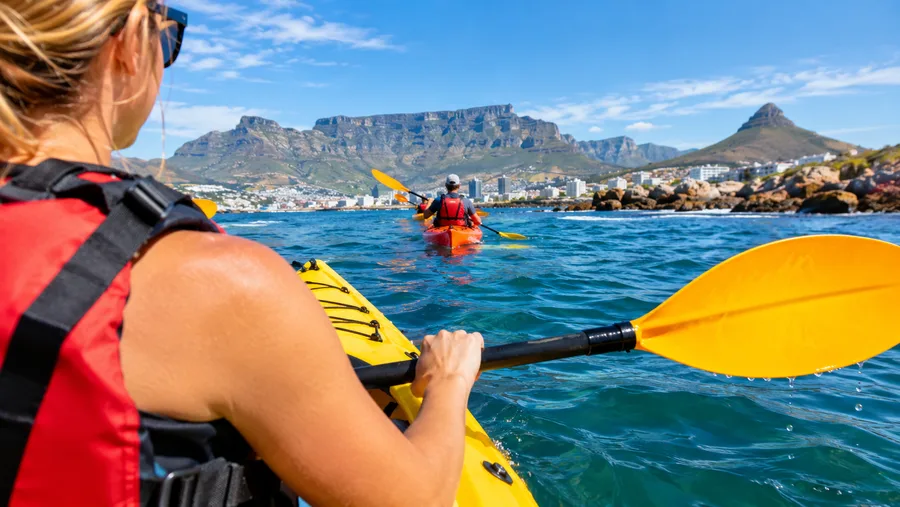
Nobody wants to think about marine safety until a squall rolls off the back of Lion's Head and blows their light plastic boat toward Robben Island. Safety compliance is where legitimate operators spend real money. In South Africa, commercial small craft operations are monitored by SAMSA, the South African Maritime Safety Authority. SAMSA requires guide certifications, seaworthy vessel inspections, coastal radio licenses, and specific guide-to-client limits.
A reputable outfitter will limit their tours to one lead guide for every six double kayaks. When companies pack sixteen tourists onto the ocean with a single nineteen-year-old seasonal worker guiding from the front, their overhead drops through the floor. Those are the outfits selling discount tickets on voucher clearinghouse sites. If a swell kicks up, that single guide cannot manage three capsized double kayaks spaced eighty meters apart in chop.
Quality operators on the Atlantic Seaboard often maintain a motorized semi-rigid inflatable boat on standby at Granger Bay or Three Anchor Bay. Running an engine, paying a licensed skipper to sit on call, and burning marine fuel adds substantial overhead. You pay an extra R100 per ticket for that privilege, and it is money well spent if the wind turns against you two kilometers offshore.
Then you have the hardware itself. The salt air in Cape Town destroys gear with ruthless speed. Paddles with loose ferrules, life vests with rusted salt-caked zippers, and faded kayaks with compromised drain scuppers are clear signs of an operator squeezing every drop of life out of their inventory to keep prices down. Companies charging closer to R550 tend to rotate their fleet every eighteen to twenty-four months, giving you stable, responsive craft with functional foot braces that do not slip under pressure.
Book your kayaking cape town experience:
Hidden Extras and What Is Included in Kayaking Prices
When you are comparing kayak prices across operators, read the inclusions list carefully. Two bookings that look identical on Google can end up costing radically different sums by the time you leave the beach. I have seen travelers get hit with surprise fees for basic necessities they assumed were standard kit.
- Digital photo packages: Some guides carry waterproof action cameras and dump the raw photos into a shared Dropbox link for free. Others employ an on-shore spotter or have the guide sell you an SD card afterward for R150 to R300.
- Neoprene suits and dry tops: Atlantic water temperatures linger around 10 to 14 degrees Celsius year-round. Several outfitters include shorty wetsuits or windbreakers in the standard ticket, while others charge an R80 gear rental fee at the counter.
- Dry bags and phone cases: Good operators lend you a heavy-duty vinyl dry bag for your car keys and layers. Budget operations often make you leave valuables on a folding table in an unlocked shed or charge you R50 to rent a basic waterproof pouch.
- Cancellation insurance and rebooking: Because ocean conditions cancel roughly 30% of Atlantic paddles, flexible rebooking is gold. Premium outfits refund you instantly without administrative fees, whereas deeply discounted tickets are often non-refundable or lock you into a strict voucher credit system.
Pro tip: Skip the phone pouch rental and buy a cheap, certified waterproof chest lanyard from an outdoor shop on Bree Street before you go. Phone cases handed out at busy slipways often have scratched plastic lenses that ruin your photos.
Lockers are another small headache that can incur costs. While most Sea Point outfits have a locked trailer or office van where you can drop shoes and dry clothes, a couple of operations run purely out of the back of a bakkie on the pavement. You might have to stash your daypack in your own rental car boot, which is less than ideal along an exposed coastal road.
Seasonality and Why Weather Dictates True Value
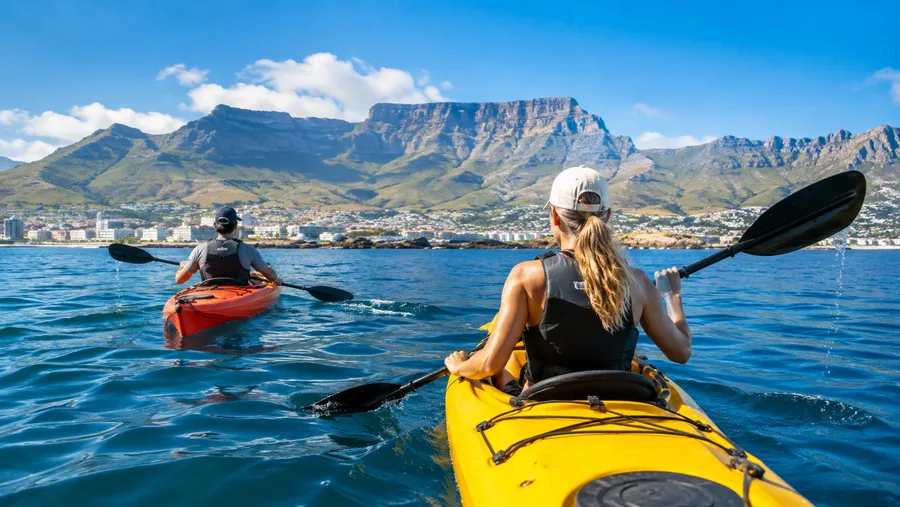
Peak season runs from mid-December through late February. The city overflows with European travelers fleeing winter, local schools close, and kayaking operations run four to five back-to-back waves of boats each day. You will rarely find discounts during this period. In fact, many operators raise their headline kayaking prices by R50 or R100 starting December 1st simply to throttle demand and match the soaring cost of seasonal staff.
Winter paddling, between June and August, drops the headline rates slightly, but the real value shifts. The water in False Bay is often clearer, and the dominant winds switch, creating glass-calm conditions in bays that are normally rough in December. Southern right whales enter the bays, and your chance of spotting significant marine life from a kayak spikes dramatically. An R500 ticket in July might get you within legal viewing distance of an eighty-ton whale, whereas that same R500 in January gets you a lot of sun, stiff wind, and a few Cape fur seals.
Consider the wind patterns when evaluating price against time of day. The local southeaster, affectionately nicknamed the Cape Doctor, usually sleeps until around 11:00 AM before blowing down the slopes of the mountains like an open jet engine. That makes the early 07:00 AM and 07:30 AM launch slots significantly more valuable than midday slots. Operators charge the exact same rate for both times, yet the early slot delivers glassy ocean swells while the 11:30 AM paddle often turns into an exhausting upper-body fight against whitecaps.
- First light departures (06:30 - 07:30 AM): Best ocean conditions, zero wind, highest odds of spotting feeding pods, but you need to wake up early.
- Mid-morning slots (08:30 - 09:30 AM): Warmer air, great visibility for photography, slightly busier on the water with neighboring kayak pods.
- Late morning slots (10:30 AM and onward): Riskier water quality as thermal winds build; more paddling effort required for the same distance.
- Sunset excursions: Highly weather-dependent, atmospheric light, but prone to last-minute cancellations if evening winds pick up off the peaks.
If an operator cancels your trip due to weather, that is a positive sign. Cape Town water can turn hostile in minutes. An outfitter that refuses to launch and hands your money back or shuffles you to tomorrow's roster is prioritizing your life over their turnover. The outfits to steer clear of are those that force clients onto the water in twenty-knot gusts just to avoid refunding payments.
Frequently Asked Questions about kayaking cape town prices
Do I need to tip the kayak guides in Cape Town?
Tipping is customary across South Africa. If your guide gave clear safety instructions, handled the boats efficiently, and tracked wildlife, a tip of R50 to R100 per person is standard and deeply appreciated by local river and sea guides.
Why are V&A Waterfront canal rentals so much cheaper?
Canal paddling happens in completely enclosed, brackish water with zero ocean swell, zero current, and no motorized boat traffic. The insurance risks are tiny, SAMSA marine qualifications are not required, and guests can paddle without guides, keeping overhead low.
Is it cheaper to book directly with the company or through a travel platform?
Booking direct via the operator's official website or direct WhatsApp line is almost always cheaper. Large travel aggregators take commissions between 18% and 25%, meaning operators rarely offer discounts on third-party portals, and direct cancellations are easier to resolve.
Quick Reference
- Standard guided sea tour: R450 to R650 per person
- Canal unguided rental: R250 to R350 per hour
- Private guided ocean paddle: R1,100 to R1,800 total
- Typical tour length: 90 to 120 minutes
Book your kayaking cape town experience:
The Bottom Line
You do not need to spend a small fortune to get onto the water in Cape Town, but hunting for the cheapest ticket in town is rarely smart when the open South Atlantic is involved. Paying around R500 secures a solid double kayak, professional guidance from someone who understands the local rips, and the comfort of knowing there is support if the weather turns. Book the earliest morning slot you can handle, deal directly with the team running the boats, and leave a few extra rands in cash for your guides when you drag the boat back up the concrete.
Read more about kayaking cape town.